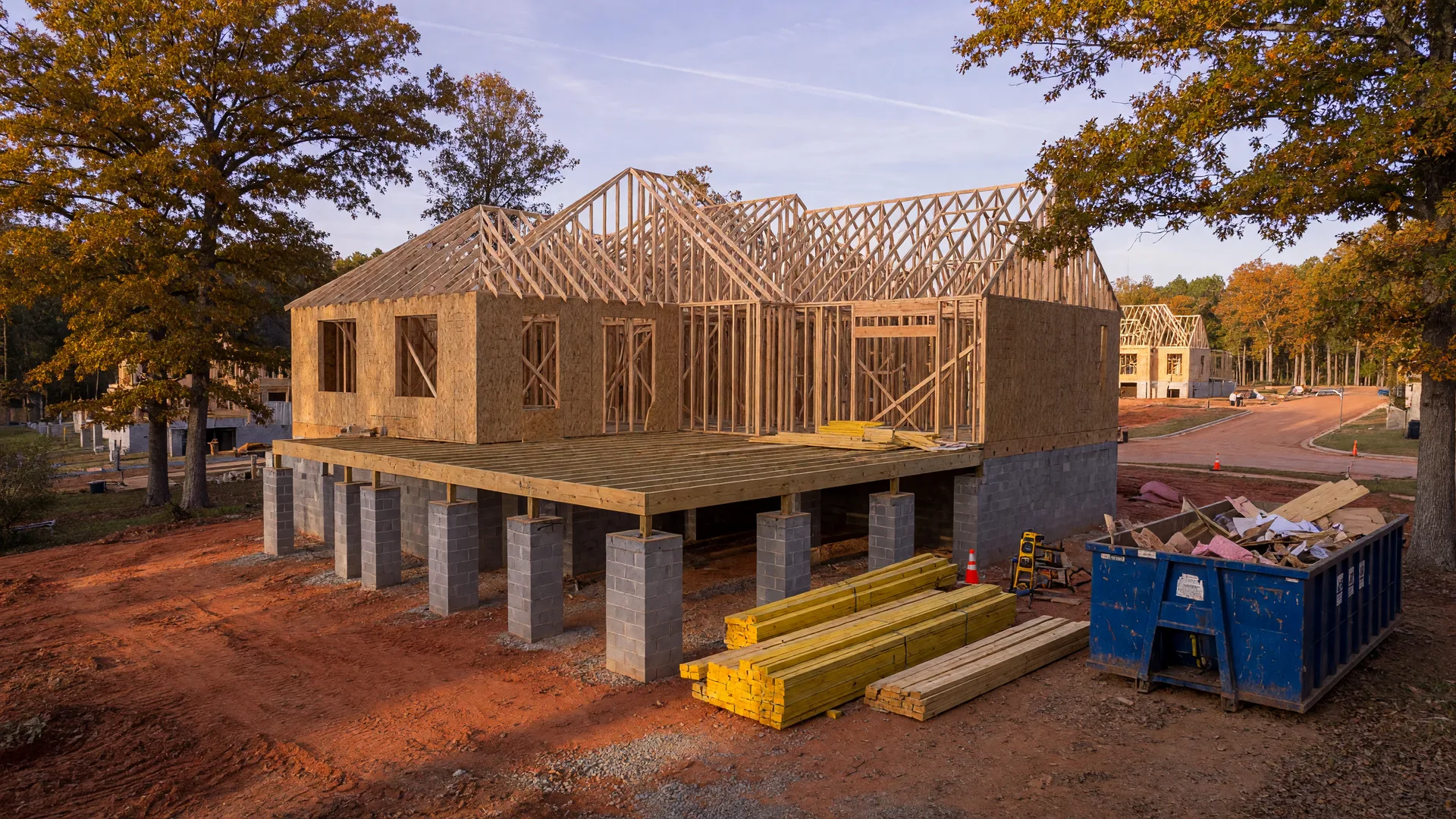
The short answer: most homes in Raleigh and the Triangle sit on crawl spaces or slabs, not basements, because of geology, climate, and what local buyers are willing to pay for.
I moved here from Connecticut more than 20 years ago, and I remember the exact feeling of walking into a Raleigh listing, asking where the basement was, and getting a blank look. Up north a basement is where the furnace, the laundry, the workshop, and the Christmas decorations live. In the Triangle, that whole floor mostly does not exist. It is not an oversight by builders. It is the rational result of three things working together: a shallow frost line, dense red clay soil, and a marketplace that does not value basements enough to pay for them.
This guide answers the question honestly, with the real numbers on what Triangle homes actually sit on, what crawl-space living really costs you, when basements do exist, and what to do about storage and storm shelter without one. No hype, just the truth a 20-year local would tell you before you pack the moving truck.
Why Don't Houses in Raleigh Have Basements? The Three Real Reasons
Ask five different people and you'll get five folk explanations. Here are the actual ones, in the order they matter:
1. The ground barely freezes. In the Northeast, frost pushes 4 to 8 feet deep, so footings have to go down that far, and once you're digging that deep anyway, a full basement is a cheap marginal step. Central North Carolina frosts only about 12 to 18 inches deep, so foundations stop around 3.5 feet. Digging an extra 7 to 9 feet of basement wall, just because, is pure added cost.
2. The red clay is the wrong partner for underground rooms. The Piedmont's heavy clay drains poorly and expands when it gets wet. Below grade, it stacks hydrostatic pressure against basement walls, which means waterproofing has to be genuinely good, and good waterproofing is expensive. Leaks and cracks are the predictable result when corners are cut.
3. The water table is not your friend. Much of the region has a fairly high water table on top of that poorly draining clay. Dig below grade and you invite persistent seepage, sump pumps, and drainage systems. Builders avoid the problem entirely by not digging.
Then add the market reality: because Northern-style basements are not the norm, Triangle buyers do not hold it against a home that it lacks one, so the builder's premium for a basement is rarely recovered at resale. In a market with a mild climate where a crawl space or slab is cheaper and completely adequate, the basement simply doesn't pencil out.
What Foundations Do Triangle Homes Actually Use?
Here is the honest share-of-market picture. The exact figures vary by source and by metro, but the direction is consistent across every one of them:
| Foundation type | How common in the Carolinas | The honest take |
|---|---|---|
| Crawl space | Roughly 75% of existing homes in the Carolinas | The default. Works well when encapsulated and kept dry. |
| Concrete slab | About 10% of existing stock; most new builds in the region | No under-floor access, no crawl. New-construction norm in the South Atlantic. |
| Basement | Est. 6-7% in the Raleigh/Chapel Hill metro | Almost always a walk-out on a sloped lot. Rare and priced like it. |
The trend for new construction pushes even harder toward slabs: U.S. Census and NAHB data for the South Atlantic division (which includes North Carolina) show about 86% of new single-family homes started in 2024 were built on concrete slabs, versus 73% slab nationally. Walk further east toward the coast and basements nearly disappear; push north and west through the Carolina mountains and they come back. The Triangle sits firmly in the middle: crawl spaces in the older stock, slabs in the new.
Is a Crawl Space a Deal-Breaker? (It's Not, But Read This)
A crawl space is not a lesser foundation. It is the foundation most suited to this climate, and it has real advantages over both basements and slabs:
- Plumbing and ductwork sit under the floor where they're reachable, instead of being buried in concrete like a slab
- Repairs like a leaky supply line or a rerouted drain are cheap jobs instead of jackhammer projects
- In a humid Piedmont climate, a properly encapsulated and conditioned crawl space keeps the floor system dry and reduces pest pressure
- You never spend money heating or cooling a room you barely use
The risks are real but manageable, and they are exactly what a good home inspection checks: standing water, mold or mildew smells, sagging insulation, rodent or termite activity, and grading that drains toward the house. In my experience, most crawl-space horror stories come from homes where nobody ever looked at the crawl space, not from crawl spaces themselves. If the listing is on a crawl space, do not let it cool you on the home. Put the condition of that crawl space on the inspection list and move on.
One honest caveat: if access to your under-floor space matters to you, or you wanted a place to stash the workshop, factor that into how you use the house. A slab gives you none of that access, so if you have a choice, many buyers prefer a crawl space to a slab for exactly this reason.
When Basements DO Exist in the Triangle
Basements are not extinct around here. When they exist, they are almost always walk-outs or daylight basements on sloped lots, because the terrain does part of the digging. You will find them most often in the hilly parts of the region: sections of North Raleigh, Wake Forest, and other neighborhoods where lots roll instead of sit flat.
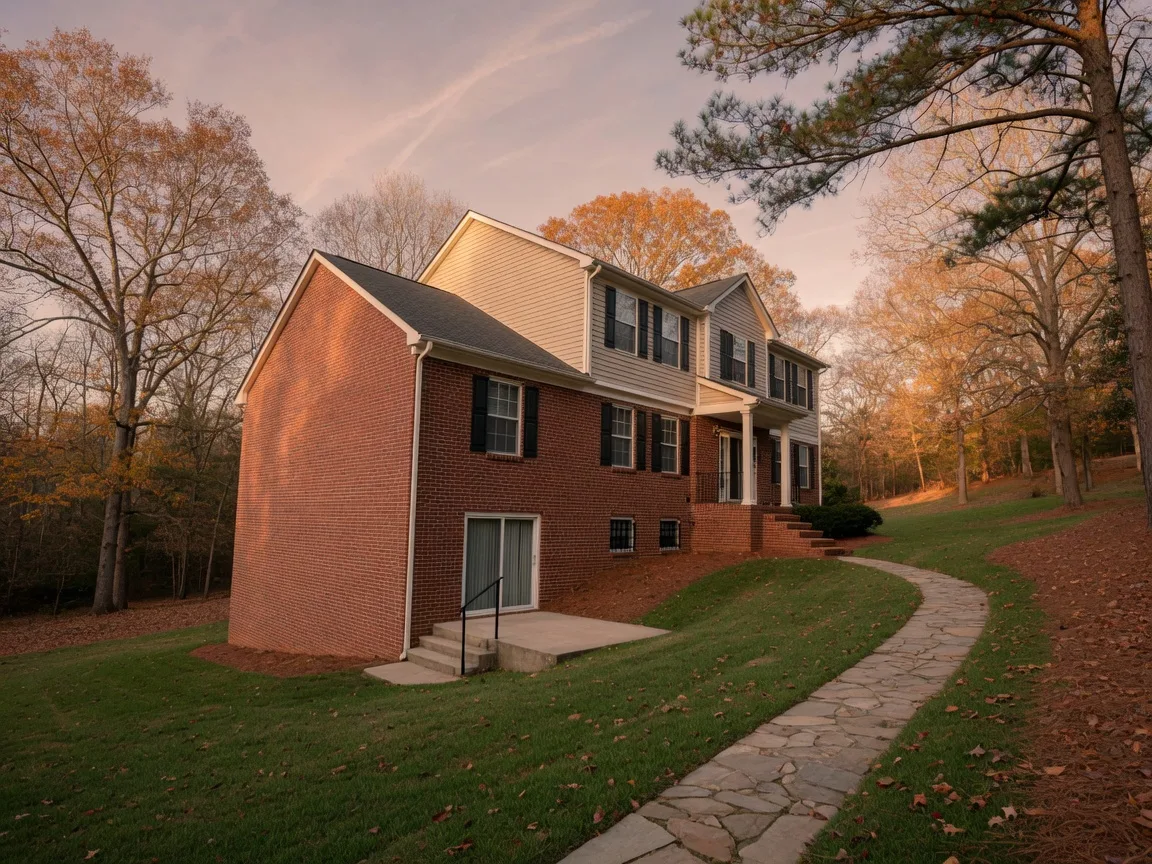
If a basement is a true must-have on your list, the practical search advice is this: tell your agent up front, and let them steer you to the sloped-lot neighborhoods where walk-outs actually exist. Homes with basements are rare enough that they rarely surface by accident. They also tend to command a premium, because buyers who want them are ready to pay for them. That is the opposite problem from up North: here, a basement is a feature you seek out, not a given you expect.
Where Do You Take Shelter During a Tornado Without a Basement?
This is the question I get from every Northeastern transplant, and it deserves a straight answer. North Carolina sees tornado warnings every year, and the Triangle sits inland where the strongest storms tend to pass through in spring and fall. A basement is one form of shelter, but it is not the only one, and most of the region gets by fine without one.
FEMA's guidance for a home without a basement: go to an interior room on the lowest level with no windows, typically a bathroom, closet, or hallway, and get under something sturdy like a mattress or a workbench. A stairwell enclosure also provides good protection. For stronger protection, a FEMA safe room built to code, or a ground-level storm shelter, is the gold standard, and both can be added to an existing home or included in new construction. Some Triangle buyers put a safe room on the must-have list instead of a basement for exactly this reason, and builders can price it into a new home for a fraction of a basement's cost.
The practical point: you do not need a basement to be safe, but you do need a plan. Read up on the county alerts for wherever you land in Wake, Durham, Johnston, or any of the surrounding counties, and decide now which room is your room.
What Do You Do About Storage Without a Basement?
This is the part Northerners feel every single move: the stuff that lived in the basement now needs a new home. The honest math is that a 2,000-square-foot Triangle home has roughly the same square footage you'd expect, minus a floor you didn't realize you were counting on.
The workable answers, in order of how often they actually get used: a two-car garage with an organized storage wall or overhead racks, an attic with a pull-down ladder and floor boards over the insulation, a storage shed, and furniture that doubles as storage. If you're building or buying new, ask about a bonus room above the garage instead of expecting a below-grade one. Realistically, most families find they purge a surprising amount of what they were storing, and the money they didn't spend on a basement goes toward a bigger home, a better lot, or a much better kitchen. Adjust the expectations, not the lifestyle.
Can You Build a Home with a Basement in Raleigh NC?
Yes, and plenty of buyers do. The winning condition is a sloped lot: a walk-out basement on a hillside is dramatically cheaper than a full underground dig on flat clay, because one full wall is already at grade and drainage mostly takes care of itself.
Go the flat-lot full-basement route and you are paying for deep excavation, dewatering in wet clay, engineered waterproofing, and drainage that a crawl space simply doesn't need. It can be done, and my team has seen some beautiful examples, but be honest about the economics: the premium is significant, and the resale market may not repay the whole thing, because the next buyer is a Triangle buyer who doesn't expect a basement. If a basement is non-negotiable for you, the smart play is usually a walk-out on a sloped lot, bought or built, over an expensive flat-lot dig.
Planning a Move to the Triangle?
Don't Let Foundation Surprises Upend Your Search
Every out-of-state buyer I work with has a list of assumptions from their old market, and most of them are wrong in a way that costs time or money in the Triangle. Basements are just the first one. I'll give you the unfiltered local read on foundations, crawl-space condition, storm shelter options, and what to do with all that stuff you were going to put downstairs, before you spend a single dollar on an offer.
- Zero-risk guidance: the Buyer Home Guarantee puts your peace of mind first when you buy with us.
- Honest answers on foundations, inspections, storage, and storm safety from a 20-year Triangle local, not a relocation sales pitch.
- Placement on the right neighborhoods and lots for whatever matters to you, basement or no basement.
Frequently Asked Questions
Why don't homes in Raleigh NC have basements?
Because the ground freezes only 12 to 18 inches deep, the red clay pushes water against below-grade walls, the water table is high in parts of the region, and Triangle buyers don't expect basements. Digging a full basement on flat clay means paying for deep excavation and serious waterproofing that the market won't repay, so builders put the money into living space instead.
Do any homes in the Triangle have basements?
Yes, around 6 to 7 percent of homes in the Raleigh and Chapel Hill metro areas, per foundation contractors. They are almost always walk-out designs on sloped lots in hilly parts of the region. Statewide the share swings wildly: more than a third of homes in Winston-Salem have basements, while coastal areas are under 1 percent.
Is a crawl space bad compared to a basement?
No, a properly maintained crawl space is the right foundation for this climate. It keeps plumbing and ductwork reachable, and an encapsulated, conditioned crawl space stays dry and pest-free. The problems show up only when a crawl space is ignored: standing water, mold, or rodents, all of which a good inspection will catch before you close.
Where do you take shelter during a tornado without a basement?
An interior ground-floor room with no windows, like a bathroom, closet, or hallway, under something sturdy, per FEMA guidance. For stronger protection, a FEMA safe room or ground-level storm shelter is the best option in a basement-free home, and it's a common builder upgrade in the Triangle.
Can you build a home with a basement in Raleigh NC?
Yes, and a walk-out on a sloped lot is the cost-effective way to do it. A full basement on flat clay adds deep excavation, dewatering, and waterproofing that a crawl space doesn't need, and resale may not recover the full premium since Triangle buyers don't expect basements. Get a builder's quote for your specific lot before you commit.
The Bottom Line
No basement does not mean no comfort, no storage, or no safety. It means the Triangle spends its money above grade, and once you adjust the mental model, you'll hardly miss the floor that isn't there. Crawl spaces work, a well-planned garage and attic cover storage, a safe room covers storms, and on a sloped lot, a walk-out basement can still be yours if it's truly a must.
What a basement absence never tells you is what else the house has, and that's where a local perspective pays for itself. Bring your list of non-negotiables, basement or not, and let's look at the Triangle the way its own residents do.
Moving Down from the North?
Let's Talk About What the Listings Won't Tell You
Call or text 919-899-2320 or book a call. We'll walk through foundations, crawl-space condition, storage, storm shelter options, and which Triangle neighborhoods fit the way you actually live, with zero pressure and zero hype.
Disclaimer
Foundation share estimates for the Carolinas and the Raleigh/Chapel Hill metro are drawn from the sources below and are industry estimates, not official censuses. New-construction foundation data is from the U.S. Census Bureau and NAHB. All figures are as of late October 2026, are approximate, and are provided for general information only. Storm shelter guidance reflects general FEMA recommendations; verify local county alert procedures before you move.
Sources
- NAHB Eye on Housing, "Foundation Types in 2024" (U.S. Census Survey of Construction data, South Atlantic division)
- Tar Heel Basement Systems, "Which North Carolina Cities Have the Most Basements?"
- Carolina Foundation Solutions, "The Percentage of Basements in the Carolinas"
- FEMA, Tornado safety guidance for homes without basements
Written October 30, 2026, by Phil Slezak, Real Estate Broker, Phil Slezak Real Estate, brokered by LPT Realty.

Phil Slezak
Real Estate Broker · NC #242173 · 20+ years in the Triangle
I moved to the Triangle from Connecticut more than 20 years ago, and my team has represented thousands of buyers and sellers across Raleigh and the Triangle with over $200 million in sales. I know exactly which "back home" expectations survive contact with this market, and which ones you should leave behind, and I'll tell you the truth about both.
Book a callRelated Articles
Relocation
Buying a Home in Raleigh from Out of State: The Sight-Unseen Playbook
New Construction
New Construction vs. Resale in Raleigh NC (2026): Why the Math Flipped
Relocation Guide
18 Things You Need to Know BEFORE Moving to Raleigh, NC in 2026
Moving & Commuting
How Bad Is Traffic in the Raleigh Triangle in 2026? Real Commute Times
Phil Slezak Real Estate brokered by LPT Realty