Living in Apex, NC (2026 Guide)
Apex combines historic downtown character, quad-corridor commute access, and a $3 billion Veridea development that redefines regional master-planned growth.
This complete 2026 guide covers home prices, neighborhoods, schools, commute times, cost of living, and the honest truth about what it is really like to live here — from a licensed broker who has spent 20+ years helping buyers find the right fit in the Triangle.
~75,000
Population & Growing
~$707K
Median Home Price
#1
Safest City in NC
$3B
Veridea Investment
This guide is researched and written by Phil Slezak, a licensed NC broker who has lived in Apex since 2004 and has helped 500+ buyers and sellers across the Triangle.
Living in Apex, NC: The Complete Package
Thinking about living in Apex NC or researching a future move to the area? In 2026, the local landscape is defined by three notable data points: a median home price of $707,025 per Doorify MLS July 2026, a growing population of roughly 75,000, and the 1,100-acre master-planned Veridea development that is projected to bring approximately 8,000 jobs to southwest Wake County. This unique municipal corridor seamlessly integrates its historic commercial core with quad-corridor transit access and significant long-term capital investment.
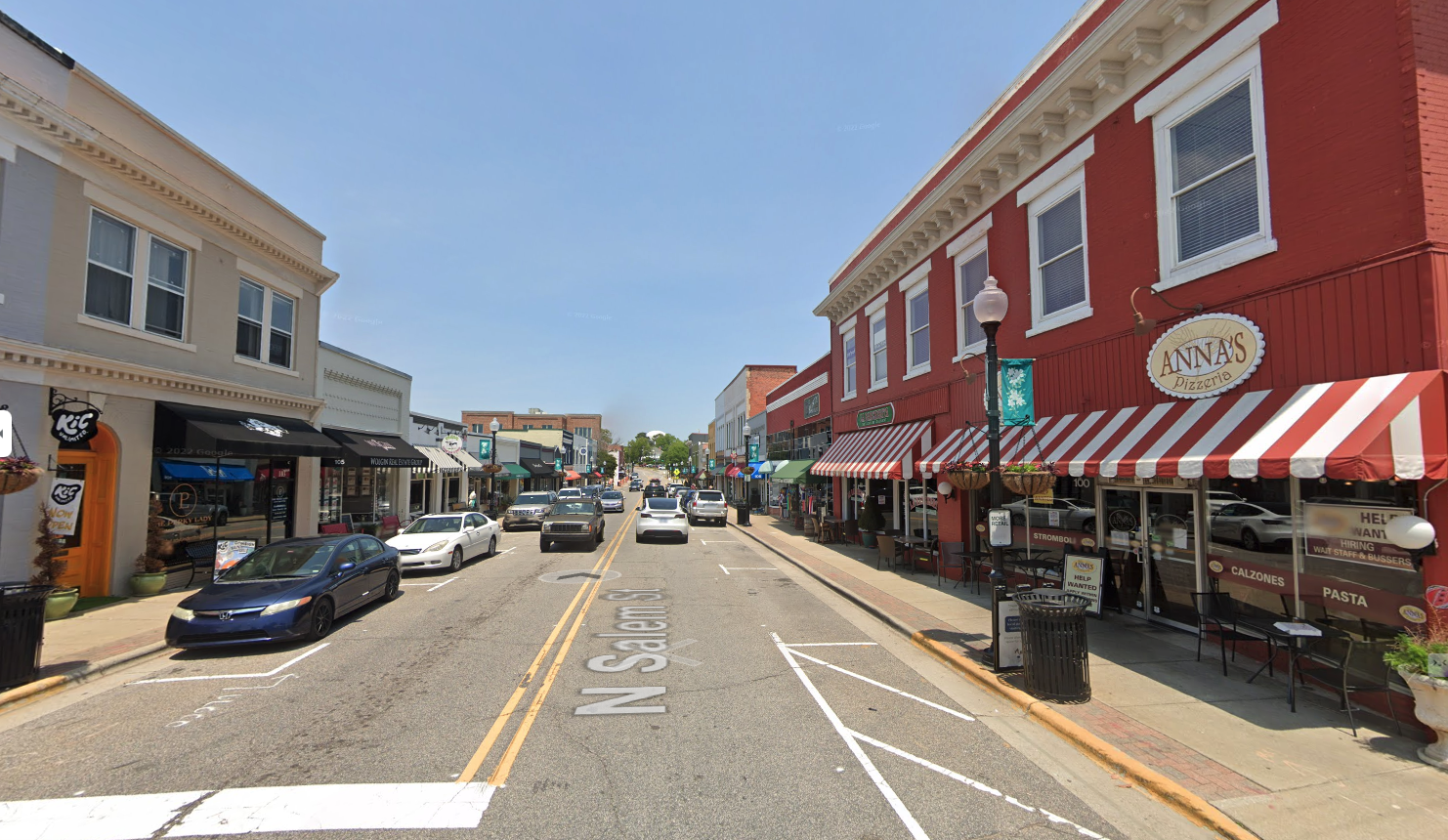
The Apex real estate market in 2026 offers an exceptional dynamic for relocators: a rare balance of historic preservation and modern infrastructure. It stands as a premier example of a western Wake County town where you can explore the pedestrian-friendly shops along Salem Street, enjoy a live production at the Halle Cultural Arts Center, and drive just 15 minutes to one of the largest mixed-use commercial and life science developments in North Carolina's history. (Local Note: The historic Salem Street corridor is currently undergoing a highly anticipated pedestrian streetscape revitalization throughout 2026, which will add expanded curbless brick sidewalks and outdoor gathering spaces).
This comprehensive 2026 guide covers local property metrics, neighborhood infrastructure, regional education options, typical Apex commute times, and the projected cost of living in Apex to provide an objective look at the market — leveraging 20+ years of local brokerage experience helping relocators find the right fit. For buyers navigating an out-of-state relocation, the area represents a highly complete suburban market centered around a thriving, walkability-focused downtown core that newly built master-planned alternatives simply cannot replicate.
Real Client Voices
What Triangle Buyers Say About Working With Phil
Relocating to a new market is a big decision. Here is what a few of the families Phil has helped move to the Triangle say about the experience, straight from their own reviews.
“Moving our entire family from out of state was incredibly overwhelming until we connected with Phil. His street-by-street knowledge of the Triangle and his incredible Relocation Guide gave us complete clarity on schools and commutes. He didn't just find us a house; he truly brought us home.”
The Chandras
Relocated to Cary, NC
“Phil gives you the absolute real talk you need in this market. No pressure, no sales pitches, just pure local data and honest guidance on growth corridors. What's even funny is that Phil explained why we shouldn't buy the house we loved, saving us from a bad deal!”
David & Sarah K.
Buyers in Raleigh, NC
“Phil is not just your realtor, he becomes part of your journey. He was there every step of the way, and I'd recommend him to anyone buying real estate in the Triangle. It took over a year to find the right home, and he never gave up on us.”
Pamela Heaggins & Walter Price
Buyers in Mebane, NC

What's Inside This Guide
Apex Market Snapshot (2026)
| Metric | Value (2026) |
|---|---|
| Median Home Price | ~$707,025 |
| Price per Sq Ft | ~$237 |
| Avg Days on Market | 35-50 days |
| Median Rent | ~$2,100/mo |
| Year-over-Year Price Change | +4.1% |
| Active Inventory | ~350 homes |
| Sale-to-List Price Ratio | ~99% |
| Population | ~75,000 |
| Median Household Income | ~$144,000 |
Sources: Zillow, Redfin, Wake County Tax Administration | Last updated September 2026
The Apex real estate market exhibits $707,025 per Doorify MLS July 2026, supported by a steady year-over-year appreciation rate of 4.1%. Active inventory hovers near 350 properties, offering relocators looking to buy a house a broader selection of housing stock than in previous cycles. Properties typically accept an offer within a 35-50 day average, consistently closing near 99% of full list price. When evaluating the overall cost of living in Apex, housing and localized infrastructure options carry a higher median price point compared to outlying southern corridors like Holly Springs or Fuquay-Varina. However, the highly connected quad-corridor transit infrastructure, pedestrian-friendly downtown commercial core, and surrounding commercial employment investment draw consistent demand from buyers prioritizing short travel times to regional tech centers.

Phil's Perspective
"Over the years, my personal relocation journey has taken me through some incredible places — from the coastal shores of Westbrook, Connecticut and Hilton Head Island, South Carolina, to the tropical climates of Nassau in the Bahamas and the Cayman Islands, and down to Winter Park, Florida. Having personally navigated almost every type of move, I know firsthand the mix of excitement and anxiety that comes with evaluating a completely new market from the outside. That experience is why we built this site. We don't deal in generic portal data; we focus on real transit variables, local school infrastructure realities, and the honest, street-level insights you need to make a highly calculated decision. Having spent 22+ years helping relocators analyze the southwest Wake County corridor, I've watched this market evolve firsthand — and determining which municipal layout fits your unique daily routine is the first and most important step of the journey."
— Phil Slezak, Real Estate Broker, Phil Slezak Real Estate
Why People Are Moving to Apex, NC in 2026 (An Honest Look)
Apex has ranked among the fastest-growing municipalities in North Carolina for over a decade, with population growth accelerating steadily since 2010. That sustained growth traces back to four structural advantages in how the town is laid out and connected — not a single cause, but a compounding set of factors that keep drawing buyers and investment to this southwest Wake County corridor.
Four-Highway Commute Access
Apex sits at the convergence of NC-540, US-1, US-64, and NC-55, giving residents multiple independent routes to the Triangle's major employment centers. Research Triangle Park is typically a 15-25 minute drive via the NC-540 Triangle Expressway, downtown Raleigh runs 15-20 minutes via US-1, and RDU International Airport is 20-25 minutes out. Few Triangle towns offer this many direct highway options from one location. The continued build-out of the NC-540 outer loop has made southwest Wake County one of the more commute-flexible pockets in the region.
The Veridea Growth Signal
Veridea is a roughly 1,100-acre, master-planned mixed-use development along Old US-1, with total investment projected near $7 billion at full build-out over the next decade-plus. Within that footprint, UNC Health and Duke Health are jointly developing NC Children's — a freestanding pediatric hospital campus of about 230 acres — expected to bring thousands of jobs to the area once construction, targeted to begin in 2027, is complete. Buyers evaluating homes for sale in Apex NC in 2026 are often positioning themselves ahead of this employment and infrastructure build-out. Whatever the exact timeline, a project of this scale and institutional backing functions as a long-term economic anchor for southwestern Wake County.
A Preserved Historic Core
While several Triangle towns are building lifestyle centers from scratch, Apex has maintained a century-old commercial core along Salem Street. The district includes locally owned shops and restaurants and the Halle Cultural Arts Center, and the town's Social District designation supports a walkable downtown experience. For anyone comparing Raleigh, Cary, and Apex and looking for a pedestrian-friendly, historically distinct downtown outside a dense urban core, Salem Street is a clear point of differentiation.
Completed Park Infrastructure
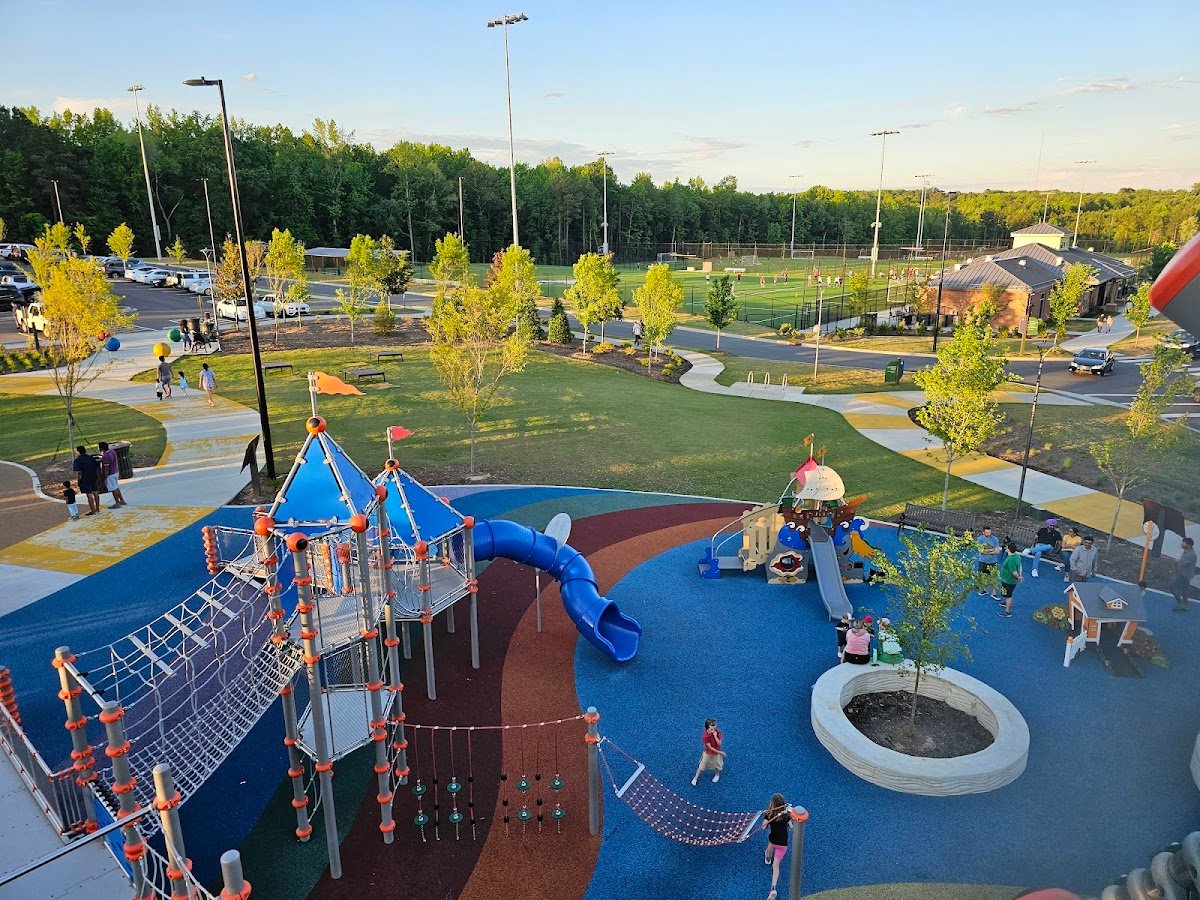
Apex's outdoor amenities are anchored by the 92-acre Pleasant Park, along with Apex Nature Park, the Beaver Creek Greenway, and access points to the multi-county American Tobacco Trail. Unlike some growing suburbs where park infrastructure is still in planning or early construction, Apex's flagship parks are already built and in daily operation — giving residents immediate access to completed recreation space rather than a future promise.
Homes for Sale in Apex
Explore the most up-to-date homes for sale in Apex, updated hourly from the local Wake County MLS. Whether you are searching for historic downtown properties, new construction in master-planned communities, or established resale neighborhoods, you can filter active listings below with no login required.

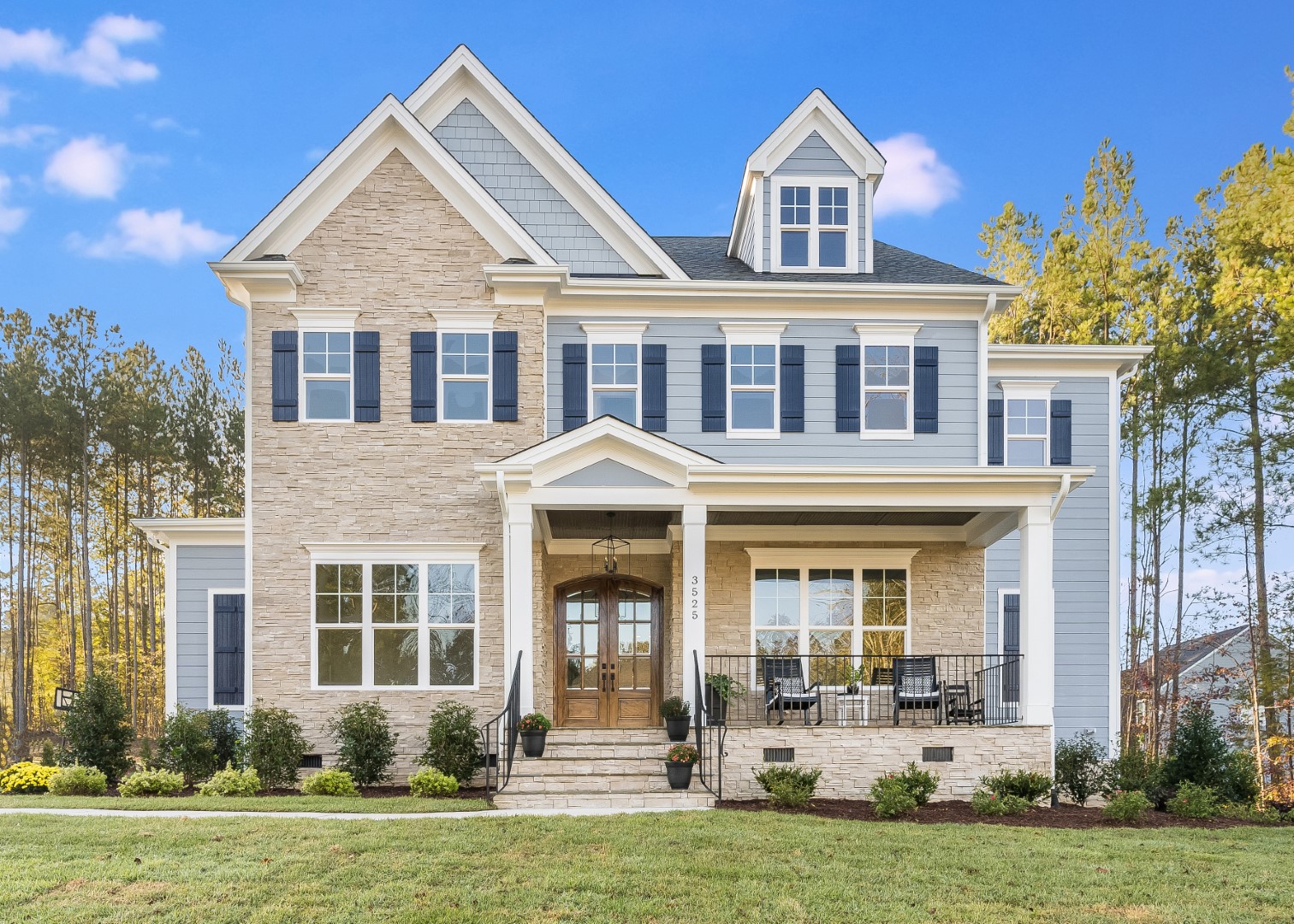
Apex Housing Guide: New Construction or Resale
The Apex housing market in 2026 offers a balanced choice between established resale neighborhoods and ongoing new construction. According to mid-2026 regional market registries, home values across the town currently track near a $620,000 median estimated value, though specific figures fluctuate monthly based on property size and inventory pools. Attached townhomes near the town center frequently start in the mid-$300s, while larger custom properties in low-density corridors regularly exceed $1 million. The highest concentrations of active inventory sit along the US-1 corridor and extend west toward the Holly Springs municipal border.
One factor worth understanding for out-of-state relocators is how large master-planned communities shape local inventory. Established developments like Sweetwater and Bella Casa built out over the past several years and now function as mature, amenity-rich neighborhoods with a stable mix of resale housing and remaining new-build phases. The more active new-construction growth in 2026 is concentrated in the southern US-1 corridor and in the newer subdivisions taking shape near Veridea, giving buyers open to new builds a wider set of options than tighter, resale-only submarkets.
Where New Construction Is Occurring
Development activity follows a clear geographic pattern. The US-1 corridor extending south remains a primary growth sector in 2026, with newer communities continuing to add inventory. Western Apex near the 1,100-acre Veridea development is also seeing steady infrastructure and residential planning activity as buyers position themselves near the area's long-term job growth. These two corridors are the primary target zones for buyers specifically prioritizing new construction in Apex.
Established Resale Communities
For relocators who prioritize mature landscaping, larger average lot sizes, and settled streetscapes, the resale market offers a strong alternative. Neighborhoods such as Scotts Mill, Haddon Hall, Abbington, and Bella Casa feature homes built over the past two decades, often boasting substantial tree canopy and established lot lines. Homes within the central perimeter near historic downtown continue to show strong demand per square foot given their close proximity to the pedestrian Salem Street corridor. Resale inventory has stabilized relative to the tight conditions of recent years, giving buyers more balanced conditions than at most points since 2020.
Types of Homes for Sale in Apex, NC
1. Master-Planned Communities (New & Recently Built)
Developments like Sweetwater and Bella Casa, along with newer subdivisions along the southern and western corridors, make up a large share of current inventory. These properties typically include contemporary floor plans, energy-efficient construction, and shared amenities such as pools, clubhouses, and pocket parks. Prices generally range from the mid-$400s to the high-$700s depending on square footage and lot size. HOA fees typically run $1,200-$3,600+ annually and should be factored into the overall cost of living in Apex.
2. Residential Resale Single-Family Homes
Neighborhoods like Scotts Mill, Haddon Hall, and Abbington offer single-family detached homes with mature trees and established layouts. Prices generally range from the mid-$400s to over $1 million depending on age, condition, and location. Homes near downtown draw steady interest from buyers who want walkability to Salem Street's dining and cultural offerings, while other established neighborhoods appeal to buyers looking for larger, lower-density lots.
3. Higher-Tier & Custom Acreage Properties
Custom home sites in enclaves like Ivory Hills and across western Wake County make up the upper end of Apex's inventory, with values regularly exceeding $1.1 million. These properties typically sit on larger parcels, often an acre or more, with premium finishes and lower density. They draw consistent interest from move-up buyers and relocators prioritizing privacy and space while staying within convenient reach of regional employment hubs.
Phil's Perspective
"The biggest calculation error I see buyers make in Apex is assuming all residential developments offer the same long-term cost structure. Build metrics, average lot dimensions, and HOA covenants vary dramatically across the region. It is common for relocators to fall in love with a master-planned model property, only to later realize that the structured association fees significantly impact their monthly overhead while the lot footprint is less than half the size of an established resale property they previously bypassed. Your specific spatial and financial priorities should drive your acquisition strategy, not temporary interior staging. Make it a priority to tour both a developing phase and an established community like Haddon Hall or Scotts Mill before deciding which neighborhood infrastructure aligns with your lifestyle."
- Phil Slezak, Real Estate Broker, Phil Slezak Real Estate
Most Searched Neighborhoods in Apex: Finding Your Right Fit
The residential landscape across Apex ranges from established low-density subdivisions to expansive, highly amenitized master-planned developments. Pinpointing the right geographic pocket depends entirely on your target commute routing, long-term spatial requirements, and specific market variables. Below is an objective analysis of the primary areas buyers evaluate when researching Apex NC neighborhoods.
Central & Established Walkable Corridors
1. The Villages of Apex
Median estimated value in 2026: $395,900 to over $700,000+
What to Know
Positioned less than one mile from historic Salem Street, The Villages of Apex stands out as one of the municipality's premier mixed-use, "live-work-play" master-planned developments, a 202-acre footprint organized into distinct sub-villages including The North Village, The South Village, and Old Mill Village. Designed for buyers prioritizing near-downtown proximity alongside modern community infrastructure, it offers exceptional internal sidewalk connectivity, an active neighborhood clubhouse with a six-lane pool and fitness facilities, a dedicated dog park, and a stocked fishing pond with paved trails linking into the town's greenway network. Buyers should note that density runs higher here than in traditional suburban developments, resulting in smaller private yard footprints and shared alleyway parking configurations for certain unit types.
Housing Styles
The real estate footprint spans a dynamic range of residential products, offering multi-level townhomes, modern row-style condominiums, and mid-to-large single-family detached homes built primarily from the 2010s into the early 2020s across multiple builder phases. Architectural designs lean toward Craftsman and neo-traditional aesthetics, featuring covered front porches, attached rear garages, and flexible multi-story floor plans that cater to low-maintenance lifestyle preferences.
Why People Move Here
Walkable proximity to Downtown Apex dining and events paired with turn-key community amenities. It provides an attractive entry-level to mid-tier price point for buyers seeking an active community environment without sacrificing rapid connectivity to the Triangle region via nearby NC-55 and the US-1/US-64 corridors.
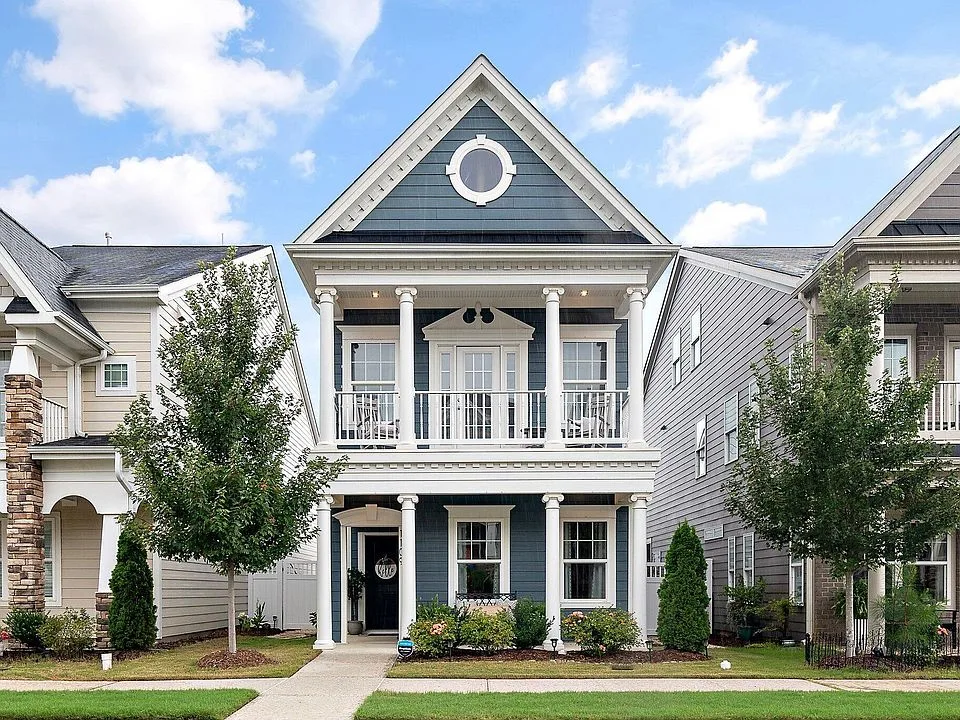
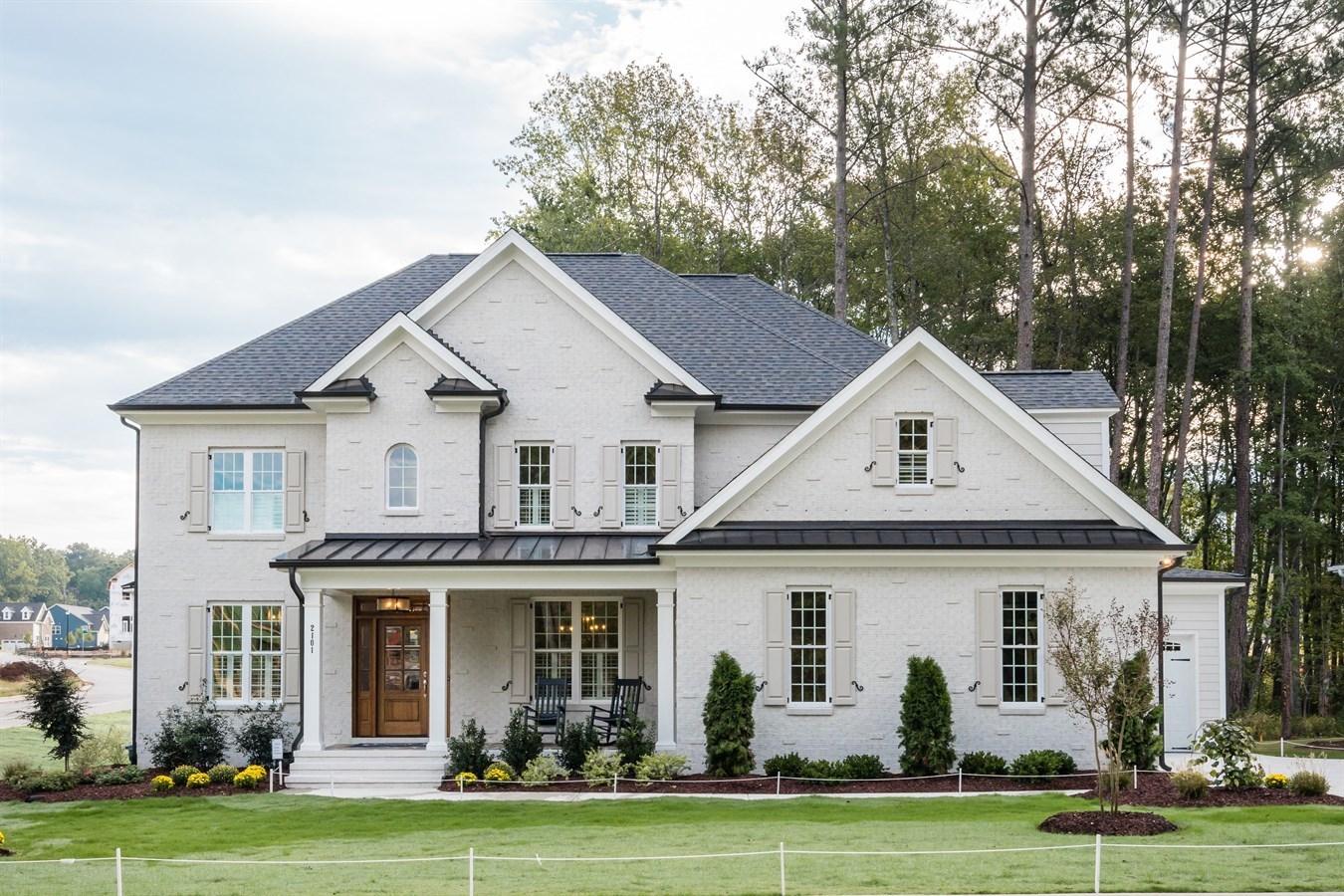
2. Bella Casa
Estimated Market Range: $550,000-$950,000+
Bella Casa is one of the largest multi-phase master-planned developments in southwest Wake County, initiated in the mid-2000s and progressing through subsequent build phases to achieve full layout maturity.
What to Know
Spanning multiple distinct enclaves, including Bella Casa West, The Estates, and Bella Casa Townhomes, this expansive neighborhood offers a highly cohesive master-planned environment. Developed from the mid-2000s onward, the neighborhood has successfully transitioned out of heavy initial development phases into a beautifully mature asset. Its extensive footprint wraps around natural topography, providing scenic retention ponds, wooded buffers, and uniform curb appeal that appeals heavily to relocators analyzing the broader market.
Housing Styles
Elegant single-family detached homes and spacious townhomes featuring transitional architecture with stone accents and fiber-cement siding. Single-family homes frequently offer expansive layouts with flexible bonus rooms and open-concept first floors. Siting varies by phase, with the earliest footprints reflecting mid-2000s design and newer construction composing the final street expansions.
Why People Move Here
Premium neighborhood-specific recreation assets, including three separate community swimming pools, multi-use clubhouses, tennis courts, and pickleball lanes. Furthermore, the community features direct pedestrian access to the adjacent 160-acre Apex Nature Park and sits just minutes from Apex Community Park and its signature 50-acre lake.
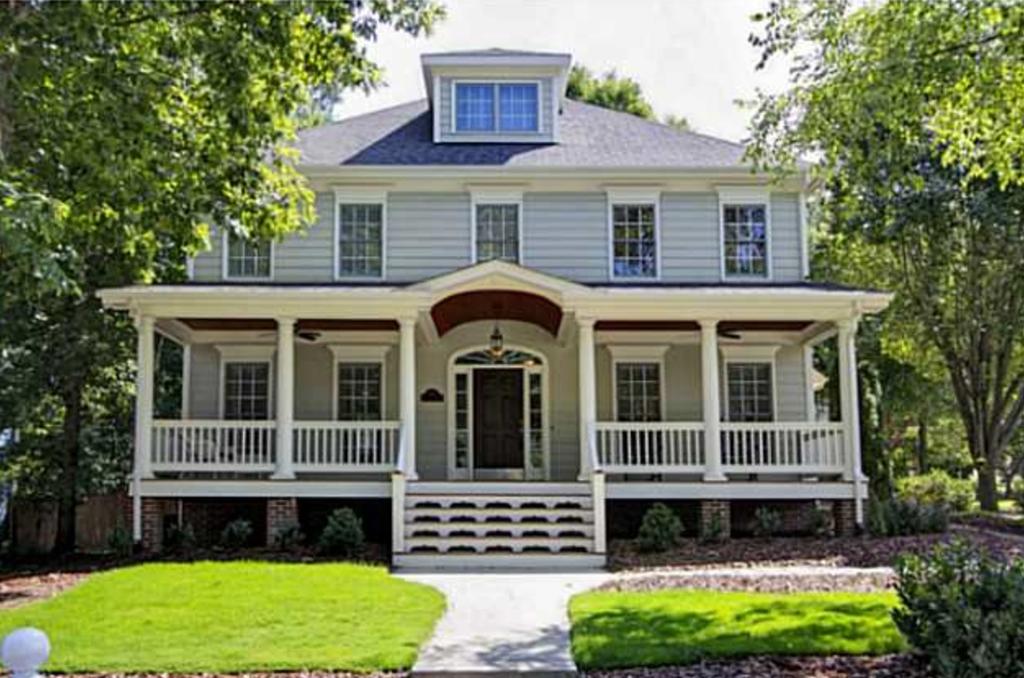
3. Scotts Mill
Median estimated value in 2026: $450,000 to $800,000+
What to Know
Developed primarily from the late 1990s through the 2000s along Apex Barbecue Road, Scotts Mill represents a highly structured and complete subdivision framework. It attracts buyers who want central municipal access and established infrastructure without the pricing premium associated with downtown infill lots. The neighborhood layout emphasizes localized pocket parks and a car-friendly grid that simplifies everyday transit routines.
Housing Styles
Traditional single-family homes and attached townhome options dominate the landscape, with Craftsman, Transitional, and Colonial architectures serving as the core aesthetic. Properties generally cluster between 2,000 and 3,500 square feet, offering highly optimized multi-level floor plans. Mature landscaping and substantial tree canopies give the streets a settled, park-like character.
Why People Move Here
The community features excellent dedicated amenities, including the central Scotts Mill Pool and Clubhouse and residents-only sports courts. It provides seamless access to the Beaver Creek Greenway trail connectors for pedestrian travel, and sits just minutes from daily retail conveniences like The Pointe at Lake Castleberry shopping plaza.
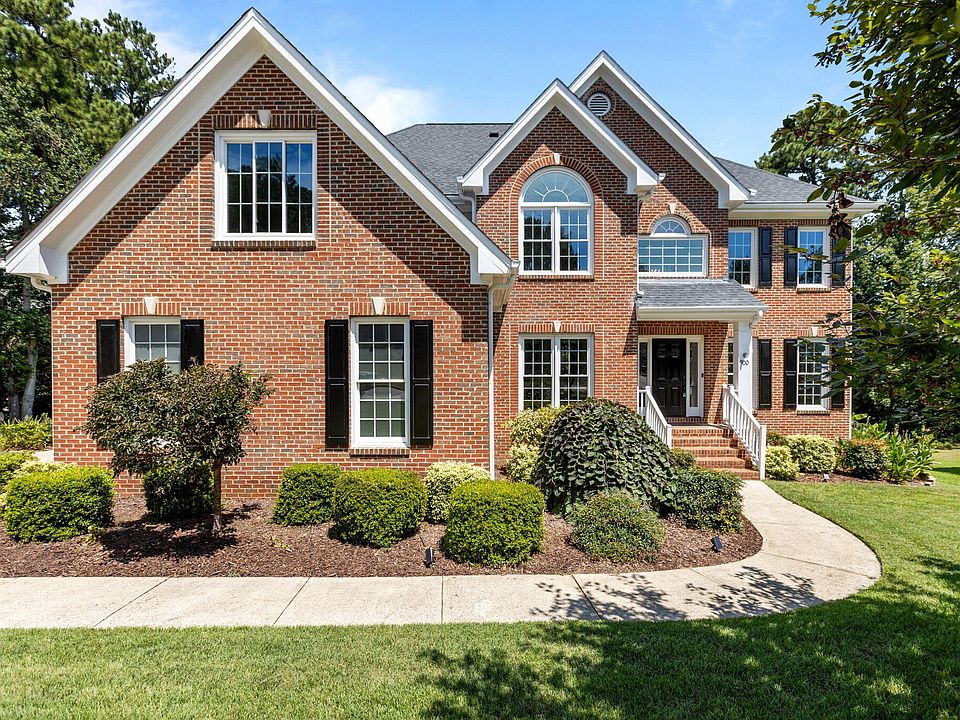
4. Haddon Hall
Median estimated value in 2026: $350,000 for attached units to over $900,000+ for grand single-family layouts
What to Know
Positioned immediately adjacent to the Beaver Creek Commons commercial corridor, Haddon Hall is widely recognized for its exceptional location efficiency. For out-of-state buyers tracking Apex NC real estate parameters who want a lower-density neighborhood feel without sacrificing rapid proximity to big-box retail and grocery anchors, Haddon Hall stands as a master-class option. The older sections of the subdivision offer some of the most private, low-density lot spaces available within the central perimeter of the town.
Housing Styles
Inventory is highly diverse across distinct phases, ranging from townhomes and condominiums in sectors like The Crossings and Golder's Green, up to expansive detached single-family layouts scaling from 2,500 to 4,500 square feet. Traditional brick fronts, side-load garages, and deep lot lines averaging a quarter-acre to over a half-acre are highly characteristic of the single-family enclaves.
Why People Move Here
Unmatched proximity to major shopping centers while maintaining a quiet, wooded neighborhood ambiance. Neighborhood amenities include a large central lake, walking trails, swimming pools, and tennis facilities, while its central position minimizes travel times to both the NC-540 toll loop and US-64.
Master-Planned & Transition Corridors
5. Sweetwater
Estimated Market Range: $500,000-$900,000+
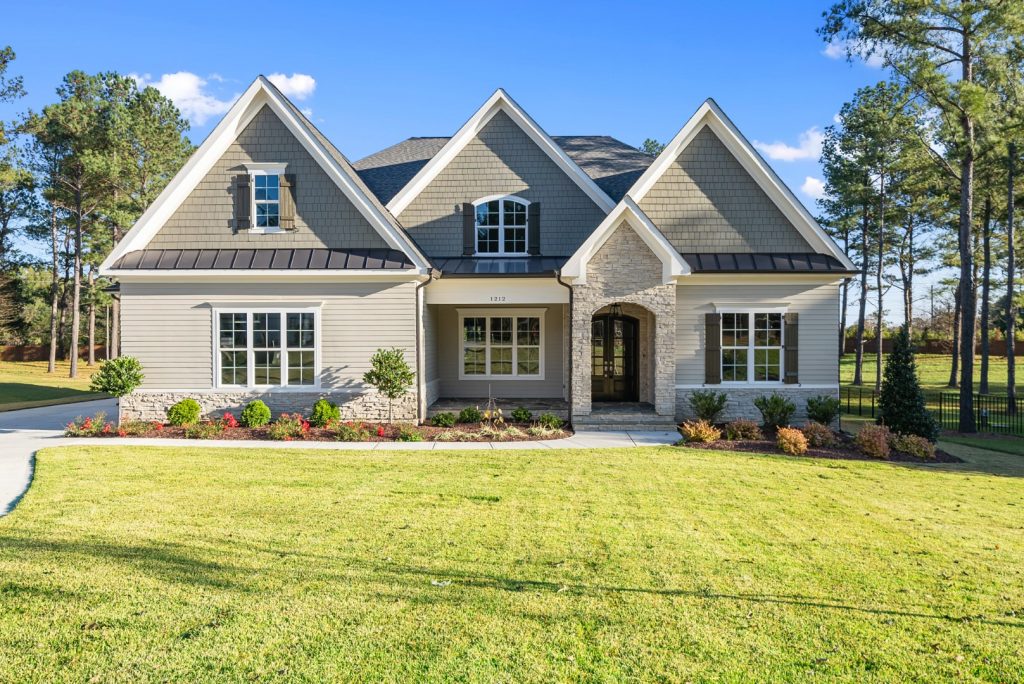
Sweetwater represents a modern execution of a New Urbanism master-planned layout, incorporating an integrated town center framework alongside its residential phases.
What to Know
Sweetwater is a premier western Wake County development designed to deliver a self-contained lifestyle experience. As the community progresses through its final development phases, the newly operational Sweetwater Town Center introduces walkable commercial infrastructure, including recent grocery additions like Harris Teeter and localized retail spaces, directly to residents' doorsteps. Buyers looking at homes for sale in Apex NC within this sector should factor the structured HOA fee tiers against the extensive lifestyle assets provided on-site.
Housing Styles
Features a distinct architectural palette defined by vibrant colors, modern Craftsman, and coastal-suburban styles with prominent front porches and rear-loading garages. Construction standards emphasize modern energy efficiency, open-concept interior configurations, and smart-home technology integrations. Lot layouts are high-density, prioritizing communal open green space over large private backyards.
Why People Move Here
Resort-style amenities featuring a multi-lane swimming pavilion, clubhouse, playground networks, and the hosting of regional gatherings like the monthly Apex Underground Market series. Its strategic position on Richardson Road offers direct, frictionless access to the NC-540 Triangle Expressway for fast commuting across the region.
6. Abbington
Median estimated value in 2026: $450,000 to $900,000+
What to Know
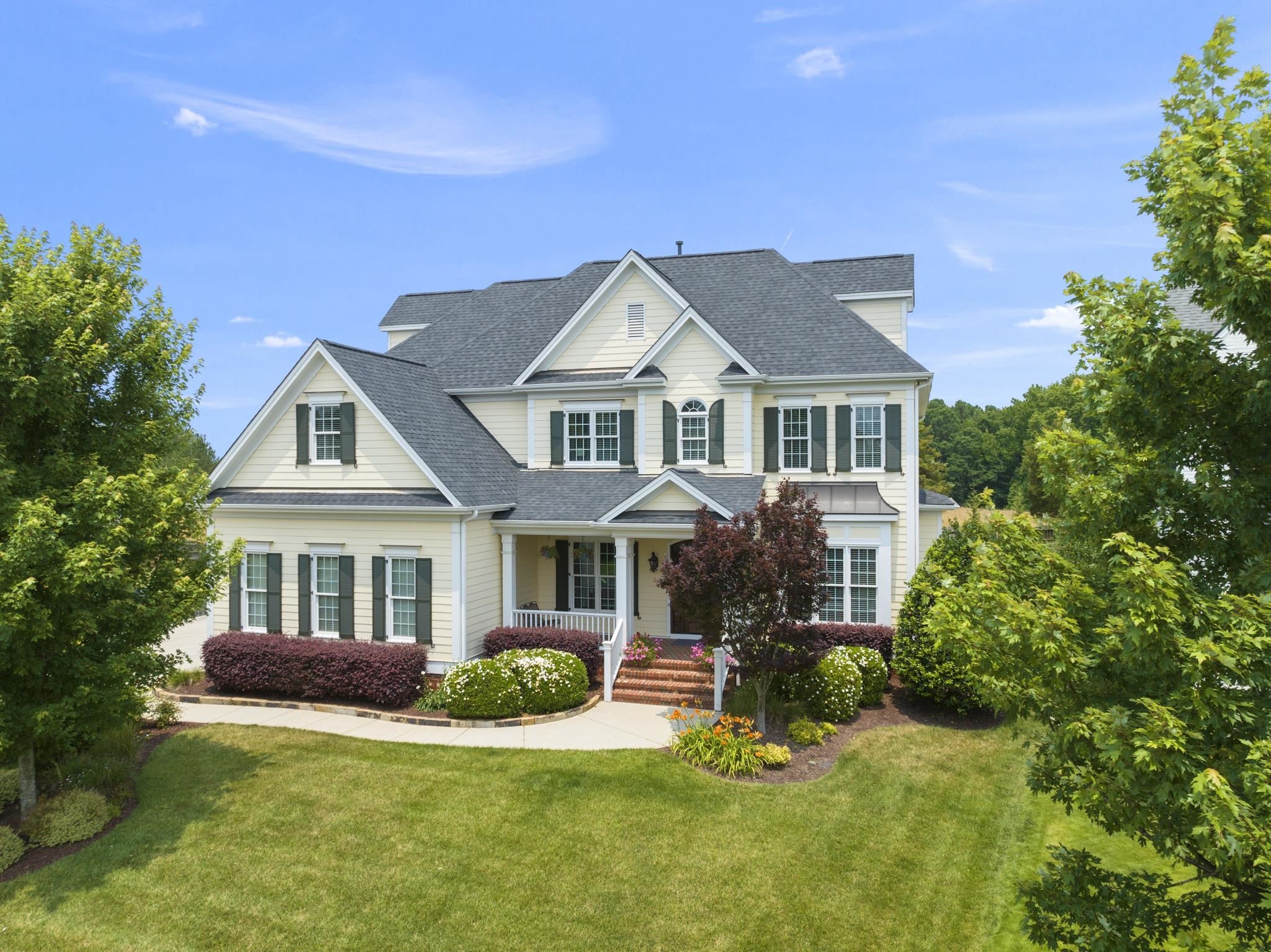
Featuring homes constructed primarily between 1999 and 2008, Abbington stands as a highly stabilized and beautifully maintained neighborhood. For out-of-state buyers evaluating the cost of living in Apex alongside daily travel efficiencies, Abbington's northern positioning makes it one of the most commute-flexible addresses for professionals tracking daily to RTP. The neighborhood operates under clear, structured HOA guidelines that ensure highly uniform property preservation across the entire subdivision.
Housing Styles
Large, stately single-family detached homes with uniform transitional architecture, featuring premium crawl-space foundations, fiber-cement or brick exteriors, and side-loading garage configurations. Properties typically sit on well-proportioned, established lots ranging from 0.25 to nearly 0.5 acres, featuring mature hardwood trees and wide street layouts.
Why People Move Here
A highly efficient commute path to Raleigh and Durham via the immediate highway junction, paired with classic neighborhood amenities including a competition-sized swimming pool, lighted tennis courts, and a central playground asset.
7. Salem Village
Median estimated value in 2026: $550,000 to $1M+
What to Know
Situated just south of the main municipal center with fast access to US-1, NC-55, and the NC-540 outer loop, Salem Village is a flagship suburban master-planned community favored by commuters working in Raleigh, Durham, or RTP. Organized into distinct sections including The Preserve, it is widely known for its resort-style amenities — highlighted by dual community pools, a 24-hour fitness center, a playground, picnic areas, and a multi-purpose court and ball field. Buyers should note that while the neighborhood features extensive interior sidewalk networks, daily errands and visits to Downtown Apex require a brief driving commute. Inventory turnover runs limited, so buyers targeting this community should be prepared to move decisively when listings surface.
Housing Styles
Built primarily in the 2012–2018 window, the residential mix is dominated by spacious single-family detached homes generally ranging from 2,300 to over 4,400 square feet on lots of roughly 0.16 to 0.25 acres. Architectural aesthetics lean toward modern Craftsman and transitional builds featuring brick or stone accents, fiber-cement siding, open-concept living, flexible multi-story layouts with first-floor owner's suite options, and screened outdoor porches. Quarterly HOA dues (approximately $255) support the shared amenity infrastructure.
Why People Move Here
Turnkey modern homes with a robust internal amenity package paired with quick vehicular access to major employment hubs. It captures consistent search demand from buyers seeking generous interior square footage, newer construction vintage, and a classic neighborhood setting with an active calendar of community events.
8. Waterford Green
Median estimated value in 2026: $455,000 to over $625,000+
What to Know
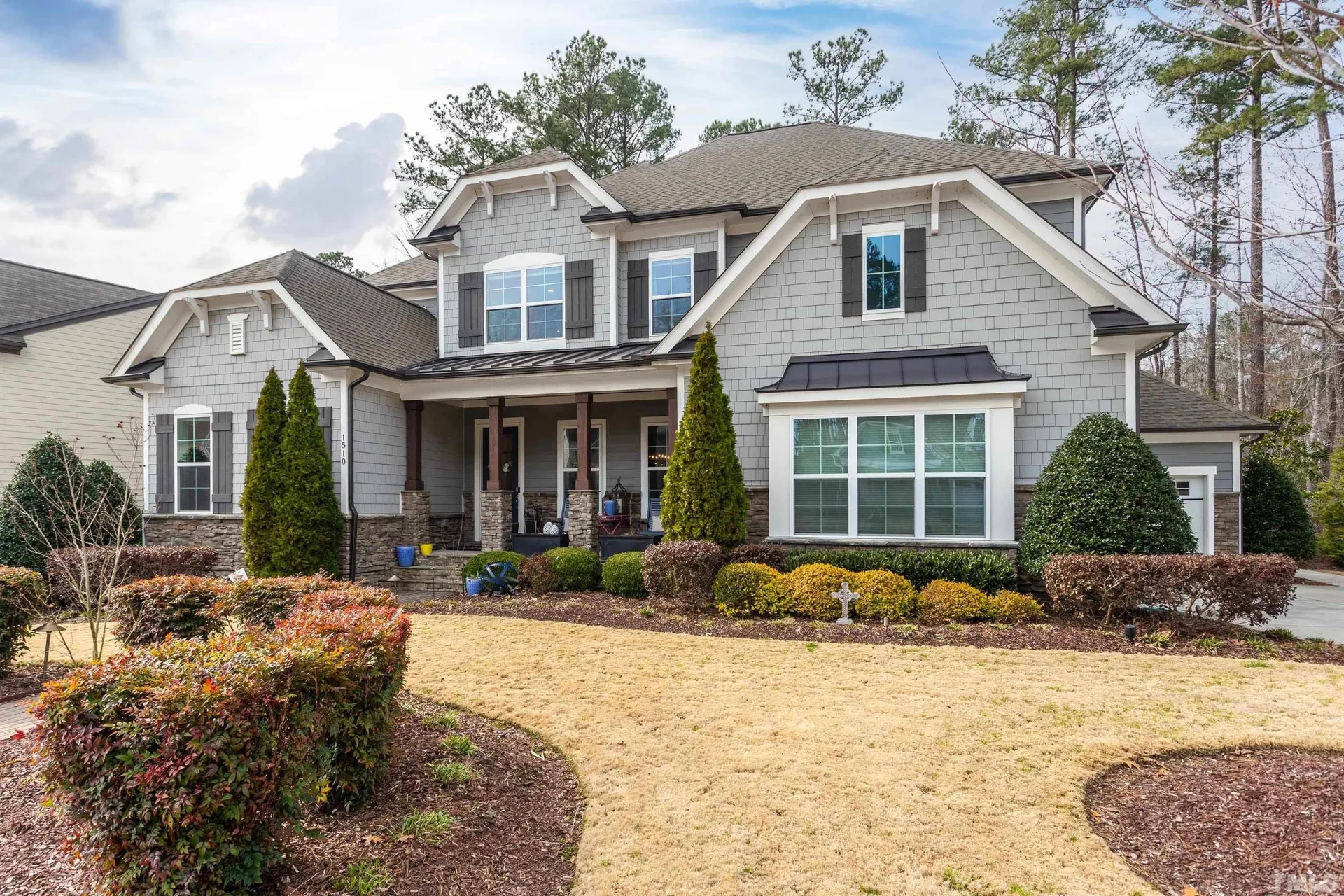
Waterford Green is a classic, established community of 403 homes organized into seven distinctive sections, located in central Apex with US-1 directly at the neighborhood entrance. A primary driver for relocators targeting this area is its direct adjacency to Seagroves Farm Park, giving residents immediate walk-out access to trails, playgrounds, open green space, and fishing ponds without getting in a car — a combination of bordering parkland plus a full internal amenity package that few established Apex neighborhoods can match. Buyers seeking an established community feel will appreciate the mature streetscapes and lack of dense new-construction packing, though homes from the neighborhood's primary development era may warrant cosmetic or system updates compared to turn-key modern builds.
Housing Styles
Traditional single-family detached homes constructed between 1993 and 1999, centering on classic Colonial Revival, transitional traditional, and functional two-story designs, with third-floor bonus and storage configurations in larger plans. Properties generally sit on quarter-acre parcels — with select larger wooded lots — featuring established landscaping, fenced backyards, and mature tree canopy that delivers genuine privacy.
Why People Move Here
Exceptional value for square footage in a central location, paired with a complete HOA amenity package — community pool, tennis and pickleball courts, basketball court, and playground — and direct pedestrian access to Seagroves Farm Park. Per current Doorify MLS activity, it remains one of the most accessible established single-family entry points in Apex, drawing buyers who want settled character, recreation on-site and next door, and effortless US-1 commuting.
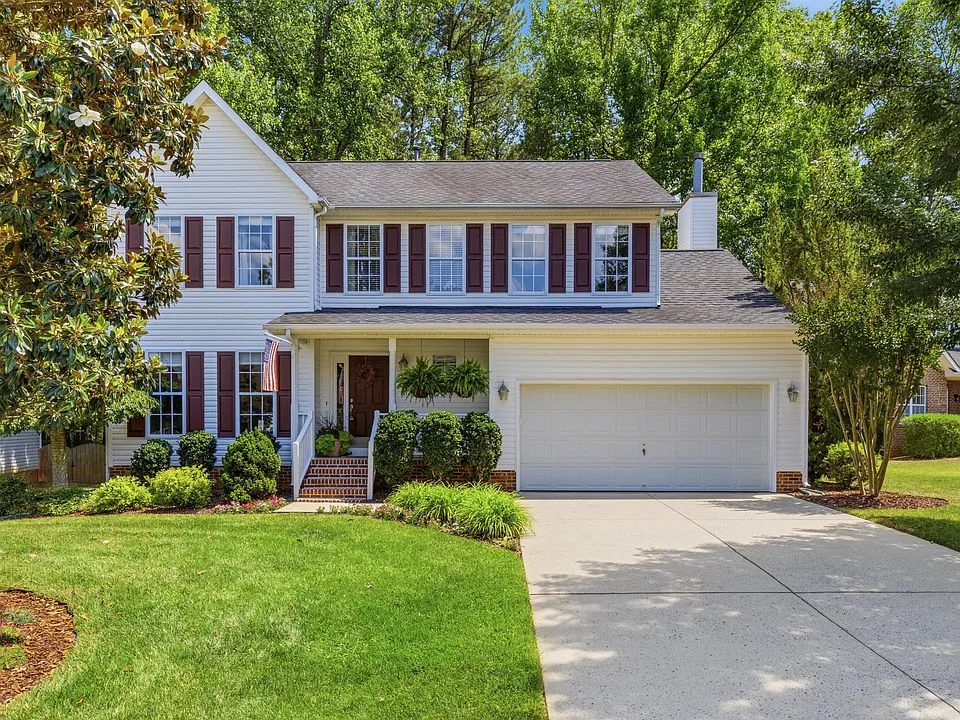
9. Carriage Downs
Median estimated value in 2026: $300,000 to over $450,000+
What to Know
Positioned directly across from the Beaver Creek Commons and Beaver Creek Crossings retail complexes, Carriage Downs offers one of the most convenience-focused addresses in the municipality. This compact, established community of just 140 residences — 68 townhomes and 72 single-family homes — gives residents unmatched walkable access to major retailers, grocery stores, dining, and the movie theater, making day-to-day errands exceptionally fast. Two realities to plan around: traffic near the neighborhood entrances runs heavier during peak shopping hours and weekday rush windows given the commercial adjacency and the nearby NC-55 and US-64 thoroughfares, and the community's small footprint means inventory surfaces infrequently — buyers targeting it specifically should set alerts and be prepared to move quickly.
Housing Styles
A near-even structural mix of low-maintenance townhomes (built by Westminster Homes) and well-proportioned single-family detached homes (built by New Fortis Homes), constructed primarily in the early 2000s and generally ranging from roughly 1,450 to 2,900 square feet. Architectural styling leans toward traditional Southern and transitional Craftsman builds with open main floors and functional deck or patio spaces, on compact tree-lined lots — with select premium sites backing to the community pond or wooded buffers.
Why People Move Here
Unbeatable retail and dining convenience combined with immediate connectivity to RTP and Raleigh via US-64 and NC-540, at one of the most attainable price points of any established Apex community. Community amenities include a playground, gathering gazebo, and scenic pond, and the tree-lined internal streets stay surprisingly quiet despite the commercial surroundings. Per current Doorify MLS activity, it draws steady demand from buyers prioritizing minimal drive times for everyday necessities.
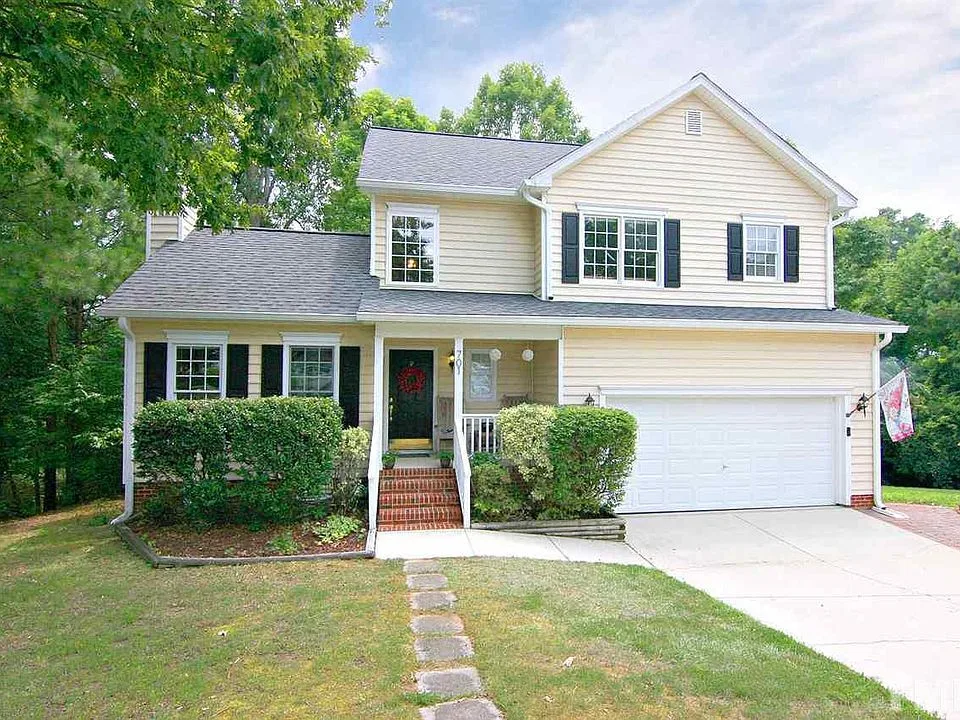
10. The Preserve at White Oak Creek
Median estimated value in 2026: $400,000 to over $1.4M+
What to Know
Situated in West Apex, The Preserve at White Oak Creek spans one of the widest price ranges of any single community in town — from attainable townhomes starting around $400,000 to custom executive homes exceeding $1.4 million. The community is anchored by direct access to local conservation areas and regional greenway connectors, most notably the White Oak Creek Greenway, which links residents toward the American Tobacco Trail and Wake County's broader trail network. It provides a quiet, nature-integrated setting away from commercial corridors, though buyers should note that everyday shopping and dining runs require a short drive to West Cary or central Apex retail hubs.
Housing Styles
The housing stock splits into two distinct tiers: contemporary attached townhomes offering the community's entry point, and high-end single-family custom and semi-custom executive homes constructed largely from 2014 onward. Architectural aesthetics across the single-family sections emphasize modern Craftsman, European Tudor, and brick-and-stone transitional styles — frequently showcasing three-car garages, gourmet kitchens, custom millwork, main-floor primary suites, and expansive screened porches overlooking wooded buffer lots.
Why People Move Here
Nature-first living with seamless greenway integration, at two very different entry points. The executive tier draws relocators wanting custom-level square footage and finishes in a wooded setting, while the townhome section — per current Doorify MLS activity — offers one of the few sub-$450K entry paths into West Apex's newer-construction corridor. Both tiers share the same core draw: an active outdoor lifestyle connected directly to the regional trail system.
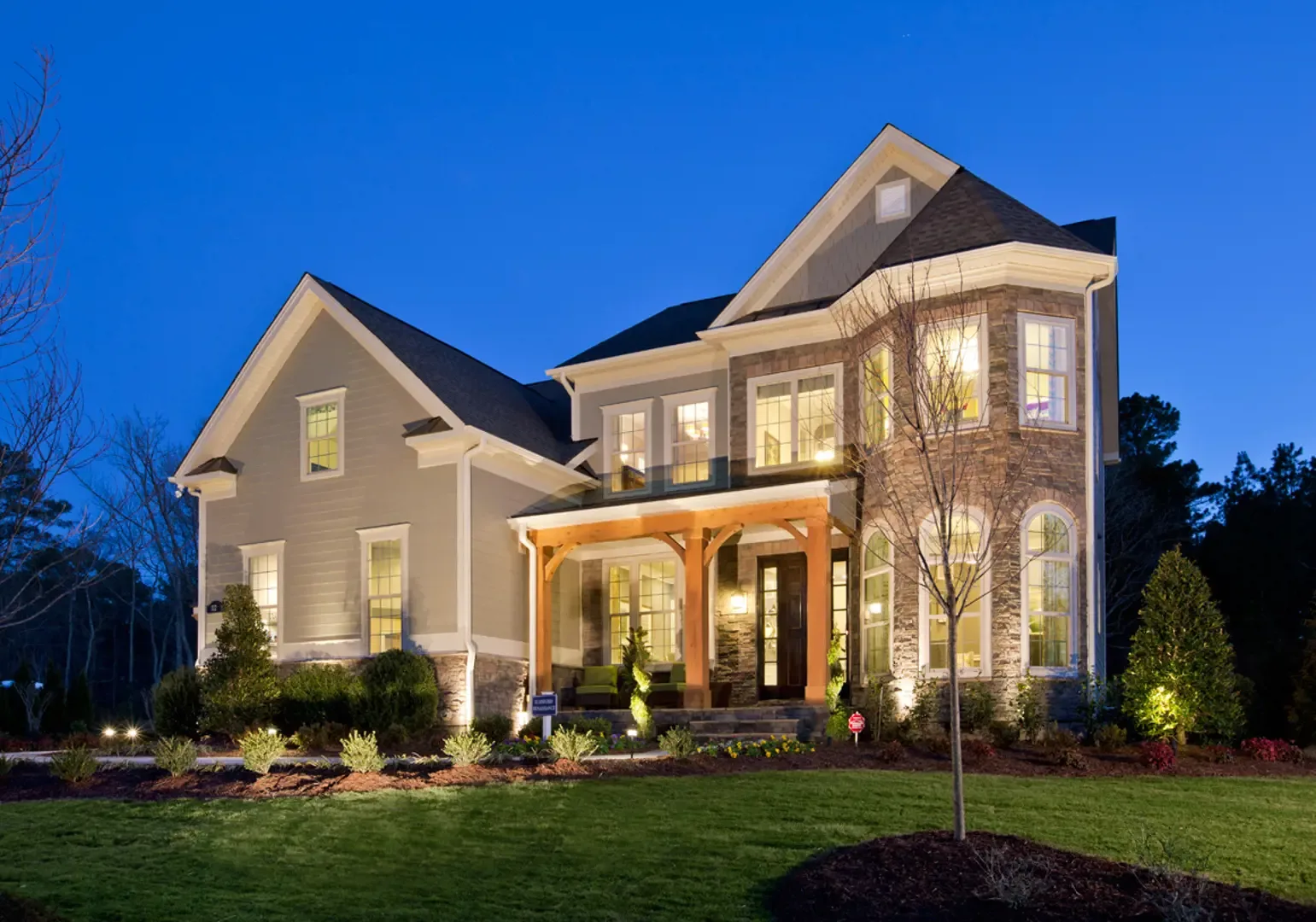
Neighborhood Selection Tips from Phil
Three critical structural factors I emphasize with every relocator looking at the Apex market before they finalize their target search criteria:
1. The Corridor Divide is Your Defining Structural Decision
Properties situated within the Central/Downtown Perimeter offer close pedestrian proximity to Salem Street, historic character, and more compact lot configurations. Conversely, locations along the Western Edge and Southern US-1 Expansion Corridors deliver modern master-planned construction standards, expansive neighborhood amenity infrastructure, and varying density scales near coming employment centers like Veridea. Determining which spatial layout fits your daily routine is essential before touring homes, as these distinct zones serve completely different lifestyles and price-per-square-foot market realities.
2. Analyze Your Primary Commute Routing Options in Real Time
A property relying primarily on the NC-55 corridor offers a completely distinct everyday transit pattern compared to a location with immediate access to the NC-540 Triangle Expressway toll loop or the US-1 bypass. In 2026, with the ongoing highway infrastructure expansions in southwest Wake County, geographic distance does not always correlate directly to travel times. Make it a priority to analyze the actual transit flow during peak morning hours to understand the reality of your daily Apex commute times.
3. Factor Association Fee Scales Into Your Long-Term Overhead
It is critical to look closely at the variable cost structures across different neighborhoods. While established resale communities may offer lower, traditional HOA fee structures, modern master-planned phases or New Urbanism developments with integrated retail centers carry more intensive amenity assessments that directly impact your monthly carrying costs. Always verify the comprehensive property expense history — and look out for any localized municipal vs. unincorporated county boundary lines — to accurately map out your projected cost of living in Apex.
CRITICAL: Validate School Assignments Independently
Always confirm current educational zoning maps directly with the Wake County Public School System (WCPSS) using the exact property street address. Due to sustained regional growth patterns and localized enrollment controls, base campus assignments and enrollment caps fluctuate annually. When coordinating a move, never rely solely on real estate aggregate printouts; independent validation with the district registry is a mandatory step before your contract due diligence period concludes.
Explore All Triangle Suburbs
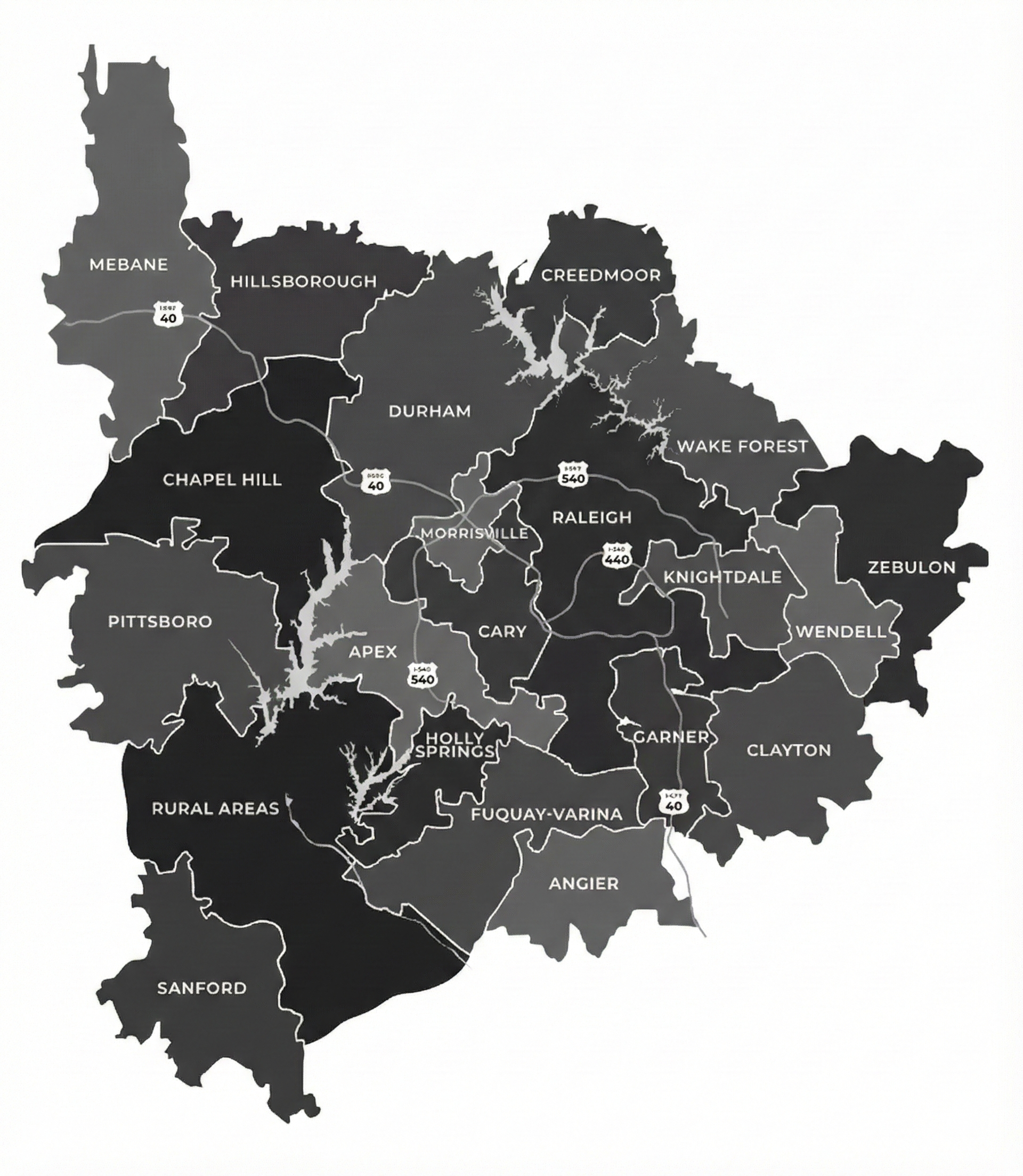
The Triangle has 22 distinct suburban markets, each serving different buyer profiles. Raleigh and Cary are the most complete package options for RTP commuters. Holly Springs serves the biotech corridor. Wake Forest and Fuquay-Varina offer the best space per dollar in Wake County. Use the full list below to explore every Triangle community.
Apex
~$707,025-$1.3M+
Cary
~$500,000-$1.2M+
Raleigh
$300,000-$1M+
Holly Springs
~$480,000-$900,000+
Fuquay-Varina
~$380,000-$750,000
Durham
~$380,000-$900,000+
Chapel Hill
~$550,000-$1.5M+
Morrisville
~$450,000-$800,000+
Wake Forest
~$380,000-$750,000
Garner
~$330,000-$600,000
Clayton
~$320,000-$550,000
Knightdale
~$320,000-$550,000
Wendell
~$300,000-$520,000
Rolesville
~$380,000-$650,000
Pittsboro
~$320,000-$600,000
Hillsborough
~$300,000-$550,000
Zebulon
~$280,000-$480,000
Angier
~$320,000-$480,000
Smithfield
~$250,000-$450,000
Mebane
~$290,000-$480,000
Willow Springs
~$350,000-$600,000
New Hill
~$300,000-$500,000
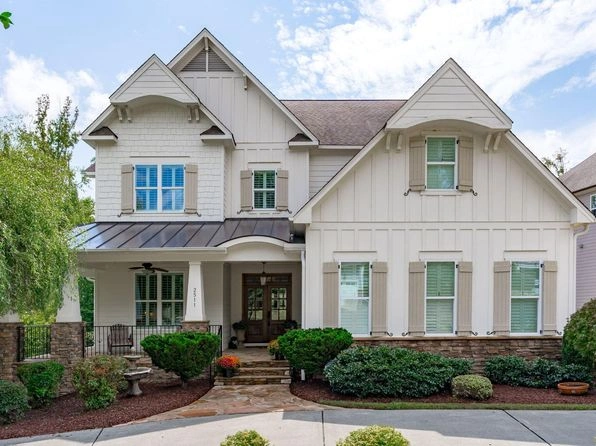
How Apex Compares to Other Triangle Suburbs
One of the most common questions relocators ask is how Apex stacks up against nearby municipal areas. If you are debating Raleigh vs Cary vs Apex, the truth is each community offers a distinctly different lifestyle, housing stock, and commute reality. This section breaks down the key differences in tax rates, regional commute times, and school options so you can make an informed decision on where to put down roots. Every Triangle suburb serves a different buyer profile, and here is how Apex stacks up based on what actually matters for your move.
| Category | Raleigh | Cary | Apex | Morrisville | Holly Springs |
|---|---|---|---|---|---|
| Median Home Price | ~$570,000 | ~$790,000 | ~$707,025 | ~$628,800 | ~$715,000 |
| Municipal Tax Rate | $0.3720/$100 | $0.3675/$100 | $0.3735/$100 | $0.3500/$100 | $0.3435/$100 |
| Combined Tax Rate | $0.9091/$100 | $0.9046/$100 | $0.9016/$100 | $0.9015/$100 | $0.8806/$100 |
| School District Rating | 7/10 avg | 7/10 avg | 8/10 avg | 8/10 avg | 7/10 avg |
| Avg Commute to RTP | 20-35 min | 15-25 min | 15-25 min | 10-15 min | 20-30 min |
| Population Growth (5-Yr) | +14% | +10% | +22% | +12% | +25% |
| Walkability Score | 30-45 | 28-38 | 32-42 | 18-28 | 22-32 |
| Typical Buyer Profile | Professionals prioritizing urban amenities | Move-up buyers seeking established neighborhoods | Buyers seeking newer construction, walkable downtown, RTP proximity | Tech professionals demanding efficient commute times | Relocators seeking emerging master-planned communities |
| New Construction Pipeline | Moderate | Limited | Abundant | Tight | Abundant |
| Typical Lot Sizing | 0.10-0.25 ac / 0.25-0.50 ac | 0.20-0.40 ac / 0.30-0.60 ac | 0.15-0.30 ac / 0.25-0.40+ ac | 0.12-0.25 ac | 0.18-0.32 ac / 0.25-0.50 ac |
Sources: Zillow, Redfin, Triangle MLS, Wake County Tax Administration, municipal FY2025-26 budgets, U.S. Census Bureau ACS | Combined Tax Rate = Wake County base ($0.5171/100) + municipal rate. Last updated September 2026.
Apex vs Cary
Median: ~$595,000 | Established Infrastructure Balance
Cary offers the most mature suburban infrastructure in the Triangle -- more dining, retail, corporate presence, and a longer track record. Apex delivers comparable quality of life with more historic character, a tighter-knit community feel, and slightly lower price points for equivalent square footage. Cary buyers pay a premium for established convenience; Apex buyers get better walkability per dollar in a preserved small-town core.
The Trade-off
Cary has more total retail square footage and a more developed corporate office base, which translates to higher property tax revenue per capita. Apex cannot yet match Cary's per-capita dining and shopping variety, though Salem Street's social district and the Verida pending will narrow that gap.
Why Choose Apex
Better per-capita green space access, a preserved historic downtown with the Salem Street Social District, lower relative price premium for comparable home sizes, and a faster-growth corridor with the Veridea master plan acting as a long-term appreciation multiplier.
Apex vs Holly Springs
Median: ~$480,000 | Biotech Corridor Comparison
Holly Springs is the biotech and life sciences anchor of southwest Wake County, anchored by the massive Thermo Fisher Scientific campus. Median home prices run significantly below Apex, and new construction dominates the available inventory. Holly Springs offers strong parks infrastructure (particularly Jones Park and the Ting Park sports complex) and direct access to the southern Wake County employment corridor.
The Trade-off
Holly Springs is still building its downtown core. The 55 West town center project is underway but years from full build-out. Residents currently rely on retail corridors along NC-55 and US-1 rather than a walkable central district. Commute times to RTP and northern Wake County are longer than from Apex.
Why Choose Apex
Apex already has a functioning walkable downtown that Holly Springs is still building. Apex also provides quad-corridor commute access that saves 5-10 minutes per trip to northern Triangle employment centers. The Veridea development immediately adjacent to Apex's western edge provides near-term employment growth.
Apex vs Fuquay-Varina
Median: ~$440,000 | Value-Focused Growth Play
Fuquay-Varina remains the best value proposition in southwest Wake County, with median home prices well below Apex and a growing downtown corridor that is attracting commercial investment. The trade-off is longer commute times to RTP, Raleigh, and northern employment centers, plus less established infrastructure in parks, retail, and road capacity relative to Apex and Cary.
The Trade-off
Commute times from Fuquay-Varina to RTP average 30-40 minutes, nearly double the Apex commute. Infrastructure for parks, road capacity, and retail is still catching up to the rapid population growth. School capacity constraints are tighter in Fuquay-Varina's attendance zones.
Why Choose Apex
For buyers who can afford the premium, Apex delivers a 10-15 minute shorter daily commute, fully built parks and greenway infrastructure, established school capacity, and a historic downtown that Fuquay-Varina is still developing. Apex also benefits from the Veridea employment corridor that directly borders its municipal limits.
Apex vs Raleigh
Median: ~$445,000 | Urban Capital Center
Raleigh is the urban anchor of the Triangle -- more dining, entertainment, employment density, and cultural infrastructure than any suburb. The median home price is lower than Apex because Raleigh's geography includes both high-demand urban neighborhoods and more affordable outer-suburban areas inside the city limits. Raleigh offers city amenities that no suburb can replicate.
The Trade-off
Raleigh's diversity of housing stock means you compete with a much wider range of buyers. School assignments are more variable across Raleigh's geographic footprint. Daily traffic on I-40 and the Beltline can be heavier than Apex's route options. Some Raleigh neighborhoods have less developed pedestrian infrastructure than Apex's Salem Street corridor.
Why Choose Apex
Apex delivers a higher ratio of community character per dollar than most Raleigh ZIP codes with comparable walkability. The police-to-resident ratio and public safety investment in Apex consistently rank among the best in the state. Apex's quad-corridor access provides redundant route options that reduce total commute risk.
Apex vs Morrisville
Median: ~$510,000 | Strategic RTP Transit Node
Morrisville is the most commute-efficient suburb in the Triangle for RTP employees, with the shortest drive times to the research park and RDU International Airport. The housing stock is diverse, including townhomes, condos, and single-family homes across a range of price points. Morrisville's town identity is less defined than Apex, but its location efficiency is unmatched.
The Trade-off
Morrisville lacks a historic downtown or defined main street. The town is essentially a series of master-planned neighborhoods connected by NC-54 and NC-540 corridor retail. Park acreage per capita is lower than Apex. Aircraft noise from RDU is audible in some neighborhoods, particularly those near the western municipal boundary.
Why Choose Apex
Apex offers a genuine historic downtown with a social district, higher per-capita park acreage, and stronger municipal identity. For buyers who commute 2-3 days per week rather than 5, the extra 5-10 minutes each way to RTP is a worthwhile trade-off for Apex's superior quality-of-life infrastructure and long-term appreciation trajectory.
Cost of Living in Apex (2026 Analysis)
Understanding what it actually costs to put down roots in Apex requires analyzing localized fiscal metrics. While the overall cost of living in Apex carries a baseline premium over neighboring southerly corridors like Holly Springs and Fuquay-Varina, the strategic value of the historic downtown, quad-highway transit accessibility, and proximity to long-term employment anchors serve as balancing economic variables. Furthermore, North Carolina's flat 3.99% individual income tax rate for 2026 -- combined with the absolute absence of local municipal or county income taxes -- establishes a highly efficient tax environment compared to high-density East Coast metropolitan areas.
Property Taxes (Current Fiscal Schedules)
Ad valorem property taxes in Wake County are assessed based on a combined calculation of county and municipal rates. For properties situated inside the incorporated municipal boundaries of Apex, the current baseline tax structural weights are defined below:
- Wake County Base Tax Rate: $0.5371 per $100 of assessed property valuation
- Town of Apex Municipal Tax Rate: $0.3735 per $100 of assessed property valuation
- Combined Baseline Tax Rate: $0.9106 per $100 of assessed property valuation
| Home Value | Annual Tax Bill | Monthly Equivalent |
|---|---|---|
| $350,000 | $3,187 | ~$266/mo |
| $620,000 (Current Median) | $5,646 | ~$471/mo |
| $650,000 | $5,919 | ~$493/mo |
| $850,000 | $7,740 | ~$645/mo |
| $1,200,000 | $10,927 | ~$911/mo |
Calculations reflect exact combined standard ad valorem tax rates without localized subdivision-specific assessments or HOAs. Homeowners should independently verify current rates directly at wakegov.com and apexnc.org before final contract signing.
Monthly Carrying Cost Breakdown -- $620,000 Market Median
To map out a real-world monthly housing overhead scenario based on current 2026 data arrays, this breakdown evaluates standard purchasing parameters leveraging a 20% down payment (~$124,000) resulting in a primary $496,000 mortgage principal balance under an illustrative 6.5% interest rate on a standard 30-year fixed term:
| Expense Category | Monthly Cost |
|---|---|
| Mortgage Principal & Interest (P&I) | ~$3,135/mo |
| Property Taxes (Combined Municipal/County) | ~$471/mo |
| Hazard & Homeowners Insurance (Standard Baseline) | ~$185/mo |
| Total Estimated Monthly Housing Allocation | ~$3,791/mo |
The configuration above excludes potential neighborhood-specific HOA fee overlays, which vary by development phase as highlighted in our primary residential profiles.
North Carolina Structural Tax Parameters
When analyzing the broader financial impact of moving to the region, relocators benefit from a collection of statewide statutory code structures that keep overall carrying costs predictable:
- Individual Income Tax: Features a uniform flat rate of 3.99% for the 2026 tax year, with statutory parameters configured to transition to 3.49% in 2027.
- No Local Income Tax: County and municipal entities in North Carolina do not assess any localized income levies.
- Social Security Exemption: North Carolina state income tax is never applied to Social Security retirement benefits.
- Sales Tax: A combined 7.25% rate applies across the county, blending the state baseline (4.75%) and the localized Wake County tax amendments (2.50%).
Important Structural Note: The North Carolina Due Diligence Framework
For out-of-state buyers exploring homes for sale in Apex NC, the statutory offer framework represents a critical point of difference from traditional contract mechanisms. The North Carolina real estate purchase contract utilizes a non-refundable Due Diligence Fee paid directly to the seller upon initial contract validation. Unlike traditional earnest money escrow accounts, this capital is released immediately to the seller in exchange for a specified due diligence window, and is non-refundable if the buyer elects to terminate the purchase agreement for any reason. Within the active Apex real estate market, standard due diligence allocations generally fluctuate between 0.5% and 1.0% of the target purchase valuation. Reviewing these contractual frameworks with your transaction team is an essential component prior to entering initial contract structures.

Schools in Apex: What Buyers Need to Know
Public education throughout the municipality is administered by the Wake County Public School System (WCPSS), which operates as the largest public school district in North Carolina. Because southwestern Wake County stands as a primary regional growth sector, the local educational infrastructure serves as a notable anchor for incoming residential demand.
The most critical structural concept for out-of-state relocators to grasp is that WCPSS student assignments are strictly address-specific and remain subject to annual system planning modifications. Physical proximity to a campus does not guarantee student placement. Every residential parcel is mapped to a designated baseline attendance structure, but active enrollment controls can divert new assignments. It is an essential procedural step to verify the active assignment profile for any specific street address directly via the district look-up tools at wcpss.net prior to executing real estate contract structures.
Understanding Enrollment Caps & Feeder Patterns
To manage high development volume across southwestern Wake County, the Board of Education utilizes a system of Enrollment Caps. When an active campus reaches its structural capacity threshold, it is locked to subsequent registrants. New households moving into that base geographic zone are automatically directed to a designated Overflow School farther out, with district-provided bus transit provided.
Furthermore, the district enforces a specialized Feeder Pattern Cap on select high-density corridors. Under a feeder pattern constraint, students can be placed on a continuous waitlist for their future high school mapping as early as elementary school, provided the household maintains verified residency inside the base zone boundaries. For the current academic year, the district has activated targeted boundary modifications, including shift rules designed to ease crowding at local facilities like White Oak Elementary and Apex Friendship High.
Active Local Enrollment Controls (Current System Status)
The following regional campuses serving the Apex submarket operate under active district enrollment constraints:
- Capped Elementary Campuses: Olive Chapel Elementary, Oakview Elementary, Scotts Ridge Elementary, Holly Ridge Elementary, and Holly Grove Elementary.
- Capped Middle Campuses: Apex Friendship Middle School.
- Feeder Pattern Capped High Campuses: Apex Friendship High School (utilizes an active feeder pattern structural waitlist tracking system).
Key Regional Public High Schools
- Apex High School: Operating from a completely modernized facility in central Apex, this campus represents one of the longest-standing institutions in the county system. The curriculum is defined by an extensive array of Advanced Placement (AP) course tracks alongside highly active career and technical education (CTE) pathways, complemented by a broad regional athletic infrastructure.
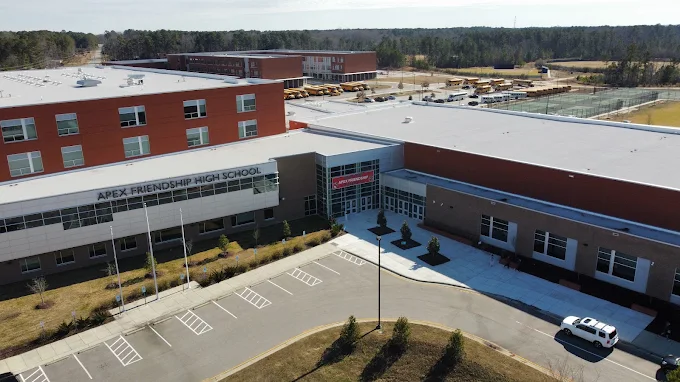
- Apex Friendship High School: Situated within the rapidly growing western growth corridor, this contemporary campus layout features heavy instructional programming tailored toward Science, Technology, Engineering, and Math (STEM) disciplines. Due to intensive development along the western perimeter, it operates under the district's active feeder pattern enrollment controls.
- Middle Creek High School: Located on the south-southeast municipal boundary near the Holly Springs perimeter, this campus services a large single-family residential footprint. The facility is anchored by a specialized Digital Media Academy and expansive community athletic partnerships linked with the adjacent Middle Creek Park complex.
Charter and Private Educational Footprints
In addition to the standard base assignments provided by the county public school system, relocators frequently analyze regional alternative and independent options situated within the southwest Wake County corridor:
- Thales Academy (Apex Campus): A localized campus executing a formal, classical education curriculum model. The facility offers structured pre-K through junior high progressions, leveraging a year-round academic calendar focused on sequential skill acquisition.
- Prestonwood Christian Academy (PCA Carolinas): A private, faith-based college preparatory institution operating an established campus footprint in the Apex area, providing full K-12 instructional tracks.
- Salem Middle School (WCPSS Context): While operating inside the primary public framework, this centrally located middle school serves as a primary example of traditional-calendar middle school integration within central Apex, drawing steady interest from relocators targeting established residential lines.
Procedural Reminder: Real estate property descriptions, third-party home search portals, and print handouts frequently feature outdated or unverified educational zoning data. To safeguard your transaction timeline, always independently input the exact GIS parcel coordinates or physical street address directly into the official WCPSS Address Look-up Tool at wcpss.net to confirm true base mapping prior to the conclusion of your contract due diligence window.
Parks & Outdoor Living in Apex
The municipal park and greenway infrastructure across Apex stands as a primary driver of residential demand throughout southwestern Wake County. Unlike rapidly growing suburban corridors where flagship recreational facilities remain in planning phases, Apex features fully operational, completed park campuses. Capital assets like Pleasant Park, the Apex Nature Park, the signature lake trails at Apex Community Park, and direct connectivity to the multi-county American Tobacco Trail supply an outdoor lifestyle infrastructure that relocators consistently prioritize when evaluating the regional market.
Flagship Outdoor Amenities & Greenways
1. Pleasant Park — 92-Acre Regional Destination Campus
Operating as the crown jewel of the municipal recreational network, Pleasant Park is a massive, multi-use athletic and lifestyle facility situated near the NC-540 and old US-1 corridor.
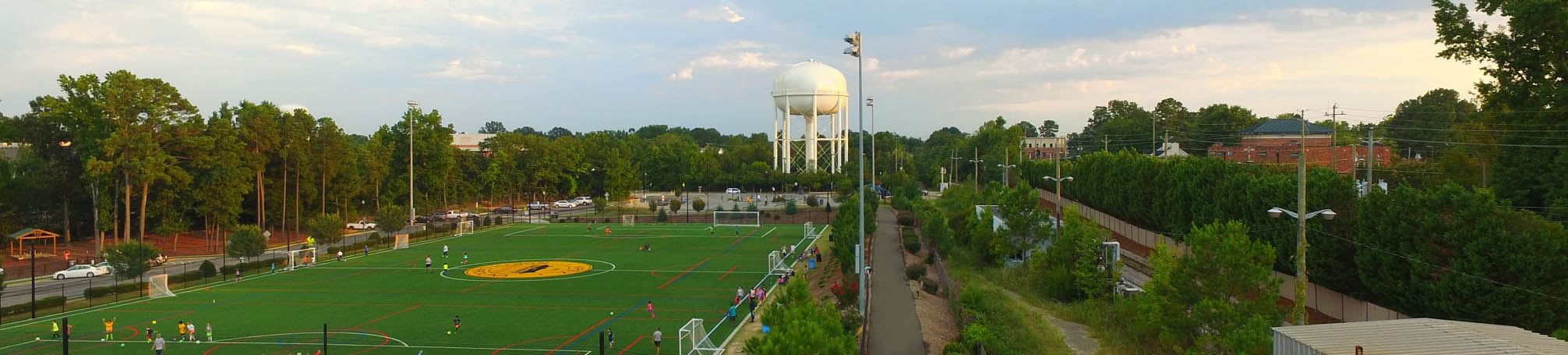
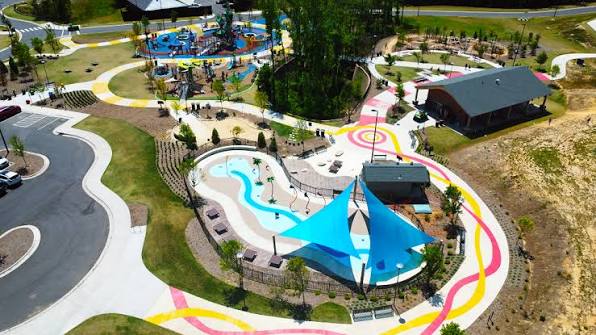
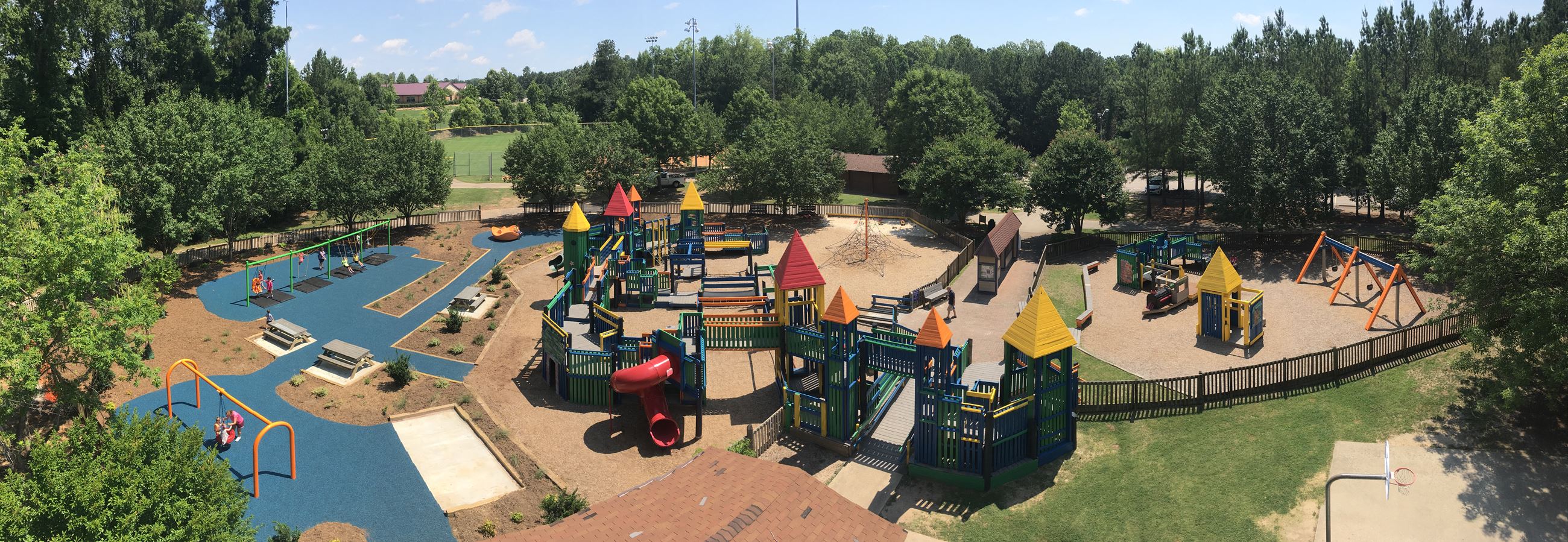
Campus Infrastructure: The park features six lighted multi-purpose turf fields configured for soccer and lacrosse tournaments, alongside dedicated tennis, basketball, and six custom pickleball courts. The campus is highly recognized for its 1.5-acre "Enchanted Forest" inclusive playground — featuring a signature 35-foot climbing structure — and the "Splashlantis" municipal splash pad pavilion. The facility functions as a primary destination for regional athletic leagues and structured town events throughout the year.
2. Apex Community Park — 160-Acre Central Lake Anchor
Situated along Laura Duncan Road, Apex Community Park serves as the central nature and fitness anchor for the interior submarket.
Campus Infrastructure: The park revolves around a 50+ acre municipal lake stocked with channel catfish as part of the NC Wildlife Community Fishing Program. It features an accessible, wheelchair-friendly fishing dock and a designated vessel launch site for canoes, kayaks, and paddleboards. The property is bounded by over 3 miles of developed fitness trails, blending 2 miles of paved greenway loops with dedicated natural hiking paths, sand volleyball courts, and an outdoor obstacle fitness course.
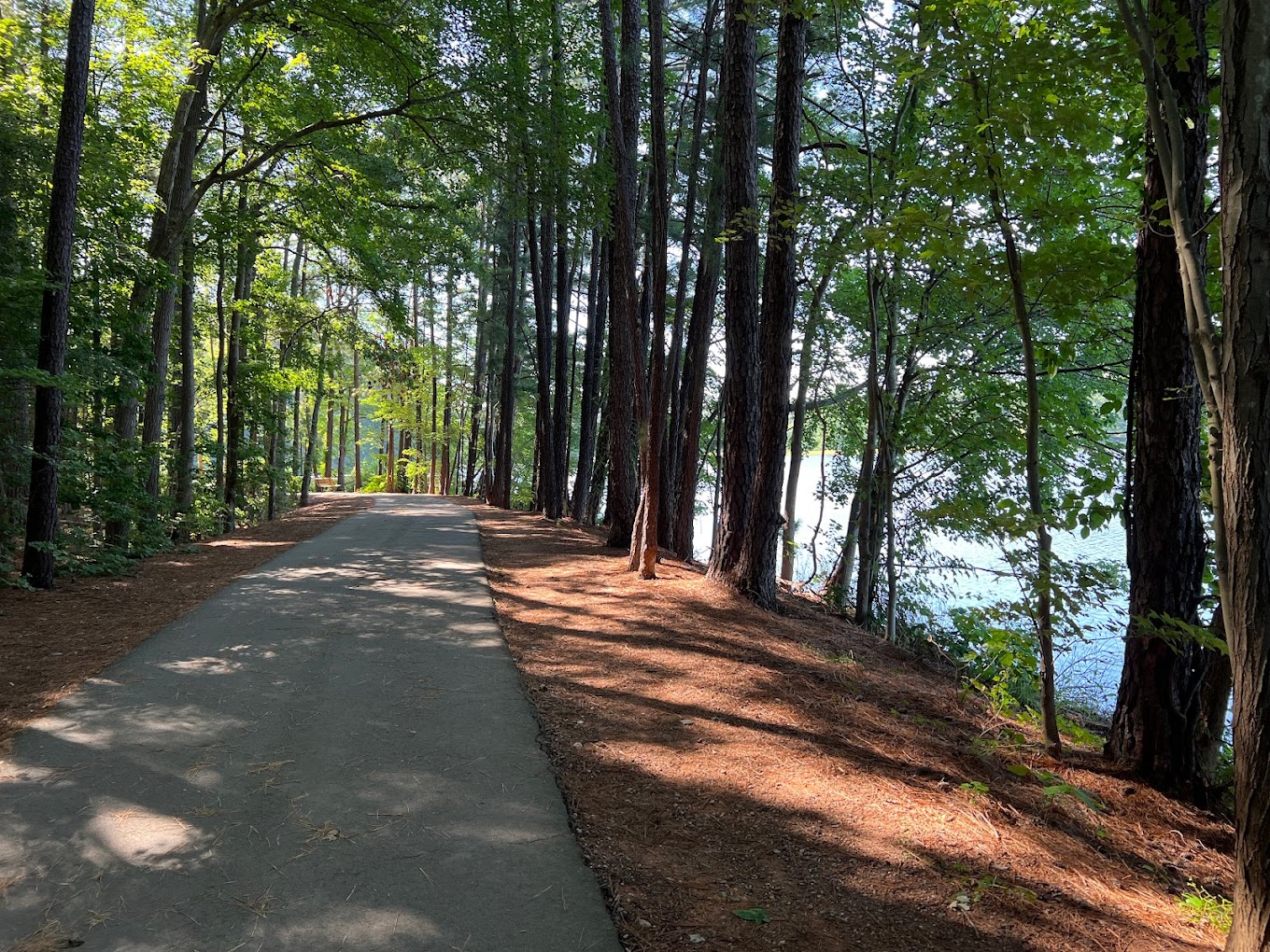
3. American Tobacco Trail & Beaver Creek Greenway
The western perimeter of the municipality provides direct access points to the American Tobacco Trail (ATT) — a renowned 23-mile continuous, multi-use recreational rail-trail connecting Durham County down through the Wake County boundary line.
Greenway Infrastructure: Complementing this regional asset is the municipal Beaver Creek Greenway network, which weaves directly through central neighborhoods to link master-planned residential phases with commercial retail destinations like Beaver Creek Commons. For cycling enthusiasts, distance runners, and active transit commuters, this interconnected trail infrastructure serves as a highly efficient quality-of-life framework.
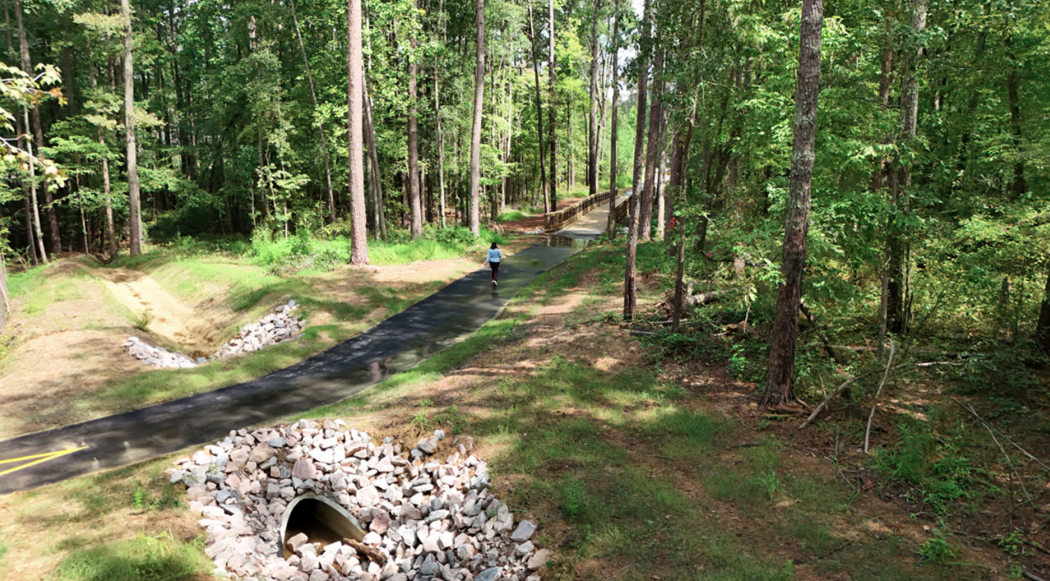
4. Apex Nature Park & Kelly Road Park
Located on the western edge, the 160-acre Apex Nature Park complex includes an expansive disc golf course, a multi-tier dog park, a natural amphitheater for outdoor assemblies, and connected natural-surface walking corridors. Moving toward the central-north sector, Kelly Road Park provides traditional athletic fields, playground complexes, and direct pedestrian bridge links to the Beaver Creek Greenway trail system, reinforcing neighborhood-to-park walkability.
Phil's Perspective on Apex Outdoor Living
"When people relocate here from high-density northern metros, they expect the visual tree canopy, but they are consistently surprised by the sheer scale of the interconnected greenway networks. I always advise clients analyzing southwest Wake County to spend a Saturday morning exploring the trail loops or athletic facilities at a hub like Pleasant Park, and then spend the afternoon experiencing the curbless brick sidewalks within the historic downtown Salem Street corridor. That exact infrastructure balance — having a 92-acre state-of-the-art sports campus minutes away from a walkable, designated Social District — is why the local market commands steady demand. If seamless outdoor access is a non-negotiable metric for your daily routine, focusing your property search within a mile radius of the American Tobacco Trail or the Beaver Creek Greenway corridors is the most calculated path forward."
Amenities & Community Services: The Apex Standard
Apex has executed deliberate municipal investments into core civic infrastructure designed to support a scalable, high-functioning suburban ecosystem. Rather than relying on speculative developments outlined purely in master plans, the town provides established, operating public facilities that manage high daily usage across all residential submarkets. This commitment to maintaining a uniform infrastructure baseline remains visible across the town's public resources, public spaces, and general municipal services.
Key Municipal Facilities & Civic Assets
1. John M. Brown Community Center
Located on the primary Town Hall Campus at 53 Hunter Street, the John M. Brown Community Center (formerly known as the Apex Community Center) serves as a primary hub for municipal recreational operations.
Facility Infrastructure: The center houses a gymnasium with scheduled open-gym hours, program classrooms for all-ages courses, and rentable meeting rooms. It serves as the official registration point for town athletic programs, dog park passes, fishing permits, and vessel permits for local community waters. The center also serves as the administrative hub for the town's broader parks network, including Apex Community Park's lake trails.
2. Halle Cultural Arts Center
Occupying a meticulously restored historic building constructed in the early 1900s within the downtown core at 237 N. Salem Street, the Halle Cultural Arts Center acts as the town's premier cultural landmark.
Facility Infrastructure: The facility features an intimate performance theater, gallery exhibition spaces, and dedicated studio rooms. The calendar provides year-round live theatrical productions, musical performances, and community exhibitions that anchor the town center's evening economy.
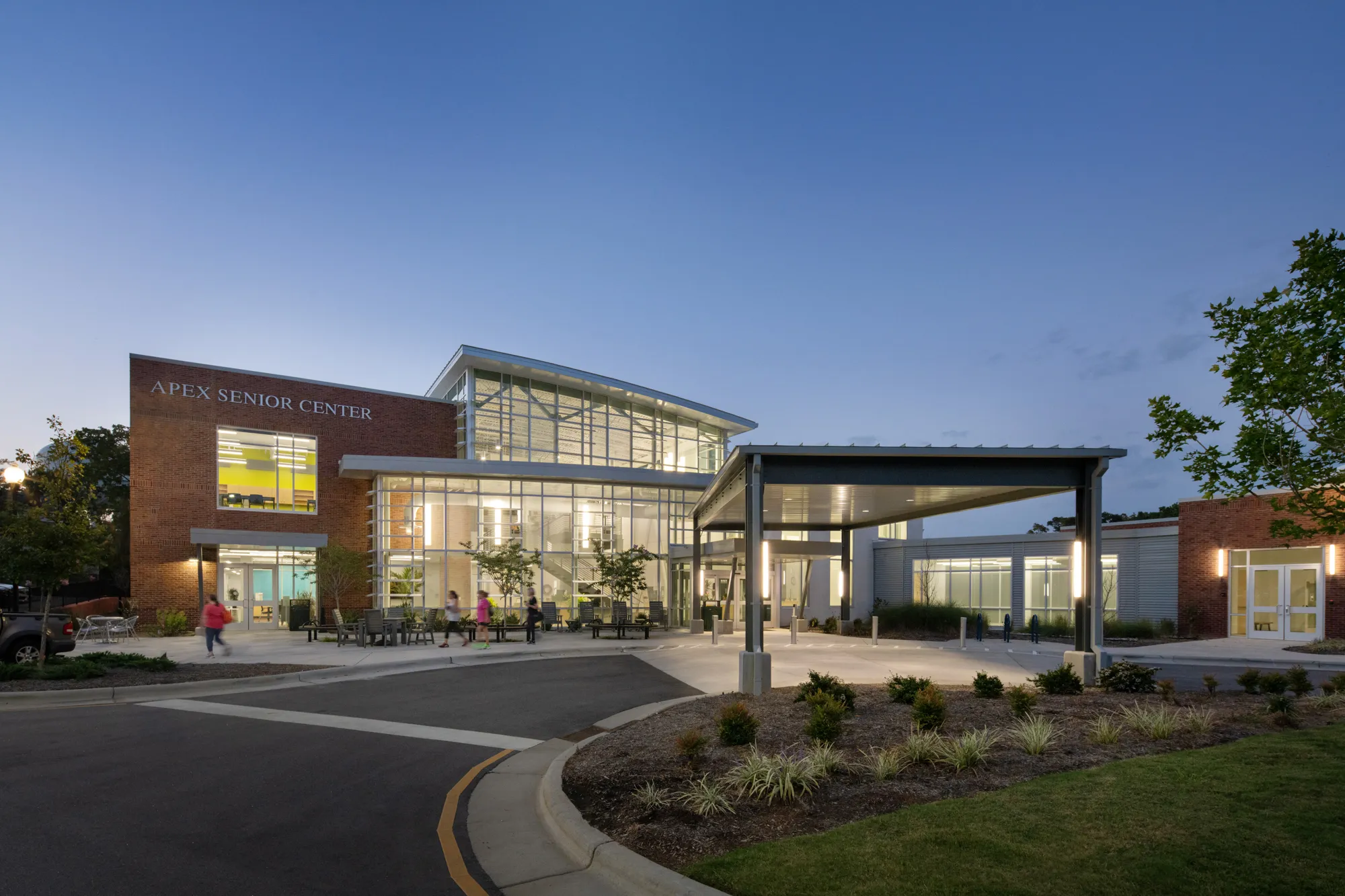
3. Apex Senior Center
Positioned immediately adjacent to the community center at 63 Hunter Street, the Apex Senior Center is a modern, state-of-the-art facility dedicated exclusively to providing active adult resources.
Facility Infrastructure: Opened in 2021, this two-story, 28,000-square-foot campus features expansive multipurpose classrooms, exercise and cardio fitness rooms, an arts-and-crafts room, and a specialized pottery room complete with an on-site kiln. The facility is heavily utilized for continuous wellness programming, structured hobby courses, and civic resource mapping.
4. Apex Public Library
Operating as a primary regional branch of the Wake County Public Library (WCPL) network, the Apex Library branch supplies extensive physical and digital informational databases. The facility provides quiet research zones, collaborative technology spaces, and structured instructional programming tailored to independent skill acquisition and academic research frameworks.
5. The Apex Peakway Infrastructure Loop
The Apex Peakway represents a highly strategic, multi-mile connector loop designed to distribute vehicular traffic cleanly around the town perimeters, minimizing reliance on congested state corridors like NC-55 and US-1 for local trips.
Infrastructure Reality (2026): While major segments of the loop are fully operational, the final critical link, the Peakway Southwest Connector, is actively under construction. This infrastructure project involves building a four-lane bridge over South Salem Street and the active CSX railroad line, backed by the 2015 Transportation Bond and the voter-approved 2021 Streets & Sidewalks Bond. Localized road closures along the Peakway from South Salem Street to Towhee Drive are mapped into mid-to-late 2026, with full operational completion of the connector targeted for 2027.
6. Public Safety and Infrastructure Funding
Apex maintains a highly stable public safety record, with municipal budget structures prioritizing a well-funded police department that emphasizes community engagement and high visibility. The Town's Capital Improvement Plan allocates substantial annual pavement management, roadway expansions, and advanced protective infrastructure to keep pace with western Wake County's growth trends.
Dining & Entertainment in Apex, NC
Apex's dining and entertainment scene has officially arrived, making living in Apex NC an incredibly vibrant and authentic small-town experience. It has quietly become one of the most impressive suburban hubs in the Triangle region for a community of its size — and relocating buyers consistently rate the walkable culinary landscape and historic performance options as the biggest quality-of-life surprise of their move. From local farm-to-table culinary concepts to local craft breweries, you will quickly discover why Apex consistently ranks among the Triangle's most livable small towns for foodies and culture lovers alike.
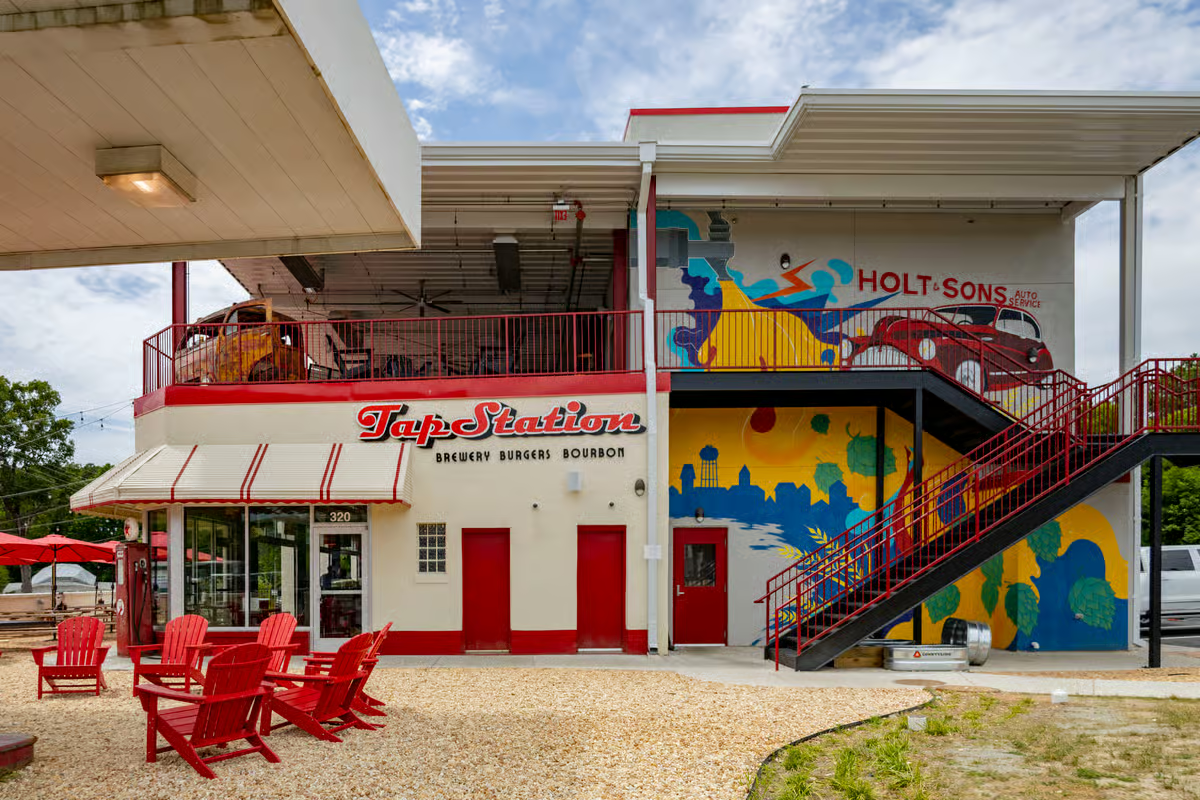
The Landmark Icons
Dining: TapStation - DEFINITIVE LEGEND
Housed in a meticulously retrofitted, two-story historic service station right on the main drag, this brewery and kitchen delivers elevated pub-grub, house-brewed beers, and a premier rooftop patio space. Phil's Tip: Head straight to the upper deck at sunset for the most dynamic architectural views over Salem Street.
Dining: The Provincial - SCRATCH-MADE ART
A highly coveted downtown boutique destination featuring an intimate atmosphere and a frequently rotating, farm-to-fork New American menu. Celebrated for pristine local seafood, seasonal vegetables, and a highly curated wine list, reservations are strongly recommended.
Dining: Serafina Ristorante - TUSCAN LUXURY
Apex's premier destination for date nights, weekend brunch, and milestone dining. Set within the historic downtown core, this upscale venue features exceptional scratch-made pasta, classic regional Italian specialties, polished service, and a refined full bar program.
Hotspots & Social Districts
Scene: "The Local Spot" Social District
A designated open-container footprint running along Salem Street between West Williams and Templeton streets, with multiple side-street nodes. Patrons can purchase beverages from over 30 participating businesses in branded cups and stroll freely through downtown public areas and retail storefronts displaying color-coded signage daily from 11 AM to 10 PM.
Scene: Daniel's Restaurant - ESTABLISHED ITALIAN STAPLE
Since 1996, Daniel's has been preparing freshly sautéed pasta dishes, hand-stretched pizzas, scratch-made desserts, and more. A foundational favorite for traditional Italian dining just outside the immediate core corridor, reservations are highly suggested.
Scene: Scratch Kitchen & Taproom
A signature culinary hotspot blending traditional Southern comfort dishes with distinct global flair. From shrimp and grits to localized banh mi variations, this highly utilized venue defines the modern downtown palate.
Entertainment & Venues
Venue: The Halle Cultural Arts Center
The town's primary cultural centerpiece. Constructed in the early 1900s, this beautifully restored historic venue hosts live theatrical performances, classical and contemporary concerts, and year-round rotating community art exhibitions.
Venue: Apex Nature Park Amphitheater
A sprawling outdoor civic facility situated within the town's mature green space network. Serves as the primary destination for seasonal live music programming, community movie nights, and outdoor acoustic performances.
Venue: The Historic Union Depot
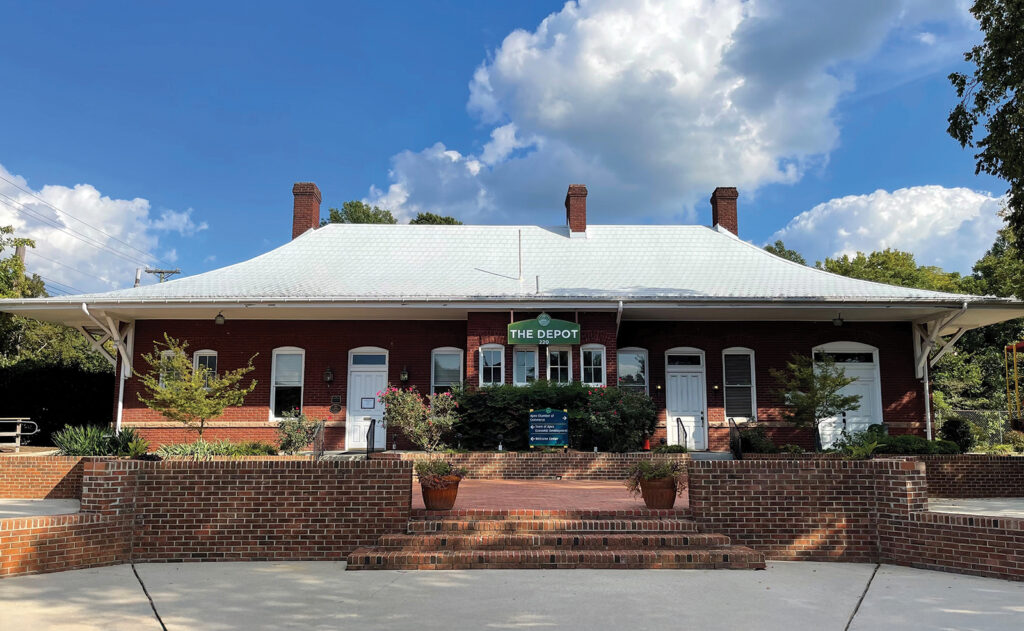
A beautifully preserved 1914 Seaboard Air Line Railway station serving as the structural anchor for the community. Beyond its historic aesthetic value, the footprint hosts the weekly, year-round Apex Farmers Market every Saturday morning.
Phil's Perfect Saturday
Morning: Depot Fuel & Local Goods
Grab an artisanal espresso blend or an acai bowl at Mission Market, then stroll directly through the historic depot lot to source local provisions from the year-round Farmers Market.
Afternoon: Sip & Stroll the Core
Pick up an authorized beverage inside an official "Local Spot" cup from Anna's Pizzeria or Peak of the Vine. Stroll leisurely through Salem Street's boutiques, local bookstores, and historic landmarks.
Happy Hour: Rooftop Skyline Drafts
Head up to the open-air rooftop level at TapStation for a cold craft selection, overlooking the active historic district below.
The Reality: Intimate & Calibrated
Apex's culinary landscape trades urban sprawl for curated intimacy. Every venue along the main drag is locally embedded, accessible, and deeply anchored in the town's welcoming heritage.
Where Apex Is Located & What the Commute Looks Like
Apex sits at the geographic intersection of southwest Wake County's four major transportation corridors: NC-540, US-1, US-64, and NC-55. This quad-corridor access gives Apex residents a notable logistical advantage: four independent route options connecting to every major employment hub in the Triangle region. Understanding typical Apex commute times for your specific destination is an essential factor in determining if this municipal layout aligns with your daily routine and lifestyle.
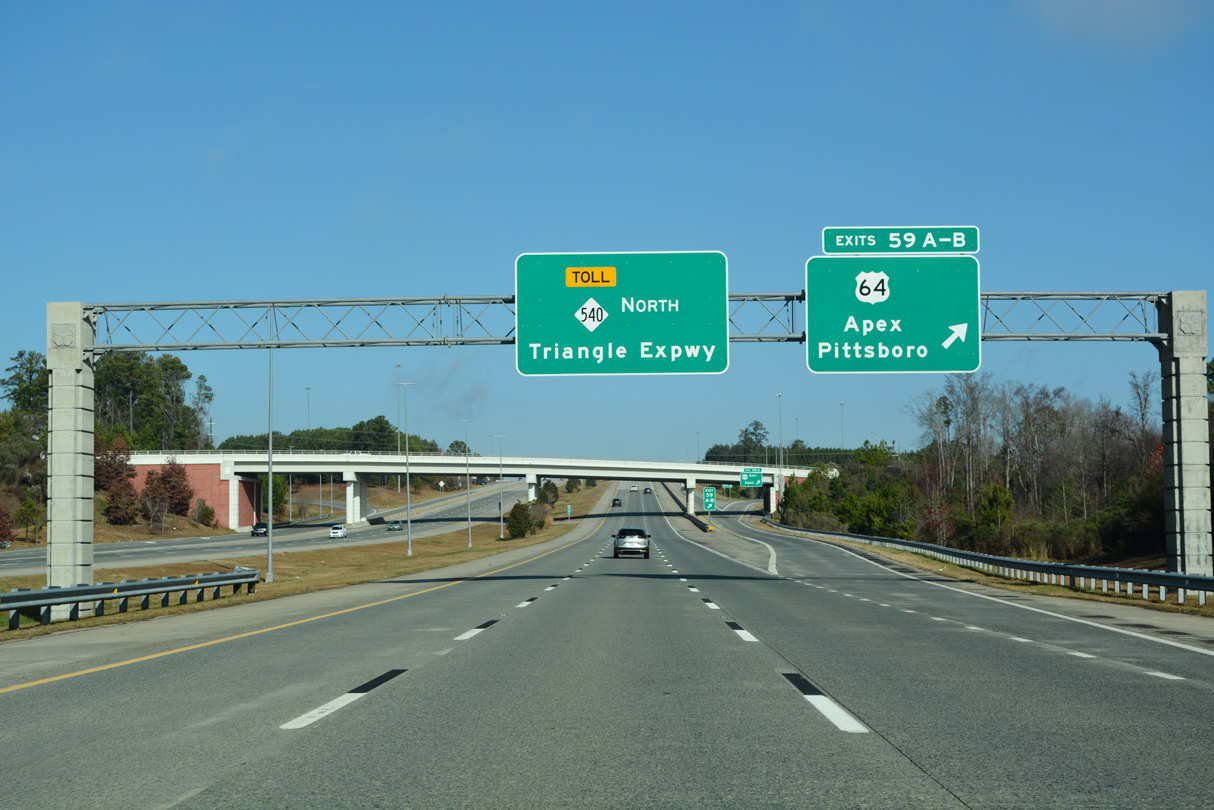
| Destination Hub | Estimated Distance | Off-Peak Drive | Peak-Hour Note (2026 Transit Realities) |
|---|---|---|---|
| Research Triangle Park (RTP) | ~12-18 miles | 15-25 min | 25-35 min peak via NC-540 Expressway |
| Downtown Raleigh | ~15-20 miles | 15-20 min | 20-30 min peak via US-1 Corridor |
| Cary | ~8-12 miles | 12-18 min | 18-25 min peak via US-1 or NC-55 |
| RDU International Airport | ~12-16 miles | 15-25 min | 20-30 min peak via NC-540 toll routing |
| Holly Springs | ~6-10 miles | 10-15 min | 15-20 min peak via US-1 or NC-55 |
| Morrisville | ~10-14 miles | 14-20 min | 20-28 min peak via NC-540 loop |
| Fuquay-Varina | ~8-12 miles | 12-18 min | 15-20 min peak via NC-55 South |
| Durham | ~20-28 miles | 25-35 min | 30-45 min peak via NC-540 Expressway |
| Chapel Hill / UNC Campus | ~22-30 miles | 25-35 min | 35-50 min peak via US-64/US-15-501 or I-40 West |
Peak-Hour Traffic Realities & Considerations
While quad-corridor transit lines maximize flexibility, specific arterial patterns require careful planning during daily peak intervals (typically 7:00-9:00 AM and 4:00-6:30 PM). Secondary corridors -- most notably NC-55 and Ten-Ten Road -- experience significant traffic volume at critical intersections during these hours.
For commuters traveling east toward downtown Raleigh, the US-1 highway line experiences recurrent slowdowns near the main I-40 and I-440 interchange system. Alternatively, the NC-540 Triangle Expressway stands as the most direct route to Research Triangle Park and RDU International Airport, operating as an all-electronic toll facility. The highway utilizes NC Quick Pass transponder billing for automated electronic toll collection, while un-transponded vehicles are billed via a dynamic "Bill-by-Mail" camera registry at a higher baseline rate. Buyers tracking employment nodes inside RTP should account for these ongoing electronic toll allocations within their calculated monthly transit overhead when budgeting for the cost of living in Apex.
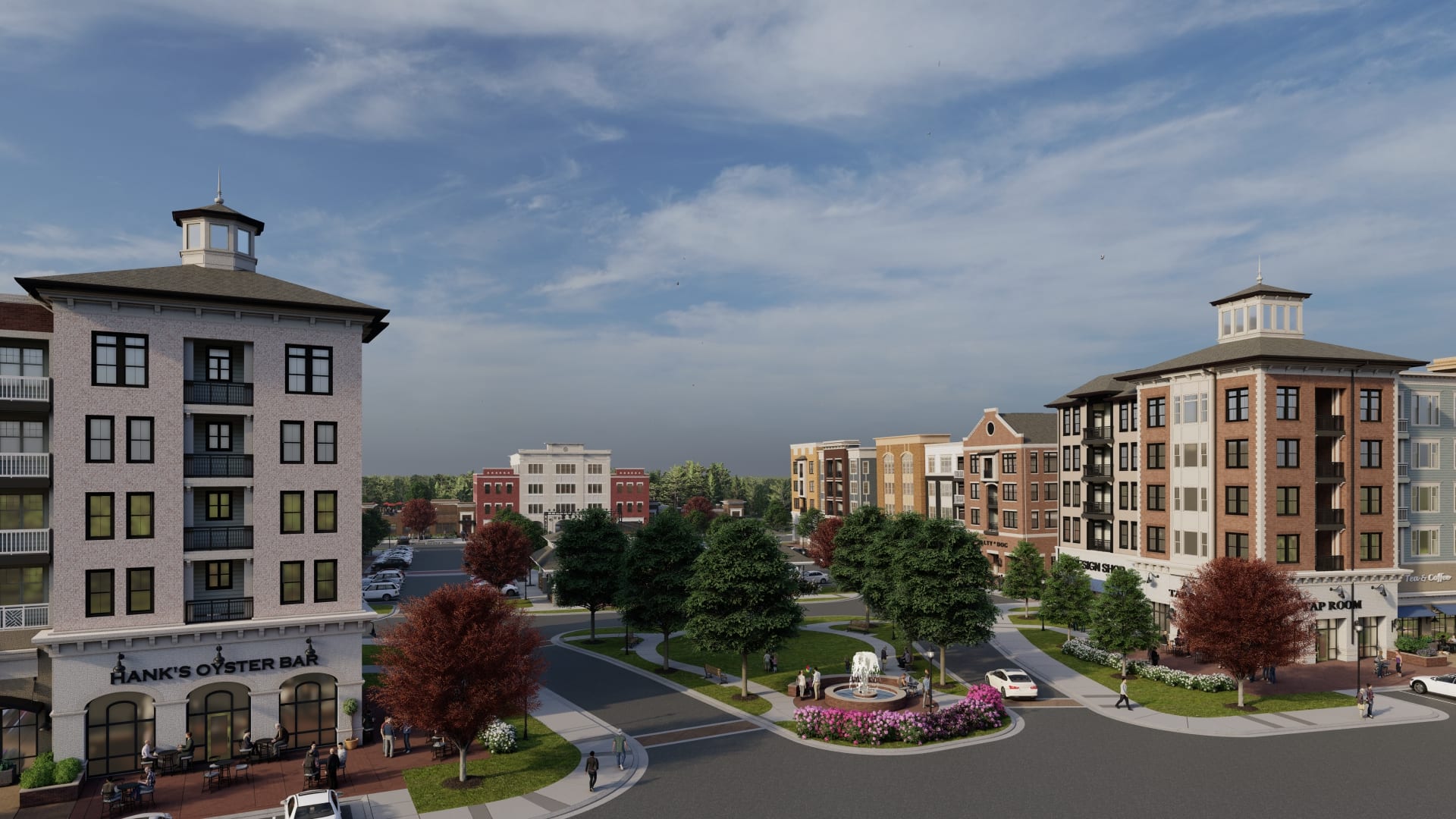
Future Growth & Development in Apex (2026 Analysis)
The growth trajectory of Apex stands out as one of the most structurally significant trends in southwest Wake County. This momentum is driven by the massive Veridea master-planned development, continuous transportation infrastructure expansions along the NC-540 loop, and the persistent build-out of established residential corridors. These multi-decade projects represent a primary focal point for relocators evaluating long-term property values and neighborhood options in the region.
Veridea: The Regional Master-Planned Innovation Node
Spanning approximately 1,100 acres along the Old US-1 corridor, Veridea functions as a multi-billion-dollar mixed-use urban community engineered by RXR. The development plan balances large-scale corporate employment anchors with modern high-density residential housing options.
NC-540 & Regional Transit Infrastructure
The continued execution of the NC-540 Triangle Expressway loop remains highly transformative for the local real estate ecosystem. By delivering direct, high-speed accessibility to Research Triangle Park, RDU International Airport, and Morrisville, this toll infrastructure allows western and southern resident corridors to bypass standard arterial bottlenecks in adjacent municipalities. The delivery of these multi-lane transit updates underpins the sustained commercial and industrial expansion scaling throughout southwest Wake County.
Master-Planned Residential Build-Out
Established signature developments such as Sweetwater, Bella Casa, and emerging master-planned communities situated along the primary highway growth vectors continue to execute planned phases of inventory. The managed expansion of these residential communities will deliver specialized single-family and townhome assets over the next five to ten years. For relocators prioritizing updated building materials, uniform neighborhood layouts, and integrated amenity centers, these master-planned corridors represent the primary baseline for new construction inventory in the local market.
Phil's Perspective on Apex Growth & Value
"Evaluating the Apex submarket requires analyzing a unique balance: preserving a highly stable, historic downtown center while simultaneously executing massive, capital-backed infrastructure growth. The multi-billion-dollar Veridea footprint is entirely committed, anchored by a flagship pediatric hospital system that will serve as a permanent regional talent magnet. Positioning your property search within the western growth vectors places your capital ahead of an established long-term demand curve. However, a calculated market approach means acknowledging that this municipality is not a universal fit for every buying profile. If maximizing total interior square footage per dollar is your absolute priority, adjacent southern corridors like Holly Springs or Fuquay-Varina generally present a lower baseline cost of entry. If you demand a mature, high-density concentration of commercial retail and corporate headquarters, Cary remains the more established asset class. But if your objective centers on capturing historic pedestrian character, quad-corridor commute flexibility, and positioning near documented, capital-committed growth drivers, Apex occupies a highly distinct tier within the Triangle region."
Awards & National Recognition
Apex's balanced municipal layout, long-term infrastructure funding, and managed development velocity have earned documented national validation across multiple economic health, structural growth, and civic formatting categories:
#3 Best Small City in America
Source: WalletHub (September 2025)
Out of 1,318 small municipalities evaluated nationwide based on economic health, affordability, and quality of life metrics, Apex secured the third-highest position in the country, anchored by the study's 12th-lowest unemployment rate and 5th-lowest poverty share.
#1 Best Place to Live in America
Source: Money Magazine (August 2015)
The town's most iconic national recognition evaluated suburban markets across the United States, highlighting the municipal infrastructure balance, pedestrian core, and strategic proximity to the Research Triangle Park employment node.
#10 Most Desirable City to Move To
Source: U.S. News & World Report (January 2026)
A comprehensive national analysis tracking consumer relocation destination trends and inbound moving volumes placed Apex within the top ten highest-interest municipalities across the United States.
56th-Lowest Violent Crime Rate Nationwide
Source: WalletHub / FBI Uniform Crime Reporting Data (September 2025)
Out of more than 1,300 cities analyzed in the comparative study, Apex's documented public safety records placed it within the top five percent lowest violent crime brackets across the entire national pool.
#1 Rated Boomtown in North Carolina
Source: The News & Observer Analysis / U.S. Census Bureau Records (November 2024)
An infrastructure and demographic data analysis designated Apex as the premier high-velocity growth community in North Carolina, reflecting sustained real estate and economic development across southwest Wake County.
The 'Peak of Good Living' Baseline
Source: Official Town of Apex Motto
The official town motto directly traces its roots back to the area's rail-era history, marking Apex as the single highest geographical elevation point on the old Chatham and Seaboard Air Line Railway corridors.
What Salary Do You Need to Live in Apex, NC (2026)?
Consistently ranked among the nation's best places to live, Apex pairs a walkable historic downtown Social District on Salem Street with top-rated Wake County schools and one of the Triangle's largest greenway networks.
To comfortably purchase a median-priced single-family home in Apex ($707,025) with a 20% down payment, most financial advisors recommend a household income of approximately $165,000–$180,000 per year. With a 10% down payment (accounting for private mortgage insurance), that range rises to approximately $180,000–$195,000 per year.
For buyers moving from major coastal hubs or neighboring Triangle markets, Apex's value proposition is exceptional. You gain access to premier Wake County public schools, a historic downtown Social District, quad-corridor commute access (US-1, NC-55, US-64, and NC-540), Beaver Creek Commons, and major park developments like Pleasant Park at a fraction of high-cost coastal metro prices.
Monthly Cost Breakdown – $707,025 Home
| Cost | Monthly Estimate |
|---|---|
| Mortgage (20% down, 6.8% rate, 30yr) | $3,688/mo |
| Property Taxes ($0.9106/$100 Town+County) | $536/mo |
| Homeowner's Insurance | $216/mo |
| HOA (varies by community) | $100–$350/mo |
| Total Housing Cost | $4,540–$4,790/mo |
Monthly Cost of Living Beyond Housing
| Category | Monthly Estimate |
|---|---|
| Groceries (2-person household) | $450–$650 |
| Utilities (Electric / Water / Gas) | $200–$350 |
| Transportation (gas, auto insurance, 540 tolls) | $300–$500 |
| Dining & Entertainment | $450–$750 |
| Healthcare (employer-supplemented) | $200–$400 |
| Total Non-Housing | $1,600–$2,650/mo |
Varies depending on lifestyle, household size, specific neighborhood, HOA fees, and down payment amount.
How Apex Compares Locally & Nationally
| City | Median Home Price | Income Needed to Buy |
|---|---|---|
| San Francisco, CA | $1,450,000 | $350,000+/yr |
| New York City, NY | $850,000 | $210,000+/yr |
| Chapel Hill, NC | $825,000 | $195,000–$215,000/yr |
| Apex, NC ⭐ | $707,025 | $165,000–$180,000/yr |
| Cary, NC | $697,500 | $165,000–$180,000/yr |
| Washington, DC | $650,000 | $160,000+/yr |
| Raleigh, NC | $445,000 | $115,000–$125,000/yr |
| Durham, NC | $460,000 | $115,000–$125,000/yr |
A household earning $175,000 per year in Washington, DC or New York is stretched thin on rent or a small condo. In Apex, that same income level allows you to purchase a spacious single-family home near Veridea, Scotts Mill, or Haddon Hall with access to Beaver Creek Commons, the American Tobacco Trail, and top-rated Wake County public schools.
That accessibility - combined with quad-corridor commute routes via US-1, NC-55, US-64, and NC-540 plus the long-term economic catalyst of Veridea - makes Apex a standout target for out-of-state buyers.
Interactive Salary Calculator
Adjust the sliders to match your home purchase scenario.
| Estimated Monthly Mortgage (P&I) | $-- |
| Property Tax (est. $0.9106/$100) | $-- |
| Homeowner's Insurance (est.) | $-- |
| Total Monthly Housing Payment | $-- |
"The income question I get most from relocating buyers is 'can we actually afford Apex?' - and the answer almost always surprises them. A dual-income household with one RTP salary and one remote income can live exceptionally well here. You're getting a historic downtown you can walk to, a park system like Pleasant Park that rivals anything in the Southeast, and a long-term appreciation signal from Veridea - for a monthly payment that would get you a two-bedroom condo in Northern Virginia. That realization is usually the moment the conversation shifts to 'how quickly can we get under contract.'"
Planning a Move to Apex?
Sell your existing property, purchase next home within 90 days, listing commission waived - $15,000 in equity saved.
Honest Pros & Cons of Living in Apex (2026 Analysis)
Evaluating a relocation target requires balancing documented structural advantages against localized day-to-day trade-offs. The southwest Wake County real estate landscape presents a distinct operational environment that aligns closely with specific buying profiles, while pointing others toward alternative adjacent suburban nodes.
THE PROS
- 1.Historic Architectural Center: The downtown Salem Street footprint presents a National Register Historic District anchored by the 1914 Union Depot and "The Local Spot" Social District, creating an established pedestrian zone unmatched by modern suburban developments.
- 2.Quad-Corridor Commute Access: The geographic intersection of NC-540, US-1, US-64, and NC-55 provides multiple independent routing choices connecting to major Triangle employment centers.
- 3.Completed Parks Infrastructure: Flagship civic amenities — including the 92-acre Pleasant Park campus, Apex Community Park lake facilities, and direct American Tobacco Trail links — are fully built and operational.
- 4.Committed Economic Anchors: Capital-intensive long-term developments like the upcoming ~230-acre multi-billion-dollar NC Children's health campus at Veridea establish permanent corporate and medical infrastructure.
- 5.Third-Party Safety Data: WalletHub's September 2025 analysis of 1,300+ small cities placed Apex at the 56th-lowest violent crime rate nationwide.
- 6.Established Resale Inventory: Neighborhood phases like Scotts Mill, Haddon Hall, and Abbington provide traditional single-family layouts featuring mature tree canopies and typical historical lot distributions.
THE CONS
- 1.Baseline Acquisition Premium: The single-family market median of $620,000 carries a current premium of roughly $130,000 to $180,000 over neighboring southerly entry points.
- 2.Master-Planned HOA Overhead: Specialized residential associations across contemporary developments impose mandatory fees fluctuating between $1,200 and $3,600+ annually, adding to carrying costs.
- 3.Arterial Peak-Hour Bottlenecks: Non-highway regional lanes — specifically NC-55 and Ten-Ten Road — experience predictable traffic volume at core intersections during standard daily commute flows.
- 4.Extended Infrastructure Development Windows: The western expansion sectors bordering the Veridea footprint will host active structural construction projects extending well into the next decade.
- 5.WCPSS District Assignment Fluidity: Attendance maps are strictly parcel-specific and subject to continuous optimization adjustments. Active enrollment caps require regular verification at wcpss.net.
- 6.Lower Commercial Core Density: The historic downtown retail strip offers high character but lacks the sheer volume and high-density commercial retail layout found in adjacent Cary or downtown Raleigh.
Market Alignment Decision Matrix
To evaluate whether this submarket layout supports your long-term real estate goals, consider the following structural cross-references:
Apex Alignment: Primary Candidate Profiles
- Commuters using highway lines like NC-540 or US-1 to reach regional nodes like RTP, Cary, Durham, or downtown Raleigh.
- Buyers prioritizing historic pedestrian street layouts, regional rail history integration, and active municipal social districts.
- Relocators demanding instantly accessible, mature municipal parks and greenways.
- Long-term investors looking to position assets near documented, capital-committed macroeconomic growth drivers.
Alternative Markets: Secondary Candidate Profiles
- Buyers seeking maximum interior residential square footage per initial dollar spent (Holly Springs or Fuquay-Varina yield a lower baseline cost of entry).
- Relocators demanding high-density concentrations of corporate retail, luxury shopping, and dense culinary options (Cary presents a more mature commercial matrix).
- Individuals requiring immediate, quiet residential lanes insulated entirely from adjacent major transit construction or multi-decade development noise.
- Commuters whose daily workforce destination anchors are located inside northeast Raleigh or Wake Forest (transit times from Apex scale toward 35 to 50+ minutes).
Phil's Perspective on the Apex Trade-offs
"A strategic approach to the real estate market means avoiding a simple sales pitch for a town; it demands making sure you understand the operational adjustments required by a specific address. Apex stands as an exceptional relocation market, but its advantages carry precise municipal costs. The traffic constraints along the non-highway corridors like NC-55 require proper transit planning during peak intervals. The mandatory monthly HOA commitments across modern master-planned communities add real weight to your total carrying costs. Additionally, if your expectations are calibrated to high-density metros with sprawling retail footprints, it is essential to recognize that the Salem Street corridor prioritizes distinct historical character over massive commercial volume. The buyers who secure long-term success here are those who enter the submarket with data parameters — valuing the structural combination of historic downtown walkability, quad-corridor transit accessibility, and positioning near capital-committed growth nodes."
People Also Ask About Living in Apex, NC
When evaluating real estate assets and lifestyle options across southwest Wake County, relocators frequently analyze identical structural, financial, and transit criteria. Below are objective answers to core regional inquiries:
Is Apex, NC a good place to live?
Apex continuously captures strong regional demand because it delivers a complete, built-out suburban infrastructure package: an active National Register Historic District downtown, finished municipal park spaces, and an advantageous quad-corridor transit network (NC-540, US-1, US-64, NC-55). Whether it represents the right geographical match depends on your specific commute boundaries, housing budget, and lifestyle alignment with a pedestrian-oriented historic core.
What is the cost of living in Apex?
The baseline cost of living is anchored by a single-family housing market median of approximately $620,000. For a median property using a 20% down payment at standard mortgage rates, monthly carrying costs including principal, interest, taxes, and baseline insurance average roughly $3,791 per month. While housing costs sit at a premium compared to neighboring southern entry points, North Carolina's flat 3.99% individual income tax rate keeps overall tax exposures favorable for East Coast relocators. Mandatory homeowner association (HOA) dues inside master-planned communities typically add $1,200 to $3,600+ annually.
Is Apex growing too fast?
Apex's population expansion to approximately 75,000 residents is actively managed and infrastructure-supported rather than purely speculative. Growth trends are anchored by major multi-lane transit corridors and large-scale, capital-committed developments like the multi-billion-dollar Veridea employment node. For property owners, this commercial volume serves as a long-term demand foundation. However, relocators must note that western expansion sectors near the future ~230-acre NC Children's hospital campus will remain active construction zones through the early 2030s.
What are the best neighborhoods in Apex, NC?
The market is categorized by distinct structural sub-sectors rather than a single premier neighborhood, allowing buyers to select based on specific property preferences:
Established Traditional Tiers - Scotts Mill, Haddon Hall, and Abbington deliver mature tree canopies, larger lot dimensions, and resale value stability.
Master-Planned Amenity Corridors - Sweetwater, Bella Casa, and newer US-1 corridor subdivisions offer resort-style amenities with contemporary floor plans and HOA-managed common areas.
Historic Core - Downtown/Salem Street infill properties provide the highest pedestrian walkability rating in southwestern Wake County and direct access to the Social District.
Western Growth Vectors - New construction near the Veridea/NC Children's footprint targets buyers positioning ahead of a major employment node build-out.
Apex vs. Cary: Which Wake County suburb is better?
Both southwest Wake County suburbs provide top-tier infrastructure but serve different architectural and retail priorities. Cary represents a larger, more established municipal market featuring higher overall dining density, corporate headquarters, and centralized luxury commercial centers. Apex offers a more distinct historic pedestrian core per square foot, an active downtown open-container Social District, and highly direct quad-corridor highway routing options.
Is Research Triangle Park (RTP) easily accessible from Apex?
Yes. Commuters traveling to Research Triangle Park benefit from highly direct transit paths. Off-peak drive times average 15 to 25 minutes via the NC-540 Triangle Expressway, bypassing standard municipal bottlenecks. Because NC-540 operates as an all-electronic toll route utilizing NC Quick Pass transponder billing, commuters should calculate these costs within their recurring monthly transportation budgets.
What are the current real estate market conditions in Apex?
The local housing sector operates in a balanced, predictable state. Single-family home values have anchored around a median acquisition price of $620,000, with typical regional listing inventories exhibiting average marketing times scaling between 33 and 55 days from listing to contract. This provides buyers with measurable negotiating leverage regarding due diligence periods and physical inspection items, while the underlying market demand remains insulated by significant long-term regional employment anchors.
Is Apex, NC safe?
Apex maintains strong documented public safety tracking. In WalletHub's comprehensive September 2025 national study of over 1,300 small cities, Apex recorded the 56th-lowest violent crime rate in the United States, placing it within the top five percent nationwide. While municipal safety indicators remain strong, relocators are encouraged to verify localized, parcel-level data maps using independent tracking registries during their due diligence window.
Searching for the Best Real Estate Agent or Relocation Specialist in Apex, NC?
Phil Slezak Is One of Apex's Top-Producing Real Estate Agents
People relocating to Apex search for a top or best real estate agent who knows the market and tells the truth about it. Phil Slezak has spent 20+ years helping buyers and sellers across the Triangle, and his track record is built on unfiltered local data, not sales pressure.
- Lived in Apex Since 2004: he has lived in Apex since 2004, so he knows the town firsthand.
- 20+ Years in the Triangle: two decades helping relocators find the right fit across Apex, Raleigh, Cary, and the Greater Triangle.
- $200M+ in Career Sales: over $200 million in closed sales across the Greater Triangle and Brunswick County, built one family at a time.
- 500+ Buyers & Sellers Helped: hundreds of families across the Triangle guided with unfiltered data and zero sales pressure.
- Top-Producing Team, Brokered by LPT Realty: Phil Slezak Real Estate is one of the top-producing teams in the Greater Triangle. NC Broker, License #242173.
Every buyer also gets the lifetime Buyer Home Guarantee: if you don't love your home at any point, we'll sell it for free or buy it back.
Frequently Asked Questions
What is the property tax rate in Apex?
The combined property tax rate for real estate located within Apex town limits is exactly $0.9106 per $100 of assessed value. This statutory total combines the updated Apex municipal tax rate of $0.3735 and the Wake County tax rate of $0.5371. For a property assessed at our market median value of $620,000, this translates to $5,646 per year (or approximately $471 per month). Tax bills are generated annually, and current rates should be validated directly via wakegov.com and apexnc.org prior to transaction closing.
Are school assignments guaranteed based on neighborhood proximity?
No. Public school assignments within the Wake County Public School System (WCPSS) are strictly tied to exact parcel coordinates and remain subject to annual alignment modifications by the Board of Education. Due to sustained residential development volume across southwest Wake County, select regional campuses operate under enrollment caps and feeder pattern waitlists. Relocators must manually validate active street-level routing assignments using official district data nodes at wcpss.net prior to transaction closure.
Does Apex have public transit?
Apex is served by regional GoTriangle bus lines that link the municipal core to adjacent employment nodes in Cary, Raleigh, and Research Triangle Park. However, the town's layout is fundamentally car-dependent, and the vast majority of residents rely on private vehicles for daily transit. The multi-lane NC-540 and US-1 corridors serve as the primary conduits for regional employment access.
What is the population of Apex, NC?
The population of Apex is approximately 75,000 residents, establishing it as one of the largest and fastest-growing suburban municipalities in western Wake County. The local population base has more than doubled since 2010, reflecting sustained inbound migration from out-of-state home buyers tracking regional employment opportunities.
How far is Apex from the beach and the mountains?
Apex's central position in the Piedmont region offers predictable travel times to both geographic perimeters. The closest coastal points, including Wrightsville Beach and Wilmington, are approximately 2 to 2.5 hours away via I-40 East. Traveling west, the foothills of the Blue Ridge Mountains and cities like Greensboro or Winston-Salem are accessible in 1.5 to 2 hours, while destinations like Boone or Asheville require a drive of 3.5 to 4.5 hours.
What major employers are near Apex?
Apex sits immediately adjacent to major employment nodes. Research Triangle Park (RTP) is home to over 300 corporate operations, including flagship tech, life science, and financial institutions like Cisco, IBM, Biogen, and Fidelity Investments. Major technology and financial hubs, such as Epic Games and MetLife, maintain extensive corporate footprints in neighboring Cary. Locally, the upcoming 1,100-acre Veridea master development, anchored by the ~230-acre NC Children's campus, a Duke Health and UNC Health partnership, is projected to supply approximately 8,000 direct jobs alongside an estimated 18,000 indirect regional positions to the southwest Wake County market ecosystem.
Phil's Perspective on Raleigh
"I moved to the Triangle from Connecticut over 20 years ago — and I remember exactly what it felt like to research this market from the outside. Everything looked good on paper, but nobody was giving me the straight answers I needed to actually make a confident decision. That is why this site exists.
Raleigh in 2026 is one of the most compelling relocation markets in the country — but it is not for everyone and it is not perfect. The traffic on I-40 is real. The school assignment complexity is real. The summer humidity is real. And the price, while low by coastal standards, has moved meaningfully in the last five years.
What is also real: the employment base, the university ecosystem, the dining scene that keeps surprising people, the greenways, the outdoor access, and the fact that you can own a home near a historic neighborhood and a world-class research park for $445,000.
I have watched buyers from New York, DC, California, and Connecticut walk through this market and have the same realization — that the life they were working toward in their expensive city is available here right now, without waiting another decade for the prices to come down. My job is to make sure you understand exactly what you are buying — the good and the honest trade-offs — before you sign anything."
— Phil Slezak
| Real Estate Broker | LPT Realty | 20+ Years in the Triangle
Ready to Explore Apex?
Whether you are months away or ready to move now, a quick conversation can save you weeks of research. I have helped hundreds of buyers find the right fit in the Triangle - and I can help you too.