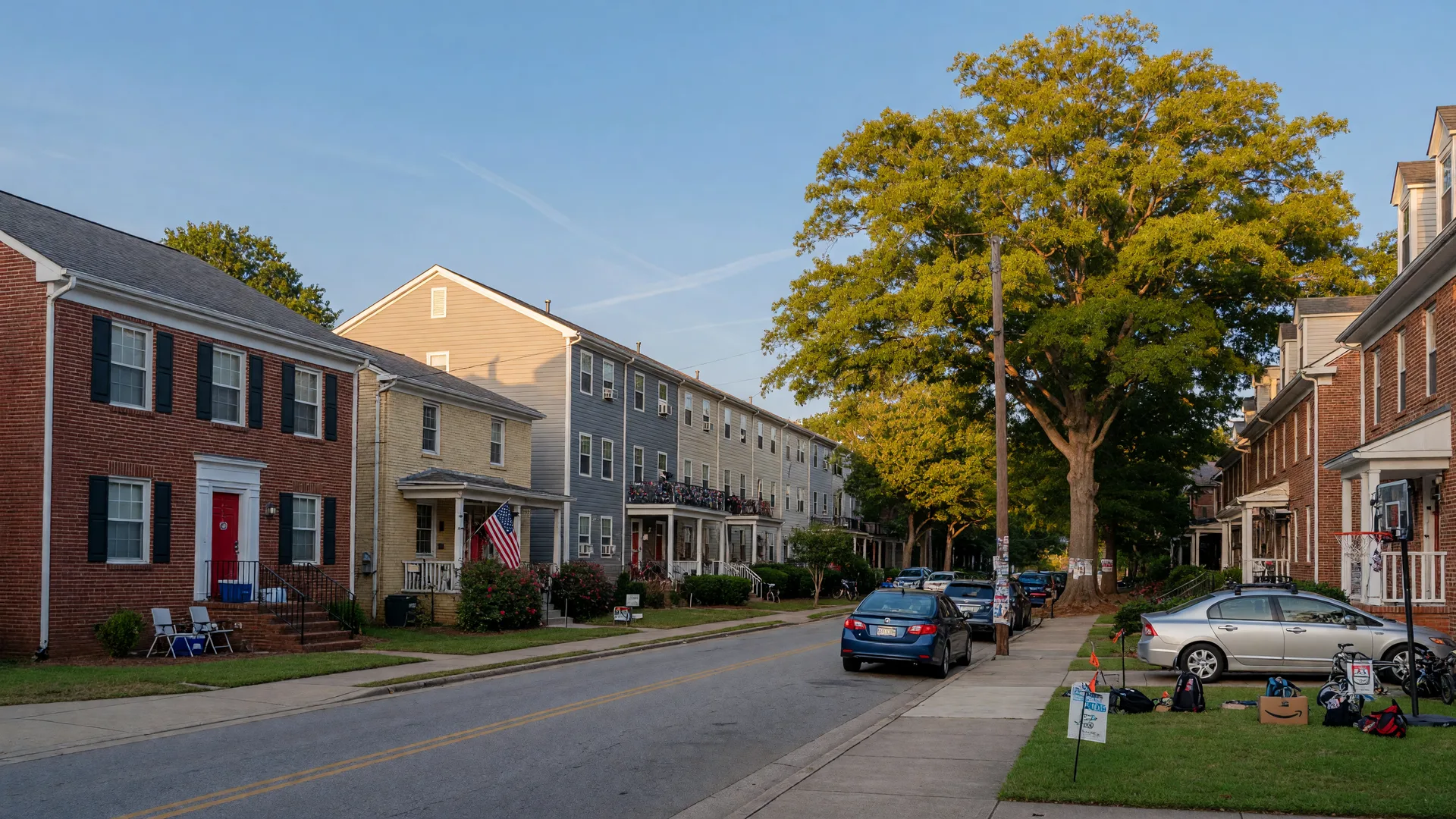
The Triangle Real Estate Investor Playbook.
Discover how to achieve true positive cash flow in Raleigh and Durham with $300K 4-bedroom university rentals near NC State and Duke. Download the complete investor blueprint.
SECTION ONE
The Triangle Investment Landscape
The Triangle market has matured significantly over the past decade. What once was a reliable cash-flow market for single-family rentals has shifted. To invest profitably today, you need to understand which submarkets still deliver yields and which ones have been priced out.
Market Yield Comparison: Wake vs Durham vs Johnston County
Each county in the Triangle offers a different risk-reward profile for buy-and-hold investors. Here is how they compare at current median price points:
| County | Median SFR Price | Gross Rent Multiplier | Yield Profile |
|---|---|---|---|
| Wake County | $450,000+ | 20x-22x | Negative to break-even |
| Durham County | $380,000 | 17x-19x | Thin margins |
| Johnston County | $340,000 | 15x-17x | Modest cash flow |
| University Micro-Markets | $280K-$340K | 10x-13x | Strong positive cash flow |
Cash Flow Reality by County
Wake County: A $450,000 single-family home with 20 percent down, a 6.5 percent interest rate, taxes, and insurance typically runs $2,500 to $2,700 per month in total housing cost. Market rent for that property is around $2,200 to $2,400. You are cash-flow negative before any maintenance or vacancy reserve.
Durham County: At $460,000 median prices, traditional rentals still produce paper-thin margins in the $50 to $150 per month range after all expenses.
Johnston County: Lower entry prices produce modest positive cash flow on single-family homes, but tenant demand is weaker and commute distances to major employment centers are longer.
The University Micro-Market Opportunity: The one strategy that still works consistently across the Triangle is purchasing 4-bedroom properties near major universities at $280,000 to $340,000 and renting by the room. This is the focus of this playbook.

Phil's Perspective
"I have been investing in the Triangle since 2004. The market has changed radically. The old playbook of buying any suburban house and expecting cash flow does not work anymore. But the university by-the-room strategy on 4-bedroom units is one of the few remaining sweet spots where you can spend $300K and generate real positive cash flow from day one. My team helps investors identify these properties, analyze HOA documents, and verify zoning so you can invest with total certainty."
SECTION TWO
The $300K By-the-Room Cash-Flow Blueprint
Target Micro-Markets
The Triangle is home to more than 100,000 college and graduate students, creating an enormous and consistent rental demand base. The three primary micro-markets are:
- NC State University (36,000+ students) -- The Hillsborough Street corridor, Gorman Street area, and Avent Ferry Road neighborhoods offer the highest concentration of 4-bedroom townhomes and condos at the $280K to $340K price point. Limited on-campus housing forces most upperclassmen and grad students off campus.
- Duke University and Duke Medical Center (15,000+ students plus residents and fellows) -- Medical residents, nursing students, and grad researchers create year-round demand. Properties in the Old West Durham and Duke Park neighborhoods near East Campus are prime targets.
- NC Central University and Shaw University (10,000+ combined) -- Expanding the rental pool across south Durham and downtown Raleigh with additional demand from university-affiliated professionals and staff.
Real-World Deal Breakdown: Traditional vs By-the-Room
The following table illustrates the financial difference between a traditional single-family lease and a by-the-room strategy on the same $300K 4-bedroom property:
| Metric | Traditional Single-Tenant Lease | By-the-Room University Lease (4-Bed) |
|---|---|---|
| Price Point | $300,000 | $300,000 |
| Down Payment (20%) | $60,000 | $60,000 |
| Rental Rate Structure | $1,850/month (single master lease) | $700-$750/month per bedroom |
| Gross Monthly Income | $1,850 | $2,800-$3,000 |
| Estimated PITI + HOA | ~$2,100 | ~$2,100 |
| Estimated Expenses (10%) | ~$185 | ~$290 |
| Net Monthly Cash Flow | -$435 (Negative) | +$350 to +$550 (Positive) |
| Annual Cash Flow | -$5,220 | +$4,200 to +$6,600 |
| Cash-on-Cash Return | Negative | 7% to 11% |
Note: PITI estimated at 6.5% interest rate, 30-year fixed, excluding principal paydown and tax benefits. Actual returns vary by property, financing terms, and operating costs.
SECTION THREE
Due Diligence, Zoning & HOA Guardrails
Before purchasing any property for a by-the-room strategy, you must verify two critical items. Skipping these steps has cost investors thousands in fines and forced exits.
Municipal Unrelated-Occupant Limits
Raleigh, Durham, and each surrounding municipality have their own zoning codes that define how many unrelated individuals may occupy a single dwelling unit. These limits typically range from three to five unrelated adults. The specific limit varies by zoning district, even within the same city. For example, an R-10 zone in Raleigh may allow up to four unrelated occupants while a compact neighborhood zone may cap at three.
You must verify the limit for your specific target address using the city's zoning ordinance or by calling the planning department. This is a deal-breaker check that happens before you make an offer, not after.
HOA Bylaws and Rental Caps
Many townhome and condo communities in university corridors limit the percentage of units that can be rented at any given time. Common caps range from 20 to 30 percent of total units. Some HOAs also impose:
- Minimum lease terms -- Requiring 6-month or 12-month minimum lease durations that may conflict with academic calendar leasing.
- Explicit prohibitions -- Some CC&Rs specifically ban room-by-room or short-term leasing arrangements.
- Occupant age restrictions -- Certain communities limit the number of occupants under a specific age, effectively blocking student-heavy tenancies.
Always request and review the full HOA covenants, conditions, and restrictions (CC&Rs) along with the most recent financial statements before making an offer. My team reviews these documents for every investor client as part of our due diligence process.
Phil's Perspective
"I have seen investors lose deals because they assumed a property was zoned for four unrelated tenants when it was only zoned for three. I have seen HOA violations wipe out a year of cash flow overnight. This section is not optional reading. Every investor who skips this step is gambling, not investing."
SECTION FOUR
Self-Management & Tech Automation
One of the most common concerns investors raise about by-the-room rentals is management complexity. In practice, modern tools make self-management far simpler than most people expect. Here is the tech stack that successful Triangle investors use:
Individual Digital Leases
Each tenant signs their own lease agreement with clearly defined terms, room assignment, security deposit, and rent amount. Platforms like Avail, TurboTenant, and TenantCloud generate compliant lease documents and handle digital signatures. This approach also protects you: if one tenant leaves, the others remain bound by their agreements.
Automated ACH Rent Collection
Platforms like Avail, Zillow Rental Manager, and TenantCloud handle automated ACH rent collection, late fee assessment, and payment reporting. Set it up once and rent arrives in your account on the first of every month without manual follow-up. Late payments trigger automatic notifications and fees.
Utility Capping Systems
Most self-managing landlords either include utilities with a monthly cap built into each tenant's room rent or use software that splits the monthly electric and water bill equally among tenants. Setting a reasonable cap (e.g. $50 per tenant for electricity) incentivizes conservation while protecting your margins.
Predictable Turnover Cycles
Aligning lease terms with the academic calendar (August through July) creates predictable, once-a-year turnover. The massive student population across NC State, Duke, and NCCU gives you a deep replacement pool. Starting the re-leasing process 60 to 90 days before the lease ends and using student housing Facebook groups and university off-campus portals typically fills vacancies well before move-out day.
Phil's Perspective
"I manage my own portfolio using exactly these tools. Individual leases with automated collection and utility capping turn a property that would require constant attention into something that runs itself. The key is setting up the systems before you need them, not after problems appear."
SECTION FIVE
Exit Strategies & Risk Mitigation
Smart investors plan their exit before they enter. Here are the strategies and protections that give you flexibility and reduce risk in your Triangle investment.
Buyer Home Guarantee
Every buyer I represent receives my exclusive Buyer Home Guarantee. If you buy a home through my team and later feel it was not the right investment, I will sell it for free within the first 12 months. This removes the fear of making a wrong decision and gives you a guaranteed exit if your circumstances change.
Off-Market Deal Access
Through our exclusive off-market investor portal, my team identifies properties that match your criteria before they hit the public market. This gives you a competitive advantage in a market where speed and access determine whether you secure the deal or watch it go to a cash buyer.
Additional Risk Mitigation Tools
- Sold Zero Commission -- When it is time to exit, the Sold Zero Commission program lets you sell without paying a listing commission, keeping more equity in your pocket.
- Cash Offer Network -- When you need to close fast or compete in a multiple-offer situation, our cash offer network provides same-day underwriting and guaranteed closings.
- Complete Investor Guide -- My full market intelligence guide covers everything from school assignments to property tax comparisons to neighborhood matching for the entire Triangle.
"Excellence is our standard. Customer satisfaction is our passion. I built this playbook because the kind of honest, data-driven investor guidance I wish I had when I started investing in the Triangle simply did not exist. Now it does."
- Phil Slezak, Real Estate Broker
INVESTOR FAQ
Frequently Asked Questions
What are the best micro-markets for by-the-room investing near Raleigh universities?
The strongest micro-markets include the areas within a 10- to 15-minute radius of NC State University's main campus (Hillsborough Street corridor, Gorman Street, Avent Ferry Road), neighborhoods surrounding Duke University and Duke Medical Center in Durham, and areas near NC Central University south of downtown Durham. Each of these areas has a high concentration of 4-bedroom townhomes and condos at the $280K to $340K price point with consistent student demand.
What should I check in HOA documents before buying a by-the-room rental property?
You must verify three things: the maximum percentage of units allowed to be rented (many HOAs cap rentals at 20-30 percent), any minimum lease term requirements (some require 6 or 12 month minimums), and any explicit prohibition on room-by-room or short-term leasing arrangements. Always request and review the full CC&Rs before making an offer.
How do I manage turnover and vacancy risk in university rental properties?
Aligning lease terms with the academic calendar (August through July) creates predictable turnover cycles. The large and consistent student population across NC State, Duke, and NCCU gives you a deep replacement pool. Starting the re-leasing process 60 to 90 days before the current lease ends and leveraging student housing Facebook groups and university off-campus housing portals typically fills vacancies well before move-out day.
Ready to Start Investing in the Triangle?
Whether you are a first-time investor or expanding a portfolio, my team provides the research, zoning verification, and off-market access you need to invest with confidence.