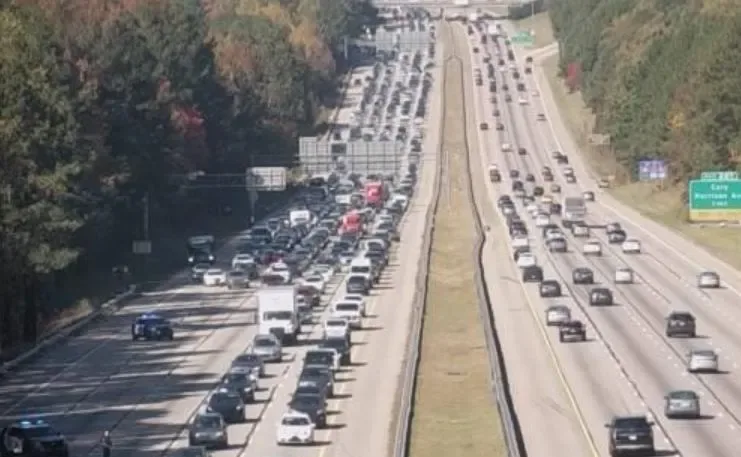
"How bad is traffic?" is one of the first questions out-of-state buyers ask me, and it deserves an honest answer. Traffic in the Raleigh-Durham-Chapel Hill area has gotten worse over the last decade, no question. But it is still below the national average, and it is nowhere near what you'd face in Boston, New York, or Los Angeles.
Here's the real data, the worst corridors to know about, and how commute times should factor into your neighborhood decision.
"To give you total clarity, unfiltered local data, and zero risk—backed by a lifetime guarantee that puts your peace of mind first."
How Do Triangle Commutes Compare to the National Average?
Average one-way commutes (2025 U.S. Census data) run roughly 23-25 minutes for most Triangle workers: about 23.6 minutes for Raleigh, 24.9 for Durham, and 21.3 for Chapel Hill. The national average is around 27-30 minutes. Traffic data providers like INRIX consistently show Raleigh-Durham drivers lose less time to congestion than the national average.
The honest read: this is a manageable car commuter's market. You'll rarely sit in standstill traffic the way you would in a big Northeast or West Coast metro. But you should still plan your suburb around where you actually work, because a few specific corridors do back up hard at rush hour.
The Worst Highways in the Triangle
If you're relocating, memorize these four corridors:
- I-440 (the Raleigh Beltline) is typically the Triangle's most congested road at rush hour, especially its southern segment and the Glenwood Avenue interchange, plus the I-440/I-40 west-side split where RTP commuters merge.
- I-40 between Raleigh and Durham is the biggest single choke point, backing up in both directions as workers pour into Research Triangle Park. Morning rush runs roughly 7-9 a.m.; the worst evening backlog hits I-40 eastbound around 3-6 p.m.
- US-1 (the Raleigh-Cary spur) and I-540 also back up, mainly around the RTP, Glenwood, and Wade Avenue interchanges. I-540 is tolled (NC Quick Pass) and often used as the reliever route when I-40 snarls.
- US-70 and NC-54 are the common parallel alternates locals use when I-40 is jammed. They won't be fast either at peak, but they move.
Real Drive Times to Research Triangle Park
RTP is the region's employment heart, so commute times to it matter most. Off-peak, these are the realistic one-way drives:
- Morrisville: about 5-15 minutes. Nothing beats it for an RTP worker.
- Cary: about 10-20 minutes.
- Apex: about 20-30 minutes.
- Downtown Raleigh: about 25 minutes via I-40 East.
- Chapel Hill: about 22 minutes via I-40 West.
- Northwest Raleigh: about 15-30 minutes.
During peak rush, a downtown Raleigh to/from RTP run can stretch to 45-60 minutes on bad days, and a single accident ripples across I-40 and I-440. The evening eastbound crawl on I-40 is the one you'll feel most.
How Commute Should Shape Your Suburb Choice
If you work in RTP, live on the west or northwest side: Morrisville, Cary, or Apex. If you work downtown Raleigh, the inside-the-Beltline or near-Beltline neighborhoods avoid the worst of it. If you're fully remote or only occasionally in an office, then Wake Forest, Holly Springs, or the more affordable eastern towns like Garner and Clayton give you more house for less money without punishing a daily commute.
My honest advice: don't buy based on a "worst day" commute. Buy based on the 90% of days, and check Google Maps during your actual commute window before you commit to a neighborhood.
The Bottom Line
Traffic in the Triangle is real and getting busier, but it's still very manageable by national standards. Average one-way commutes sit around 23-25 minutes, well under the national average. The congestion you'll actually feel is concentrated on I-440, I-40's RTP corridor, US-1, and I-540 at peak hours.
Pick your suburb with your real commute in mind and you'll spend your days enjoying this area, not sitting in it. That's exactly the kind of match I help people make every week, with real drive-time data, not hype.
Rush Hour Realities: When the Triangle Actually Congests
If you want to know what your daily drive will really feel like, you need to know when the system gets tight, not just where. The Triangle's congestion is heavily time-stamped:
- Morning peak runs roughly 7-9 a.m. I-40 westbound toward Research Triangle Park and I-440's southern arc are the first to slow. The worst of it is usually a defined window: get out before 7:15 or after 9 and the difference is dramatic.
- Evening peak starts absurdly early by Northeast standards. The I-40 eastbound crawl backs up around 3 p.m. and stretches to about 6 p.m. That 3-6 p.m. window is the single most predictable slowdown in the region, and it surprises a lot of New Yorkers who assume 5 p.m. traffic.
- School-year weeks are busier than summer weeks. Once Wake and Durham county schools are in session, carpool and school-run traffic stacks on top of the commuter surge, adding 5-10 minutes to the same drive you made in June.
- Friday afternoons and holiday weekends run their own pattern. RTP empties out early on Fridays, and I-40 westbound toward the mountains and beach-bound US-1 south stack up differently than a normal weekday. Locals plan long trips for Saturday morning, not 4 p.m. Friday.
The practical takeaway: the Triangle gives you usable, predictable windows. Traffic here is not a 7 a.m. to 7 p.m. wall of cars the way it is on the Belt Parkway or the 405. It is a 90-minute morning squeeze and a three-hour evening squeeze, and you can plan around both.
Commute Times by Suburb: A Planning Table
Here are the realistic off-peak one-way drives to Research Triangle Park from the towns that come up most with relocating buyers, straight from the numbers above:
| Suburb | Off-Peak Drive to RTP | Peak Reality |
|---|---|---|
| Morrisville | 5-15 minutes | The best commute in the region for an RTP worker |
| Cary | 10-20 minutes | Still short; the west side is closest to the park |
| Apex | 20-30 minutes | Add 10-15 minutes at morning peak via I-540 |
| Northwest Raleigh | 15-30 minutes | Wide range by neighborhood; check the NC-54 or I-40 path |
| Chapel Hill | About 22 minutes via I-40 West | Eastbound into RTP backs up at peak; leave early |
| Downtown Raleigh | About 25 minutes via I-40 East | 45-60 minutes on a bad peak day, usually the p.m. crawl |
If your work is downtown Raleigh instead of RTP, the inside-the-Beltline and near-Beltline neighborhoods sidestep the worst of the western inbound traffic.
Public Transit, Telework, and Real Alternatives
The honest answer most relocating professionals need: a car will be your primary commute tool in the Triangle. But there are real alternatives for specific routes, and they are getting better year by year.
- GoTriangle regional express routes: the CRX (Chapel Hill-Raleigh), DRX (Durham-Raleigh), FRX (Fuquay-Varina), NRX (North Raleigh), and WRX (Wake Forest-Raleigh) express buses are built for exactly this commute, and they use the shoulder and priority lanes where they exist.
- GoRaleigh and the GoTransit family: GoRaleigh, GoDurham, GoCary, and Chapel Hill Transit all operate under the same fare system, so a transfer between city systems is seamless for the stretches where that works.
- Amtrak out of Raleigh Union Station: the Piedmont and Carolinian give the region real rail options for trips to Greensboro, Charlotte, and the Northeast corridor, and the station is a lovely place to wait compared with most.
- The half-cent transit tax is doing real work: Wake County voters approved it in 2016, and it has funded the expanded bus network and the push toward bus rapid transit along the region's busiest corridors.
The commuter rail line once planned to link Garner, Raleigh, Durham, and RTP was shelved after federal funding did not materialize, so betting your house hunt on a future train is not sound planning. Bet on the bus routes that exist, a flexible schedule, or a neighborhood close to work.
How to Test a Commute Before You Commit
I tell every out-of-state client the same thing: do not trust a drive-time estimate you checked on a Saturday afternoon. Here is the testing routine that actually works:
- Run the route in Google Maps three times: 6:45 a.m., 8:15 a.m., and 5:15 p.m. on a normal school weekday, using the "arrive by" feature so it models the drive you will actually make.
- Drive it in person during your window if you can. A relocation trip that includes one real rush-hour commute tells you more than a month of map research.
- Ask the neighbor question: when you tour a home, ask the listing agent, or better yet the actual neighbor, how long the drive to RTP or downtown takes on a bad day. Real users know the shortcuts and the choke points.
- Stack the school run on top: if you have kids, the school drop-off loop adds time in the same window as your commute. Map the school route too before you pick a side of town.
The Commute Versus House Trade-Off: Matches That Work
Nearly every neighborhood decision in the Triangle is a commute decision in disguise. Here is how the trade-offs tend to land in 2026:
- RTP and tech workers: Morrisville, Cary, and Apex trade the shortest drives for western-suburb prices. Morrisville in particular is the single most commute-friendly suburb in the region.
- Downtown Raleigh workers: inside-the-Beltline and near-Beltline neighborhoods beat every suburb for a State Capitol, Glenwood South, or downtown campus commute.
- UNC, Duke, and WakeMed healthcare workers: the medical campuses cluster in Chapel Hill, Durham, and downtown Raleigh, so Chapel Hill, Durham, and the Beltline neighborhoods deserve the shortlist.
- Remote and hybrid workers: if you are in the office two days a week or less, Wake Forest, Holly Springs, Garner, and Clayton convert commute minutes into more house for the same monthly payment.
The Bottom Line on Commute Planning
Traffic in the Triangle is real, concentrated, and predictable. Average one-way commutes sit around 23-25 minutes, comfortably under the national average, and the pain is localized to I-440, I-40's RTP corridor, US-1, and I-540 during defined peak windows. Pick your suburb with your actual route in mind, test the drive at your real hours, and this remains one of the easiest big metros in the country to live in without hating your car.
That is the kind of match I help relocating families make every week, using real drive-time data and real neighborhood knowledge, not brochure maps. If you want your commute factored into a shortlist of homes that actually fit your life, that is exactly what a consultation is for.
Frequently Asked Questions
How bad is traffic in the Raleigh Triangle compared with other metros?
Average one-way commutes run about 23-25 minutes, below the national average of roughly 27-30 minutes. Congestion exists and is concentrated at rush hour, but it is nowhere near the level of Boston, New York, or Los Angeles.
What are the worst highways in the Triangle?
I-440 (the Raleigh Beltline), I-40 between Raleigh and Durham, and the US-1 and I-540 interchanges around RTP are the hot spots. The evening I-40 eastbound crawl from about 3-6 p.m. is the most predictable slowdown.
What is the fastest commute to Research Triangle Park?
Morrisville at about 5-15 minutes is the fastest, followed by Cary at 10-20 minutes. Apex runs 20-30 minutes, and downtown Raleigh runs about 25 minutes off-peak but can stretch to 45-60 minutes at peak.
Which suburbs are best for commuters?
RTP workers should prioritize Morrisville, Cary, or Apex on the west side. Downtown workers fit best inside or near the Beltline. Remote or hybrid workers get the most house for the money in Wake Forest, Holly Springs, Garner, or Clayton.
Can you commute in the Triangle without a car?
It is possible for specific routes using GoTriangle express buses, GoRaleigh, and the GoTransit family, plus Amtrak from Raleigh Union Station, but the practical answer for most households is still a car. Budget for one.
Your Next Step
Build Your Home Search Around the Commute You Will Actually Make
I work with relocating buyers every week to match their real drive times to the right suburb and the right block, using live route data and two decades of neighborhood knowledge. Tell me where you work and I will show you where you should live.

Phil Slezak
Real Estate Broker · NC #242173 · 20+ years in the Triangle
I've run these commutes for twenty years and matched hundreds of relocating families to the suburb that fits their drive, their budget, and their life. Let's talk about yours.
Book a callRelated Articles
Phil Slezak Real Estate brokered by LPT Realty