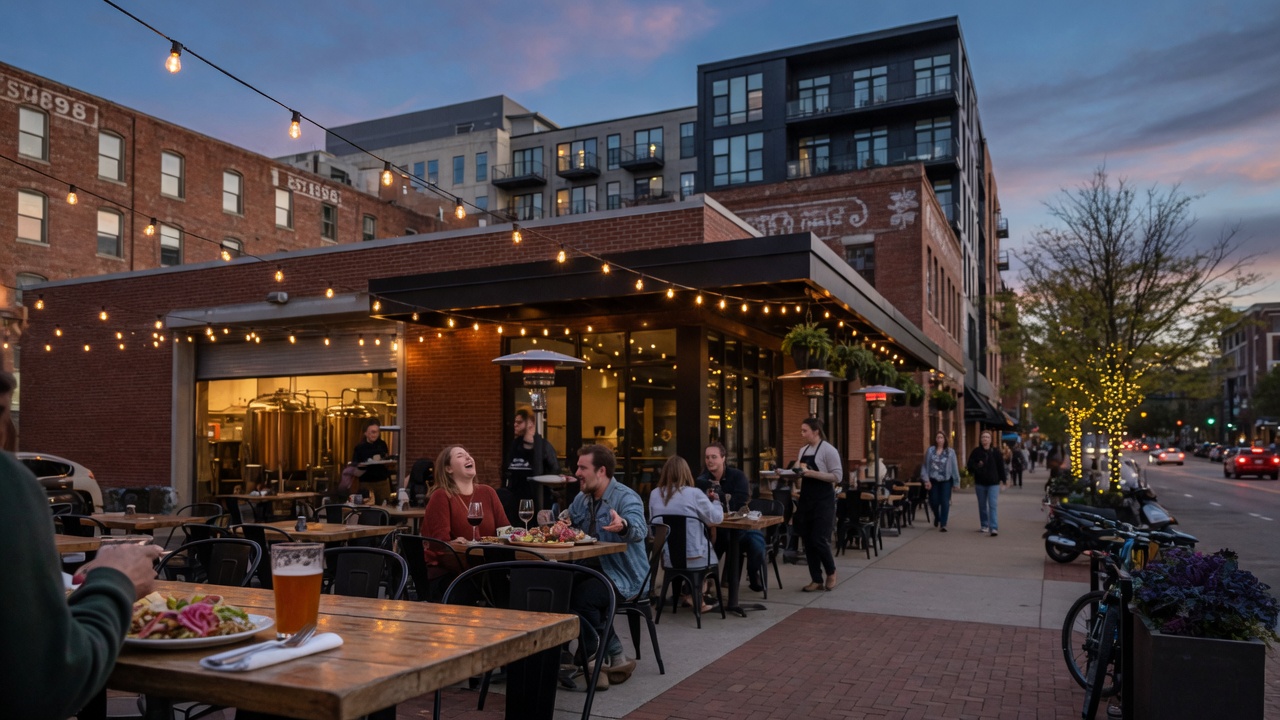
People ask me all the time: "What's the best suburb in the Triangle?" The answer is always the same - it depends on what matters to you. A family with young kids has completely different priorities than a young professional or a retiree. There is no single "best" suburb. But there is a best suburb for you.
Here's my honest take on the four that come up most often, plus a few you might not have considered.
"To give you total clarity, unfiltered local data, and zero risk—backed by a lifetime guarantee that puts your peace of mind first."
Cary - The Established Choice
Cary is the Triangle's most popular suburb for a reason. It's well-run, has excellent schools (particularly in the western Wake district), tons of parks and greenways, and a downtown that's genuinely become a destination over the last decade.
The honest trade-off: Cary isn't cheap anymore. Median home prices hover around $475,000-$525,000, and the best neighborhoods push higher. If you're coming from a high-cost area, this still feels reasonable - but if you're comparing to Apex or Fuquay, you're paying a premium for the Cary name and established infrastructure.
Best for: Families who prioritize school quality, want established neighborhoods with mature trees, and don't mind paying a bit more for polish.
Apex - The Sweet Spot
If I had to pick one suburb that balances value, schools, location, and community feel, Apex is it. It's got a charming historic downtown, strong schools, and home prices that are typically $40,000-$75,000 less than comparable Cary neighborhoods.
The commute to downtown Raleigh is about 20-25 minutes, and to the Research Triangle Park corridor, it's even less. The town has grown fast but has maintained its character better than most.
The honest trade-off: Apex is popular enough now that inventory moves fast. If you find a home you love, you need to be ready to act. Also, some of the newer developments on the western edge feel less "Apex" and more "generic suburban."
Best for: Buyers who want the Cary experience at a lower price point, who value a walkable downtown, and who appreciate a community that's growing without losing its identity.
Holly Springs - The Family Machine
Holly Springs is the Triangle's most family-focused suburb. The schools are consistently among the top-rated in Wake County, the parks and recreation programs are outstanding, and there's a genuine small-town community feel despite the rapid growth.
Home prices typically range from $400,000 to $550,000, with a lot of new construction in that sweet spot. The town has invested heavily in infrastructure - new roads, new parks, new community centers.
The honest trade-off: Holly Springs is further from downtown Raleigh (25-35 minutes) and doesn't have the nightlife or restaurant scene that Cary or Apex offer. It's very family-oriented, which is great if that's your priority but less ideal if you want walkable dining and entertainment.
Best for: Families with school-age kids who want top-tier schools, newer homes, and a strong sense of community. Not ideal for singles or empty-nesters.
Wake Forest - The Grown-Up Suburb
Wake Forest has evolved from a small college town into one of the Triangle's most desirable suburbs. It's got more character than most - the historic downtown, proximity to Falls Lake, and a mix of older and newer neighborhoods give it a personality that's harder to find in the southern suburbs.
Median prices sit around $450,000-$550,000, but there's a wide range from starter homes to luxury properties on large lots.
The honest trade-off: The commute to downtown Raleigh is longer (30-40 minutes) and traffic on US-1 can be rough during rush hour. Southern Wake County (where Holly Springs and Apex are) has better highway access to RTP and Durham.
Best for: Buyers who want more space, prefer a town with history and character, and don't mind a slightly longer commute. Great for remote workers and those who prioritize outdoor recreation.
Don't Sleep On These
A few suburbs that deserve more attention:
- Fuquay-Varina - The best value in southern Wake County. Newer homes, lower prices, and a rapidly improving downtown. 20 minutes from Apex.
- Garner - Closest affordable suburb to downtown Raleigh. Underrated for buyers who want a short commute without Raleigh prices.
- Morrisville - Tech corridor location, walkable to RTP, and a diverse community. Smaller homes but unbeatable convenience for RTP workers.
- Knightdale - Eastern Wake County's rising star. Lower entry prices, new construction, and improving infrastructure.
The Bottom Line
The "best" suburb is the one that fits your life - your commute, your budget, your kids' schools, and the lifestyle you actually want. Don't pick based on a "Top 10" list. Pick based on your real priorities.
That's what I help people do. A 20-minute conversation can narrow your search from "everywhere in the Triangle" to the 2-3 neighborhoods that genuinely fit. And that's worth more than any suburb ranking article.
How to Compare Suburbs Without Going in Circles
When families start the Triangle search, they usually compare towns the way they compare cars, side by side on price and features. That is a mistake, because a suburb is not a product you drive, it is a system you live inside. Here is the framework I use with relocating buyers, and it works every time:
- Score the commute first, not last. The median home price difference between two suburbs is a one-time number. The extra 20 minutes a day you spend driving is a daily, compounding cost. Work backward from where you actually work, and the real commute times guide gives you the numbers to do it.
- Separate "school quality" from "school match." A top-rated district is not automatically the right fit for your child. Wake County's address-based assignment, calendar choices, and magnet options mean the right school for your family can live in a town you had not shortlisted.
- Match the inventory to your timeline. Need to move in six weeks? Some suburbs are resale-heavy with immediate inventory. Want a to-be-built home on a cul-de-sac? You are shopping new-construction communities, not a town.
- Check the daily rhythm, not the statistics. Where do you actually go: the gym, the pediatrician, the grocery, the airport? A suburb that is 10 minutes from RTP but 35 minutes from your daughter's soccer complex has a hidden cost that no ranking captures.
The Contenders in Detail: The Value Four
The quick bullets above barely scratch these four. Here is the fuller picture for each, because they are where a lot of relocating families land:
Fuquay-Varina: The Southern Wake Value
Fuquay-Varina is the best value in southern Wake County, and it keeps getting better. Newer construction dominates the price points that feel impossible in Cary, the downtown has a real small-town main street with restaurants and breweries, and the town has been adding parks and infrastructure at a fast clip. It is roughly 20 minutes from Apex and a manageable run to RTP via US-1 and I-540. The honest trade-off: the southern position means a longer drive to downtown Raleigh, and the school assignments pull from a wider southern Wake base.
Garner: The Short Commute to Downtown
Garner is the closest genuinely affordable suburb to downtown Raleigh, and for anyone who works in the city rather than the park, it deserves a serious look. You get single-family homes at entry-level prices, established neighborhoods with mature trees, and a downtown that has invested heavily in its own identity. The honest trade-off: the school district conversation is different, and the resale market is thinner than the western suburbs, which matters if you plan to move again in five years.
Morrisville: The Commuter's Cheat Code
Morrisville sits right on the doorstep of Research Triangle Park, and that location does more work than any amenity. A 5-15 minute drive to the park beats every other suburb in the region, the community is genuinely diverse, and the new mixed-use development at Park West is building the kind of walkable density the Triangle is known for. The honest trade-off: homes and lots run smaller, prices are not cheap, and the town's identity is still forming around its RTP-facing role.
Knightdale: Eastern Wake's Rising Star
Knightdale is where eastern Wake County is doing its growing up. Entry prices undercut the western suburbs by a wide margin, new construction is plentiful, and the town continues to add shopping, dining, and parks along US-64. The honest trade-off: the commute to RTP and the western employment centers runs longer, and the school and amenity infrastructure is still catching up to the town's growth.
Should You Skip the Suburb Entirely? The In-Town Option
A meaningful slice of Triangle buyers never intended to buy a suburb at all. Inside-the-Beltline Raleigh and the near-Beltline neighborhoods offer walkable blocks, older homes with character, and the shortest possible commutes to downtown employers, hospitals, and state government. If your priorities are urban energy, proximity to restaurants and cultural events, and single-level living close to the city core, the suburbs are a compromise you do not need to make.
The honest trade-off: you pay for that location in price per square foot, and inventory inside the Beltline is much thinner. Most of my in-town buyers set up a saved search and wait for the right home rather than force a compromise.
The Towns That Will Be on Everyone's List in Five Years
Every Triangle suburb had its moment of being "the next Apex." The towns below are earlier in that arc, which is exactly why they are worth a look if value and timing matter:
- Clayton: Johnston County's growth story, with new construction pricing well below Wake County and a surprisingly charming downtown on the Neuse River. The trade is the eastern commute.
- Wendell: a small-town eastern Wake character, historic blocks, and affordable lots, increasingly popular with buyers priced out of the west.
- Rolesville: Wake Forest's quieter neighbor to the north, with larger lots and a slower pace that families love and commuters weigh carefully.
- Zebulon and Smithfield: the deepest value in the region, with downtown charm, tobacco-history roots, and prices that make the eastern commute a very logical trade.
If you are only comparing the four famous names, you are comparing half the market. The market reports cover every one of these towns with current medians and days on market.
The Five Questions That Pick Your Suburb
Skip the rankings and answer these five questions honestly. The answers will do the choosing for you:
- Where do I work, and how much of my life is that drive worth? If the answer is RTP, towns like Morrisville and Cary start on top. If it is downtown, Garner and inside-the-Beltline deserve the first look.
- What is the real monthly payment I can carry? Work backward from the payment to the price band, then match that band to the towns that actually deliver it.
- What does school time look like this fall? School-age kids make assignment, calendar, and magnet choices the deciding factors. Toddler-age or none yet? You have more flexibility and can buy a better house.
- How do I actually want weekends to feel? The answer separates Holly Springs from downtown, Wake Forest from Knightdale, and there is no wrong choice, only the honest one.
- How long do I plan to stay? Five-plus years favors the towns whose appreciation curves are still climbing. A shorter timeline favors established markets with liquid resale.
Frequently Asked Questions
What is the best suburb in the Triangle for families?
Holly Springs and Cary are the most frequent answers, with top-rated school districts, parks, and family programming. Apex adds a walkable downtown to the same recipe. The best choice depends on your commute and budget, because all three are excellent.
Which Triangle suburb is the most affordable?
Garner, Knightdale, Clayton, Wendell, Zebulon, and Smithfield offer the region's best entry prices, with new construction well below the western suburbs. The trade is a longer commute to RTP and the western employment centers.
What is the best suburb for commuting to Research Triangle Park?
Morrisville is the clear winner at 5-15 minutes, followed by Cary at 10-20 minutes and Apex at 20-30 minutes. If the drive to RTP is your dominant daily cost, those three are the shortlist.
Which Triangle suburb has the best schools?
The western Wake County district, covering Cary, Apex, and Holly Springs, is the region's most requested. Wake County uses address-based assignment with calendar and magnet choices, so verify the exact current assignment for each home.
Is Cary or Apex better?
Cary offers more established infrastructure, mature neighborhoods, and a larger dining and shopping scene, at a premium. Apex delivers much of the same experience, a walkable historic downtown, and prices roughly $40,000-$75,000 lower. Both are excellent; the choice is about polish versus value.
Your Next Step
Narrow the Triangle to Two or Three Towns That Fit
A 20-minute conversation with a broker who has watched every one of these suburbs grow for two decades beats a month of ranking articles. Tell me your commute, your budget, and your kids' school needs, and I will hand you a shortlist you can act on.

Phil Slezak
Real Estate Broker · NC #242173 · 20+ years in the Triangle
I've shown homes in every one of these suburbs. If you want to narrow down your options, let's talk.
Book a callRelated Articles
Phil Slezak Real Estate brokered by LPT Realty