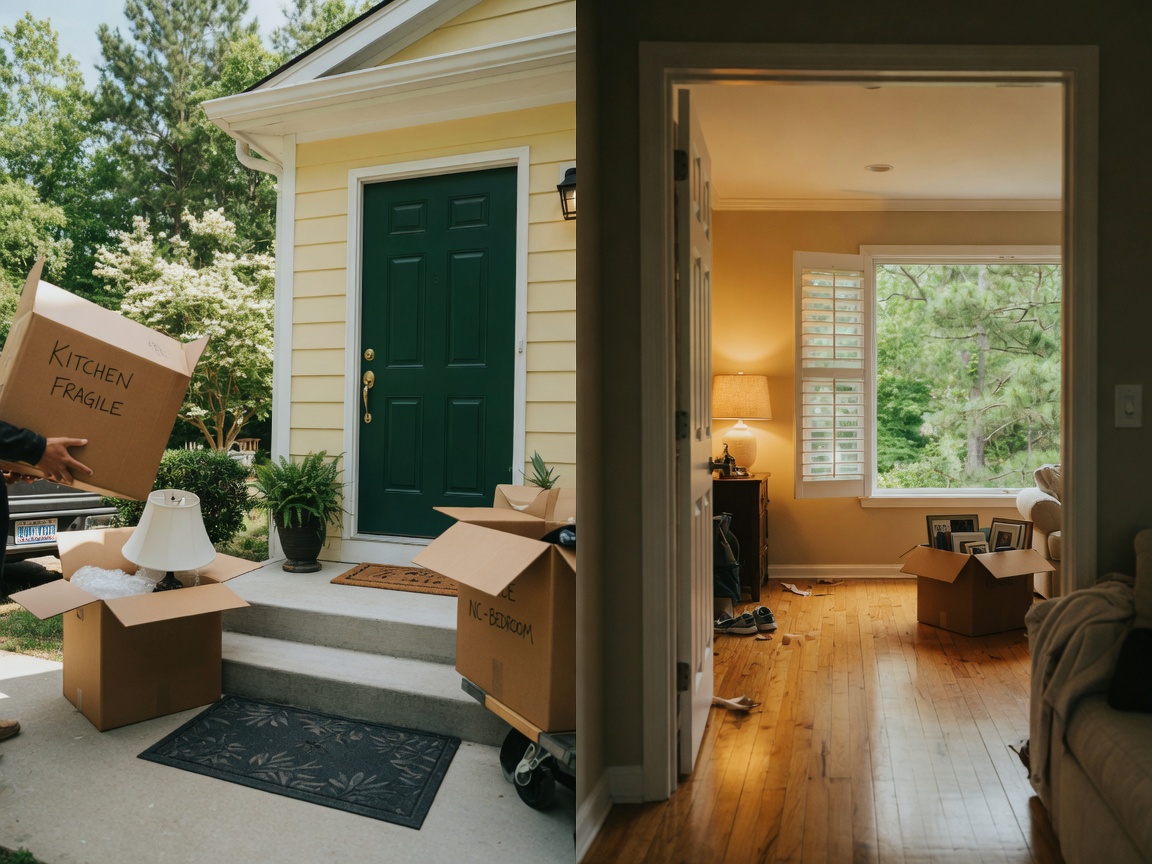
Every week, I get a call from someone in Connecticut, New York, or New Jersey who's thinking about moving to the Triangle. They've done the math, they've seen the home prices, and they're starting to get serious. What they usually haven't done is think through all the things that are different - not just better or worse, but genuinely different.
I know because I made this exact move. Here's what I tell every Northeast client before they sign anything.
"To give you total clarity, unfiltered local data, and zero risk—backed by a lifetime guarantee that puts your peace of mind first."
The Financial Upside Is Real - But Not Magic
Let's start with the obvious. If you're coming from the Northeast, you're going to save money. Here's roughly how much, based on what I see with my relocating clients:
- Home prices: 30-40% less than comparable homes in Fairfield County CT, Westchester NY, or northern NJ.
- Property taxes: 50-70% lower. A $450K home in Wake County might cost $3,500/year in taxes. The same value home in CT could be $10,000+.
- State income tax: NC's flat 4.5% vs. NY's 8.82% or NJ's 10.75%. That's thousands back in your pocket every year.
- Overall cost of living: 15-25% lower across the board. Groceries, dining, car insurance - it all adds up.
But here's the thing nobody mentions: the savings are real, but they're not instant. You still need to sell your Northeast home, buy here, and navigate the transition. The financial advantage plays out over 2-5 years, not the day you close.
The Weather Is Different Than You Think
Everyone knows it's warmer. But "warmer" means different things depending on what you expect:
- Summer is long and hot. Expect 90°F+ from June through September. Your AC bill will be higher than you're used to. Budget $200-$300/month for electricity in summer.
- Winter is mild, not tropical. You'll get a few weeks of cold (30s-40s) and occasional ice. Snow is rare - maybe 2-3 times a year, and the city essentially shuts down when it does.
- Spring and fall are gorgeous. This is the real payoff - months of perfect weather that make you wonder why you ever lived anywhere else.
The Culture Shift Is Subtle But Real
The Triangle is cosmopolitan by Southern standards - three major universities, a huge tech workforce, and a diverse population. But it's still the South, and there are differences you'll notice:
- Pace of life is slower. Not bad - just different. People are friendlier in casual interactions. Service can be a little slower at restaurants. It's an adjustment, not a negative.
- Car culture is dominant. There's public transit (GoRaleigh, GoTriangle), but it's limited. You'll need a car. Plan for it.
- The food scene is legitimately good. It's not NYC, but it's better than most people expect. Particularly strong in Asian, BBQ, and Southern cuisine.
- Pollen season is no joke. March and April bring yellow-green clouds of pine pollen. It coats everything. Buy a good air filter and a car cover.
What I Wish I'd Known Before Moving
When I left Connecticut, I focused on the financial benefits. What I didn't fully appreciate was the emotional side of the move:
- You'll miss things you didn't expect. The delis, the pizza, the specific grocery stores. North Carolina has great food, but it's different food. Give yourself time to adjust.
- Build a new social network intentionally. The Triangle is welcoming, but friendships happen slower than in established Northeast communities. Join things. Say yes to everything for the first year.
- The first summer will test you. The heat and humidity are real. By your second summer, you'll have figured out the rhythm - early morning outdoor time, afternoon indoors, evening on the porch.
The Bottom Line
Moving from the Northeast to the Triangle is, for most people, one of the best financial and lifestyle decisions they'll ever make. But it's still a big move, and going in with realistic expectations makes all the difference.
I've helped hundreds of Northeast families make this transition. Every one of them has had questions I could answer because I've been in their shoes. That's the advantage of working with someone who's actually made the move - not just sold houses in the area.
If you're thinking about it, let's talk. Twenty minutes on a Zoom call can save you months of research and anxiety.
The Housing Market You Are Actually Buying Into
The single biggest surprise for Northeast buyers is usually not the price per square foot, it is the process. North Carolina does real estate differently than New York, New Jersey, or Connecticut, and understanding the difference before you shop saves real stress:
- The due diligence model: North Carolina buyers pay the seller a negotiable due diligence fee, typically during a defined due diligence period where the buyer completes inspections. The fee is non-refundable by state law, and it is how sellers compensate for taking the home off the market while you do your homework.
- Earnest money behaves differently: the earnest money deposit is generally refundable to the buyer until the due diligence period ends, which is the opposite of the "earnest money is at risk" default in many Northeast contracts. Your agent should explain exactly which of your dollars are at risk at every step.
- The 30-40% more house math is real: a Northeast buyer moving a $700,000 budget from Fairfield County or Westchester into the Triangle typically steps into a substantially larger, newer home on a bigger lot, in a neighborhood that would carry a seven-figure price tag up north.
- The market has cooled, which helps careful buyers: the median sits around $445,000-$459,000 in the greater Raleigh area in 2026, inventory has climbed, and homes are spending more days on market. That means you can be deliberate about inspections and negotiation in a way the 2021-2022 market never allowed.
The honest market analysis walks through the 2026 numbers in detail, and the per-town market reports give you the current median in each suburb you are weighing.
Schools: The Decision That Drives Everything
For Northeast families, school quality is usually the first filter, and the Triangle's systems are genuinely among its biggest draws. What surprises people is how the systems work:
- Address-based assignment: in most of the Triangle, your assigned school is determined by your address, not by open enrollment. Two streets apart can feed different schools, so the exact lot matters as much as the town.
- Calendar choice in Wake County: Wake County Public Schools operate both traditional and year-round calendars, and families apply to the calendar that fits their schedule. That choice is baked into the system, something most Northeast transplants have never seen.
- Magnet and charter options: Wake's magnet program and the region's public charter schools add real choices beyond the neighborhood school, with application windows you need to know before you commit to an address.
- Assignments can shift: districts rebalance as neighborhoods grow, so a "great school address" today can change. Buy the house you love in a district that is strong district-wide, not just one year's ranking.
The Cary, Apex, and Holly Springs guides dig into the western Wake schools, and the Wake Forest and Chapel Hill pages cover the northern and Orange County systems. Before you bid on anything, I pull the current assignment for the exact address so there are no surprises after closing.
Weather and Home Preparation: What Changes With Your House
The climate differences from the Northeast run deeper than "you will need a lighter coat." They change how you maintain a home:
- Air conditioning is the whole budget: budget $200-$300 a month for electricity in the summer months, and check the age and condition of the HVAC unit before you buy. A failing system in July is a crisis, not an inconvenience.
- Basements are the exception, not the rule: many Triangle homes sit on slab foundations. If you expect a basement for storage, a workshop, or a storm room, you need to ask for it explicitly. It changes your shortlist.
- Termite bonds are standard: a termite inspection and a transferable bond are part of responsible home buying here. Your inspector will include an active-termite check in the report.
- Ice is the winter threat, not snow: the two to three snow events a year are usually manageable, but freezing rain shuts the region down quickly. Northeast drivers are actually ahead of the curve here, the locals have less practice.
The Move Logistics: License, Registration, and the 60-Day Clock
North Carolina gives new residents 60 days from establishing residency to transfer a driver's license and register vehicles. The process is straightforward, but it is a real errand with a deadline:
- Driver's license: visit an NCDMV office with your out-of-state license, Social Security document, and two proofs of NC residency, pass a vision test, and surrender the old license. The fee runs a few dollars per year of validity.
- Vehicle registration: you need NC insurance and a passing safety inspection first, plus the out-of-state title and an odometer statement. Annual registration for a standard passenger vehicle is around $46.25.
- The vehicle property tax surprise: North Carolina taxes your vehicle's appraised value every year, usually around 0.7%-1.1%, and bills it together with your registration renewal. The bill shrinks yearly as the car depreciates, which Northeast transplants find oddly comforting.
- Highway use tax on first titling: new residents titling a vehicle they already own pay a 3% highway use tax capped at $250, one of the genuinely friendly details of the system.
If you are also wiring up the financial side, the real cost-of-living breakdown covers property tax, sales tax, and monthly numbers for the whole household.
How the First Year Feels: What Northeast Families Tell Me
Two decades in, I can tell you the pattern. The first six months are logistics: the license, the hospital network choice, the dentist, the favorite grocery store replacement. The second six months are when it becomes home. A few observations from watching hundreds of families make this move:
- You are not the only transplant. The Triangle's growth is driven by people who moved here from somewhere else, and that makes the region unusually welcoming. Neighbors who arrived three years ago know exactly what you are going through.
- Say yes to everything the first year. Neighborhood groups, school events, rec leagues, the church or community center. The Triangle's social fabric is built on people who joined things, and it rewards the effort quickly.
- The second summer is the benchmark. The first summer tests you with heat and humidity. By the second, you have the rhythm down and you are outside by 7 a.m. and on the porch by 7 p.m. like everyone else.
When Buying Makes Sense: The 2026 Timing Question
The shortest honest answer: buy when the monthly payment fits comfortably and you plan to stay five years or more. In 2026, with prices a few points off their peak, inventory up, and homes sitting longer, a relocation buyer who is ready can negotiate on inspections and closing costs in a way the last market cycle did not allow. Waiting another year for a "crash" usually costs more in rent-equivalent carrying costs and rate movement than it saves, and the region's job and migration fundamentals keep pointing one direction.
If you want to pressure-test your numbers before committing, the income-to-buy guide works through qualifying income, down payments, and rates for the median Triangle home.
Frequently Asked Questions
How much cheaper is housing in the Triangle than the Northeast?
Comparable homes typically cost 30-40% less than Fairfield County CT, Westchester NY, or northern NJ. Property taxes run 50-70% lower, and the flat 4.5% state income tax beats the 8%+ rates in several Northeast states.
How long do I have to transfer my driver's license and register my car in North Carolina?
You have 60 days from establishing residency. Bring your out-of-state license, Social Security document, and two proofs of residency to an NCDMV office, and register your vehicles with NC insurance and a passing inspection.
How does the North Carolina due diligence process work for buyers?
Buyers pay sellers a negotiable due diligence fee during a defined period for inspections and research. The fee is non-refundable by state law, while earnest money is generally refundable until the due diligence period ends.
Are the schools in the Triangle good for my kids?
The Triangle's school systems are a major draw, with strong districts across Wake, Durham, Chatham, and Orange counties. Assignment is address-based and can shift, so verify the exact current assignment for the home before you buy.
What is the biggest adjustment for Northeast transplants?
The summer heat, the car-centric layout, and the slower everyday pace top the list. None are negatives once you adapt, and most families say the first year of adjustments is easily worth the financial and lifestyle gains.
Your Next Step
Plan Your Move With Someone Who Already Made It
I moved from Connecticut and have spent two decades helping Northeast families land in the right Triangle suburb, school district, and home. Twenty minutes on a call can save you months of research, and you will leave with a plan, not a pamphlet.

Phil Slezak
Real Estate Broker · NC #242173 · Connecticut transplant, 20+ years in the Triangle
I moved from Connecticut to Raleigh twenty years ago and I've been helping other Northeast families do the same ever since.
Book a callRelated Articles
Phil Slezak Real Estate brokered by LPT Realty