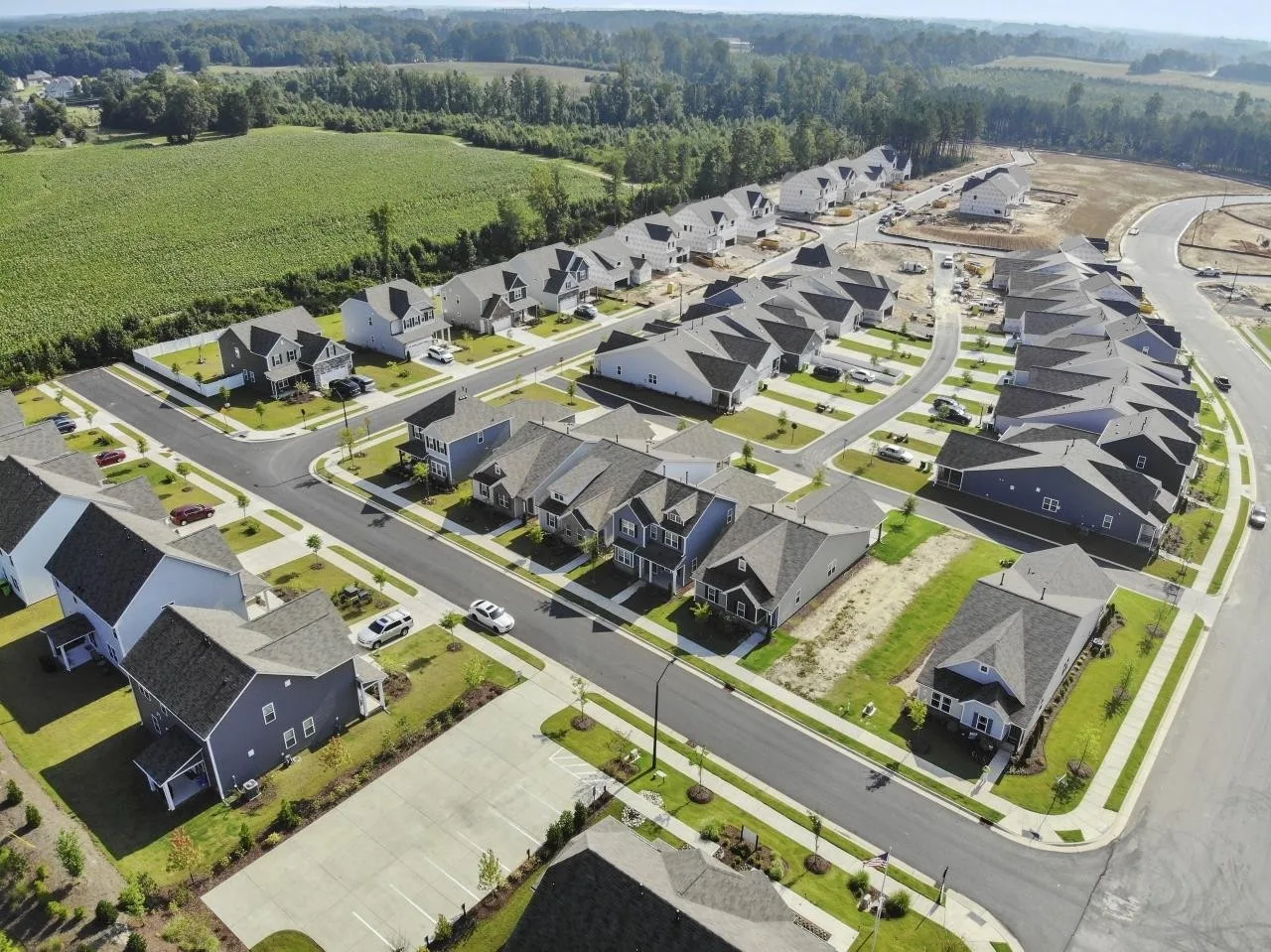
To buy a median-priced home in Raleigh in 2026, plan on a household income of roughly $99,000 to $101,000 a year. That's the number that lets a typical buyer qualify for the median-priced Triangle home at today's mortgage rates without stretching past the roughly 30% of income that lenders and financial planners consider comfortable.
I get this question almost every week from someone relocating, so let me walk you through exactly how that number gets calculated, what it assumes, and where it breaks. These are current figures from the fall of 2026, not a headline pulled from a national cost-of-living site.
"To give you total clarity, unfiltered local data, and zero risk—backed by a lifetime guarantee that puts your peace of mind first."
The short answer
Household income of about $99,000 to $101,000 to buy the median-priced home in the Raleigh area, assuming a 15-20% down payment, a 30-year fixed-rate loan, and housing costs at or below 30% of gross income.
What Does the "Median-Priced Home" Actually Cost?
Let's pin down the price first, because that's the biggest variable. Across the Triangle, the median sales price has hovered near $425,000 for the last couple of years. The most recent Triangle-wide data put it at about $424,900, while Zillow's average home value for Raleigh itself is around $435,000.
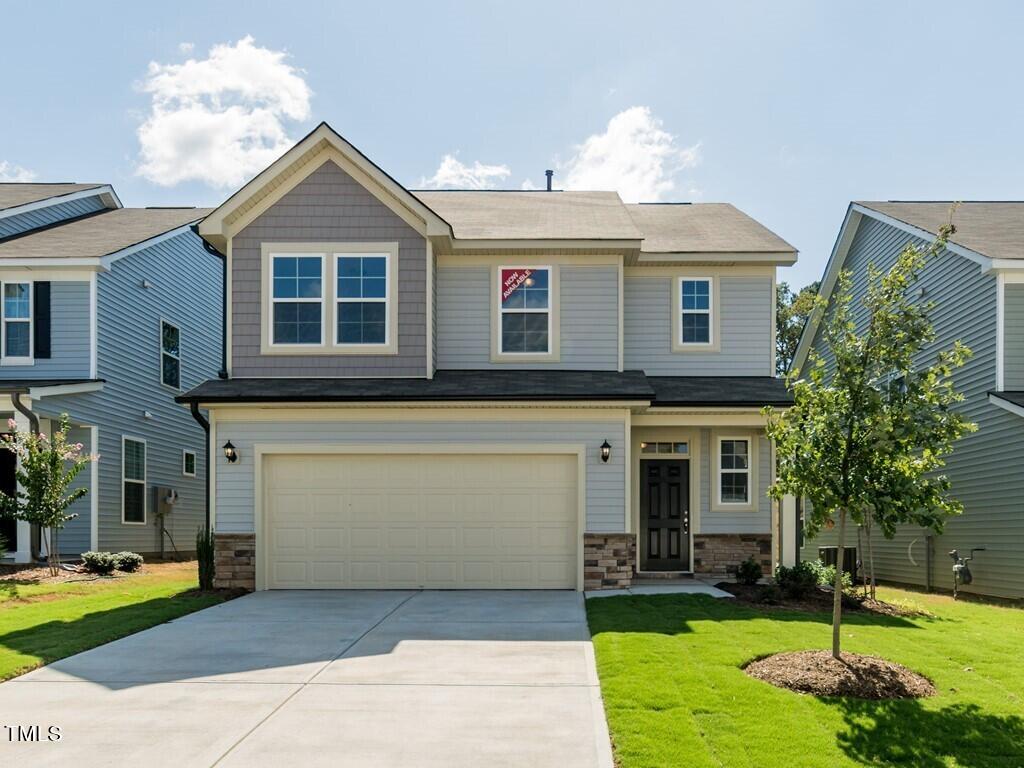
But that median flattens a lot of difference. A starter townhome in eastern Wake County can be $300,000 or less, while a new build in a premium western suburb runs $600,000 and up. The median just tells you what the "middle" house costs. If your income is lower, you have real options in parts of the market where the median doesn't apply.
The Math Behind the Income Number
Lenders typically want your total monthly housing payment, including principal, interest, taxes, and insurance, to stay at or below about 28-30% of your gross monthly income. On a $425,000 home with a 20% down payment, you'd finance about $340,000. At a 30-year fixed rate near the current mid-6% range, that's a monthly principal and interest payment of roughly $2,150.
Add in property taxes (Wake County's effective rate is around $0.77 per $100 of assessed value), homeowners insurance, and possibly PMI if your down payment is smaller, and the total monthly housing cost lands in the $2,500 to $2,700 range. At 30% of income, that works out to a household income right around the $99,000 to $101,000 mark.
Why Mortgage Rates Matter So Much Right Now
The 30-year fixed mortgage rate has been sitting in the mid-6% range for most of 2026, hovering near 6.5% to 6.7% through late summer. Rates in the 6s add hundreds of dollars a month compared with the 3% mortgages buyers locked in a few years ago, which is exactly why the income needed to buy feels high even though prices have flattened.
Here's the honest tradeoff: a half-point move in rates shifts the qualifying income by thousands of dollars. If rates drift down toward 6% or below, more households qualify. If they creep higher, the income bar moves up with them. That's why "how much do I need" is never one static number. It moves with the rate market.
The 2026 Market Is Shifting in Your Favor
This is the part most national articles miss. The Triangle market is no longer the bidding-war frenzy of 2020-2022. It has normalized into a market that is roughly flat to slightly cooling. Home values in Raleigh are down about 2% year over year, inventory is up roughly 7%, closed sales are running below last year, and homes are sitting on the market longer.
For a buyer, that means more choices, fewer bidding wars, and room to negotiate on price and closing costs. It does not mean prices are collapsing. We're not in a crash. But the pressure that forced buyers to overpay and waive contingencies a few years ago has eased, and that makes the income math more forgiving in practice than the raw numbers suggest.
Where You Can Buy for Less
- Townhomes and condos: Often $280,000-$350,000, which can cut the qualifying income to the $65,000-$75,000 range.
- Eastern Wake and Johnston County: Garner, Clayton, Knightdale, Wendell, Zebulon, and Smithfield consistently run below the Triangle median.
- Parts of Durham: Several neighborhoods offer more square footage per dollar than the western suburbs.
If you need a full breakdown of how the suburbs compare on price, schools, and commutes, the honest suburb-by-suburb comparison covers it in detail.
What the Number Doesn't Tell You
The income figure assumes a 15-20% down payment. In practice, many 2026 buyers are putting down less, which adds mortgage insurance and raises the payment. First-time buyers also face the very real challenge of saving that down payment while renting. That's often the harder hurdle than the monthly payment itself.
The honest truth is that Raleigh isn't the bargain it was in 2020, but it still stacks up well against the Northeast and most major metros, especially once you account for property taxes and state income tax. If you want the full cost-of-living picture, including taxes, utilities, and childcare, my cost-of-living breakdown walks through the real numbers.
Every household is different, and a median is just a starting point. That's exactly what a relocation consultation is for: we look at your income, your down payment, your target area, and the current rate, and figure out what you can actually qualify for. No hype, just the real numbers.


Down Payment Assistance: The Programs That Close the Gap
The down payment is usually the hardest hurdle for first-time buyers, and North Carolina has real programs built to clear it:
- NC Home Advantage Mortgage: the state's flagship program pairs a 30-year fixed mortgage with down payment assistance of up to 3% of the loan amount, forgiven after 15 years of occupancy. Income and sales price limits apply, and they have been raised in recent cycles to keep up with Triangle prices.
- NC 1st Home Advantage Down Payment: up to $15,000 in zero-interest, deferred help for first-time buyers and veterans, with no monthly payment and full forgiveness after 15 years of primary occupancy.
- Community Partners Loan Pool: the most generous option for lower-income buyers, a zero-interest deferred second mortgage up to $50,000 or 25% of the price, delivered through participating local groups.
These programs change the qualifying math: a $15,000 down payment boost on a $300,000 townhome is the difference between "saving for two more years" and "buying this spring." Rules, limits, and lender requirements change, so check current program guides with a participating lender before you underwrite your own budget.
Closing Costs: The Second Down Payment Nobody Budgets For
Buyers hear "down payment" and build their savings plan around it, then get to closing and discover a second bill. In North Carolina, buyers typically pay several thousand dollars in lender fees, title work, and prepaid taxes and insurance beyond the down payment, plus the negotiable due diligence fee that by state law is non-refundable.
Three ways to soften it:
- Ask the seller to contribute. In the current cooling market, sellers above the entry band are regularly agreeing to closing-cost credits as part of the negotiation.
- Shop the lender fee stack. Origination fees, processing fees, and rate-lock fees vary meaningfully between lenders on the same loan amount.
- Roll it in where the lender allows. Some programs permit financing a portion of closing costs into the loan, which trades a slightly higher payment for a much smaller cash-out day.
The Budget Beyond the Mortgage: Taxes, Utilities, and the Everyday
Qualifying income gets you the loan. Living comfortably is another calculation, and the numbers that matter are the recurring ones:
- Property taxes: Wake County's effective rate runs around $0.77 per $100 of assessed value, so a $425,000 home carries roughly $3,275 a year in tax.
- Homeowners insurance and HOA dues: budget $100-$150 a month for insurance and anywhere from $75 to $250 a month for HOA fees in newer communities.
- Utilities: summer air conditioning pushes electric bills to $200-$300 in July and August, so annualize, don't sample a spring month.
The full monthly picture, including groceries, childcare, dining, and commuting, is laid out in the real Raleigh cost-of-living guide, so you can build a budget that survives contact with reality.
How the Income Number Changes by Suburb
The $99,000-$101,000 figure is the Triangle median game. Your real target suburb moves the number, sometimes a lot:
- Entry towns: at $280,000-$350,000 in Garner, Clayton, Knightdale, Wendell, or Zebulon, the qualifying income drops to the $65,000-$85,000 range.
- Mid-range western suburbs: at $400,000-$550,000 in Cary, Apex, or Holly Springs, the income bar climbs toward $110,000-$125,000, depending on down payment and rates.
- Premium and luxury: above $550,000 in Wake Forest, North Raleigh, or Chapel Hill, the same math lands in the $140,000+ income territory.
Those bands are illustrative planning ranges for a 20% down, 30-year fixed scenario at mid-2026 rates, and the suburb comparison guide shows the trade-offs behind each. Your exact number depends on rates, down payment, debts, and the specific home, which is precisely what a lender and I can model for you in minutes.
Frequently Asked Questions
How much income do I need to buy a home in Raleigh in 2026?
Roughly $99,000-$101,000 a year for the median-priced home with a 15-20% down payment and a 30-year fixed loan at current rates. Lower price points in eastern Wake and Johnston County bring the qualifying income down to the $65,000-$85,000 range.
What is the median home price in the Raleigh Triangle?
The Triangle-wide median hovers near $425,000, with Zillow's average for Raleigh around $435,000. Starter townhomes run $280,000-$350,000, while premium western suburbs climb past $600,000.
How much do I need for a down payment in the Triangle?
20% avoids mortgage insurance and gives you the strongest negotiating position, but 3%-10% down programs, plus NC state down payment assistance up to $15,000, are widely used by Triangle first-time buyers.
What mortgage rate should I use when calculating affordability?
The 30-year fixed rate has hovered in the mid-6% range through 2026, roughly 6.5%-6.7%. Each half point of rate shifts the qualifying income by thousands, so model your deal at current rates, not the rate from a few years ago.
Is there down payment assistance for first-time buyers in North Carolina?
Yes. NC Home Advantage offers up to 3% of the loan amount, NC 1st Home Advantage offers up to $15,000 in zero-interest deferred help, and the Community Partners Loan Pool offers up to $50,000 for qualifying lower-income buyers.
Lifetime Buyer Home Guarantee
Buy Your Next Home in the Triangle With Zero Risk
If you don't love your new home at any point, we'll sell it for free, or in many cases, buy it back ourselves. Backed completely in writing.
Option 1
We Sell It for $0 Listing Commission
If the home isn't the right fit, we list, market, and sell it while waiving the entire listing-side commission, so you keep more of your hard-earned equity.
Option 2
The Direct Buyback Option
In specific scenarios, we may offer to purchase the home directly from you.
Either way, you're covered for the life of your homeownership. No ticking clock. No expiration date. This isn't a home warranty that covers repairs and appliances, this guarantee covers you: your right to exit the home if it's not the right fit. When you purchase your next home through our team, you're automatically enrolled in the protection plan from day one.
Consultation and Enrollment
We confirm your eligibility before we ever start the search.
Expert-Guided Home Search
We negotiate and close using Triangle market data.
Lifetime Protection
Trigger the guarantee whenever life changes.
Designed for primary-residence purchases across the Triangle, built for relocators, first-time buyers, and upsizing or downsizing families. Your guarantee is delivered as a written certificate with the specific terms, conditions, and protections once you partner with us as your buyer's agent.

Phil Slezak
Real Estate Broker · NC #242173 · 20+ years in the Triangle
I moved to Raleigh from Connecticut and have spent two decades learning this market inside out. If you have questions about what you can afford here, I'm happy to help.
Book a callRelated Articles
Phil Slezak Real Estate brokered by LPT Realty