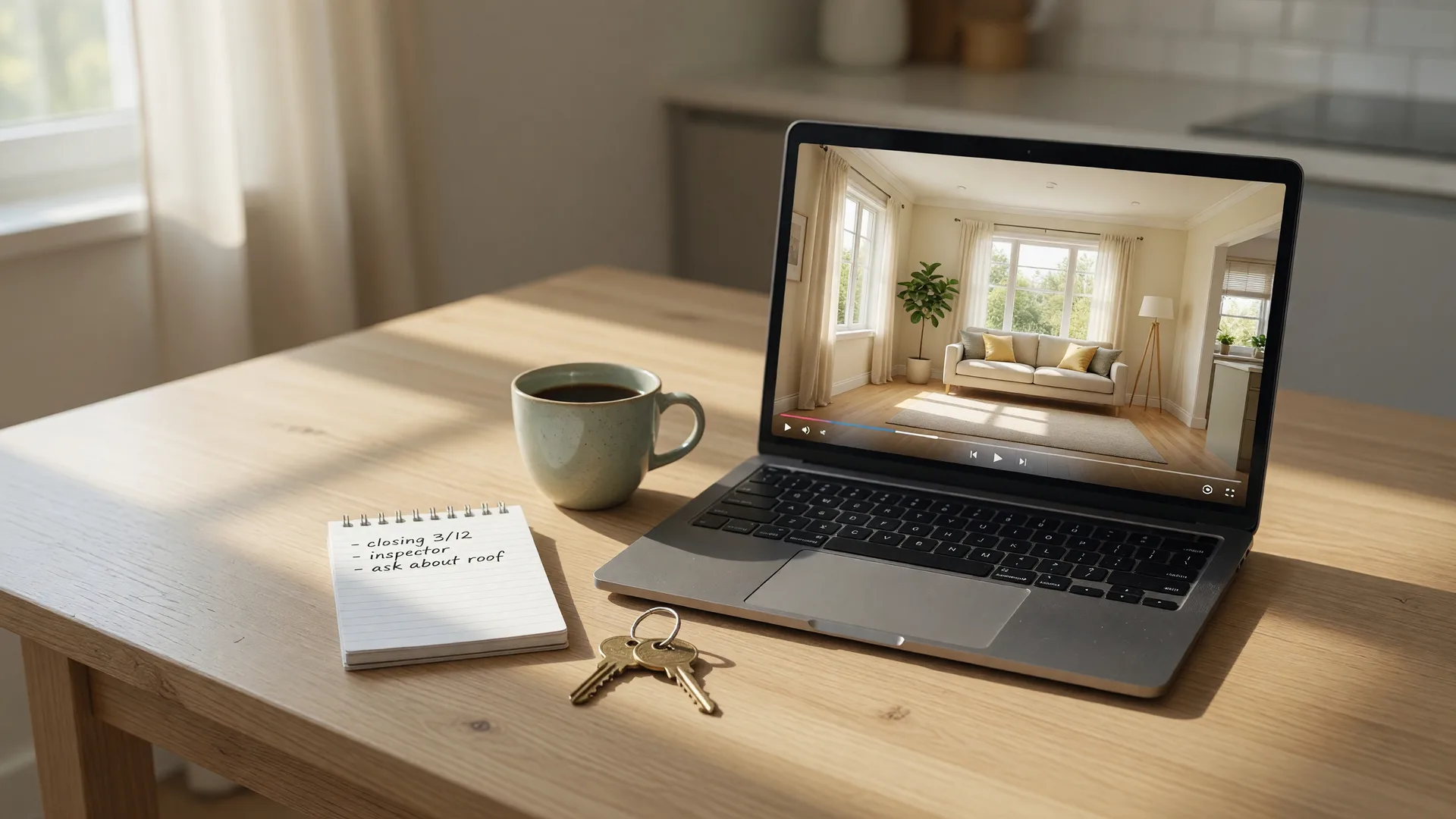
Yes, you can buy a home in the Raleigh Triangle from out of state without ever stepping foot inside, and thousands of relocating buyers do it every year. In the most recent national data, about 21.7% of relocation buyers made an offer on a home they had never visited in person. The catch is that North Carolina's purchase contract is different from most states, so the process has its own rules, and doing it sight unseen safely comes down to three things: a longer due diligence period, a guided virtual tour, and a licensed inspection you never skip.
I moved to the Triangle from Connecticut more than twenty years ago, and since then I have helped out-of-state buyers buy homes here remotely more times than I can count, from a relocation, a job transfer, or a family change that did not wait for a convenient house-hunting trip. The honest truth is that remote buying works well when you build the right structure around it, and that is exactly what this playbook covers.
"To give you total clarity, unfiltered local data, and zero risk, backed by a lifetime guarantee that puts your peace of mind first."
Can You Really Buy a House Sight Unseen in the Triangle?
Yes, and it is far more common than most buyers assume. The latest data from Redfin for the fourth quarter of 2025 showed that 21.7% of relocation buyers nationally made an offer without visiting the property in person. In a market like the Triangle, where buyers relocate for jobs at Research Triangle Park, the universities, and the region's biggest employers, remote purchases are routine, not exotic.
The reason it is safe here specifically is North Carolina's due diligence system, which gives a remote buyer an unusually clean exit. Instead of separate inspection, appraisal, and financing contingencies like you see in many other states, the standard North Carolina Offer to Purchase and Contract (Form 2-T) uses one negotiated due diligence period, typically 14 to 30 days in the Triangle, during which you can walk away for any reason or no reason at all. For a buyer who cannot see the house in person, that window is where all your protection lives, and you should ask for a longer one, not a shorter one.
How Does North Carolina's Due Diligence Work for a Remote Buyer?
The single biggest difference from most states is the due diligence fee, which is paid directly to the seller at contract signing and is generally non-refundable. It is the price you pay for the right to inspect, investigate, and walk away during your due diligence period. It is refunded only in rare situations, such as the seller's material breach.
Your earnest money is a separate deposit, typically 1% to 3% of the purchase price, and it works the opposite way: it is refundable if you terminate before the due diligence deadline, but at risk if you walk after it. Here is the honest way to read that for a remote purchase: the due diligence fee is the cost of your investigation, and the earnest money is what protects the seller while you use your investigation window.
If this is your first exposure to North Carolina's system, the full breakdown of the NC due diligence fee is worth reading before you make an offer, because it is the number one surprise for out-of-state buyers.
What Should a Virtual Tour Actually Cover?
A Matterport 3D tour or professional walkthrough video is a great screening tool, but it is not the final word. It cannot confirm wear and tear, noise from the street, odors, or how water drains in the yard. The most valuable tool for a remote buyer is a live video walkthrough, on FaceTime or Zoom, where you direct the camera and the agent walks the property in real time.
- HVAC and water heater data plates. Age and brand tell you when major systems are due for replacement, and those dates are your future repair bills.
- Roof condition. Have the camera look up from the ground and ask the agent to describe what they see from the roofline.
- Under sinks and around windows. The classic hiding places for water damage and past leaks.
- Attic and crawlspace access. You may not crawl in yourself, but knowing the access points exist means the inspector will have them to check.
- Ask what the agent sees, hears, and smells. Road noise on the front porch, a neighbor's barking dog, or a musty corner tells you more than any photo.
Do You Still Need an Inspection If You Can't Attend?
Yes, and this is the one step you never skip, even when you cannot be there in person. Hire a licensed North Carolina home inspector, have your buyer's agent attend the inspection in person, and ask the inspector to walk through the findings on video at the end. A remote buyer who watches the inspector explain a roof, an HVAC unit, and a water heater with the property in view gets ninety percent of the value of being there.
The Consumer Financial Protection Bureau is explicit on this point: keep your offer contingent on financing and inspection. In the Triangle, that protection lives inside your due diligence period, which is exactly why a remote buyer should negotiate a longer due diligence window, often 20 to 30 days, in exchange for a clean, well-priced offer. Sellers frequently trade time for certainty, because a remote buyer who has done the inspection homework is a buyer who is less likely to fall out of the deal.
Do You Need a Buyer's Agent for a Remote Purchase?
Honest answer: for a sight-unseen purchase, your agent is not a luxury, they are your eyes on the ground. Everything a remote buyer cannot do themselves, an agent does for you: touring homes on video, attending inspections, checking the neighborhood and the commute, and negotiating the due diligence terms that protect you. With the 2026 changes in how buyer representation is structured, it matters even more to have an explicit agreement in writing before you start.
If you are weighing whether representation still makes sense in the current market, the honest breakdown of buyer's agents in the Triangle covers who actually pays and what you should expect.
How Long Does a Remote Purchase Really Take?
The honest timeline: most out-of-state relocations to the Triangle run about 4 to 8 weeks from first call to closing. Homes here average around 13 days on market, roughly 48% faster than the national average, which means the market rewards buyers who arrive ready.
- Week 1: get fully pre-approved. This is the biggest single advantage you can bring from out of state. A pre-approval letter tells sellers you are real, and it lets you move the moment the right home appears.
- Weeks 1 to 3: narrow your suburbs and tour on video. Use the commute, school, and lifestyle data to shortlist two or three areas, then tour live listings with your agent on video.
- Week 3: make your offer with a longer due diligence period. Ask for 20 to 30 days so inspection and every remote check fit comfortably inside your exit window.
- Weeks 4 to 6: inspection, appraisal, and closing logistics. Your agent attends the inspection, your attorney handles the NC closing, and you plan your move-in around the contract date.
When Should You Actually Fly Out?
If you can make the trip at all, the single best moment is for the final walkthrough before closing. By then you are under contract, the inspection is done, and you get to see the home empty and in final condition, which is the moment most surprises would surface anyway. For many of my remote clients, one well-timed trip that combines the walkthrough with neighborhood driving, school visits, and a meeting at the attorney's office is all they need.
If you cannot fly out at all, that is workable too, as long as your agent attends the walkthrough and video-calls you through it, and as long as your contract holds your earnest money until you are satisfied. The key is never to let the excitement of the photos outrun the structure of the deal.
The Bottom Line
Buying a home in the Raleigh Triangle from out of state is absolutely doable, and for relocation buyers it is the norm rather than the exception. What makes it work is structure: a fully funded pre-approval before you shop, a live video tour where you direct the camera, a licensed inspection your agent attends, and a due diligence period long enough to protect a buyer who cannot walk the property in person.
North Carolina's contract is built for exactly this scenario, because the due diligence period gives you a clean, honest exit while you verify everything remotely. That is the honest trade: you pay a non-refundable due diligence fee for the right to investigate, and in exchange you get a purchase process that protects you every step of the way. If you are relocating and want someone who has done this from the other side of the country for twenty years, let's talk, and I will walk you through what your specific move looks like week by week.
What a Remote Buyer Needs to Know About Closing Costs and Income
Two numbers every out-of-state buyer should have in hand before they start: how much cash they will need at closing, and what income supports their target price. The honest 2026 figures: North Carolina buyer closing costs typically run 1% to 5% of the purchase price, and a median-priced Raleigh home around the mid-$400,000s takes roughly $99,000 to $101,000 in household income to qualify at current rates.
Read the closing cost breakdown and the income requirements guide before you talk to a lender, and you will walk into that conversation with the same numbers I use every week.
The Step-by-Step Sight-Unseen Checklist
If you only take one thing from this post, take this checklist. It is the same structure I use with every remote buyer:
- Get fully pre-approved before you look at a single listing. In a market where homes average about 13 days on market, this is your biggest lever.
- Pick your suburbs on data, not on the one tour you can schedule. The commute, school, and price data in the Raleigh, Cary, and Apex guides will do more for you than a rushed weekend of showings.
- Do a live video walkthrough of every shortlisted home. Direct the camera, and take notes on systems, water, and anything the listing photos hid.
- Offer with a 20 to 30 day due diligence period. Use the exit window for inspection, appraisal, insurance quotes, and utility research, all before you are locked in.
- Never skip the inspection. Have your agent attend and walk you through the findings on video.
- Fly out for the final walkthrough if you possibly can. If you cannot, do it on video with your agent, and keep your earnest money protected until you are satisfied.
If you want the full framework written out, including the remote closing guidance and the school assignment details, the out-of-state buyer's guide is the complete version of this playbook.
How Do You Protect Your Earnest Money From Out of State?
This is the question remote buyers ask most, after the due diligence fee. The honest answer: your earnest money is held by the title company or closing attorney, not by the seller, and it is fully refundable if you terminate during the due diligence period. It only becomes at risk if you back out after the due diligence deadline without a contractual reason.
The practical implication is that your exit window is your shield. Keep your inspections, appraisal review, insurance quotes, and utility research inside the due diligence period, and your earnest money is protected by the calendar. That is the structure I build for every remote client, and it is the difference between a stressful remote purchase and a clean one.
How Do You Verify the Neighborhood Without Visiting?
You cannot smell a neighborhood through a screen, but you can get most of the way there with real tools. Drive the commute corridors in street view, read the current market reports for the exact town, check the school assignments against the district boundaries, and ask your agent to video a quick drive-by of the home at rush hour and on a weekend.
The honest limit: some things, like whether a backyard feels private or whether a street is loud at 7 a.m., only reveal themselves in person. That is why I recommend the one trip for the final walkthrough. For everything else, the combination of live video, inspection, and a long due diligence period covers the gap surprisingly well.
The Bottom Line, Clearly
A remote, sight-unseen home purchase in the Triangle is normal, safe, and completely doable when you build the right structure. Get pre-approved first, tour on live video, negotiate a longer due diligence period, never skip the inspection, and protect your earnest money by finishing every investigation inside your exit window.
If you are relocating and want a broker who has guided buyers through this from across the country for twenty years, bring me your timeline and your price range, and I will show you exactly how your purchase would run week by week, with every dollar protected. That is the conversation I have every day, and it is the one that makes remote buyers feel like they have boots on the ground.
Frequently Asked Questions
Can you buy a house in North Carolina without seeing it in person?
Yes. In the most recent national data, about 21.7% of relocation buyers made an offer without an in-person visit. The Triangle process makes it safe when you combine a longer due diligence period, a guided live video tour, and a licensed home inspection you never skip.
Is the NC due diligence fee refundable if you back out?
Almost never. The due diligence fee is paid directly to the seller at contract signing and is non-refundable in nearly all cases, refunded only in rare situations like a seller's material breach. Your earnest money is separate and refundable if you terminate before the due diligence deadline.
What should you look for on a virtual tour of a Triangle home?
Have your agent run a live video walkthrough where you direct the camera: HVAC and water heater data plates, roof age, under sinks, attic and crawlspace access, windows, and any sign of water. Ask your agent to describe what they see, hear, and smell, because a 3D tour cannot confirm noise, odors, or drainage.
Should you skip the home inspection if you can't attend?
No. Never skip the inspection. Hire a licensed North Carolina home inspector, have your buyer's agent attend in person, and ask the inspector to walk through the findings on video so nothing is lost in translation.
How long does it take to buy a Triangle home remotely?
Most out-of-state relocations to the Triangle run about 4 to 8 weeks from first call to closing. Homes in the area average around 13 days on market, so getting fully pre-approved before you start shopping is the single biggest advantage.
Your Next Step
Plan Your Remote Move, Week by Week
You do not need to figure out a sight-unseen purchase alone. Bring me your timeline, your target price, and the suburb you are weighing, and I will show you the current numbers for your exact market, with the same structure I use for every out-of-state buyer. No spin.

Phil Slezak
Real Estate Broker · NC #242173 · 20+ years in the Triangle
I moved to the Triangle from Connecticut more than twenty years ago, and I have been guiding out-of-state buyers through remote, sight-unseen purchases ever since. If you are relocating, let's build your purchase plan around real data, not guesswork.
Book a callRelated Articles
Phil Slezak Real Estate brokered by LPT Realty