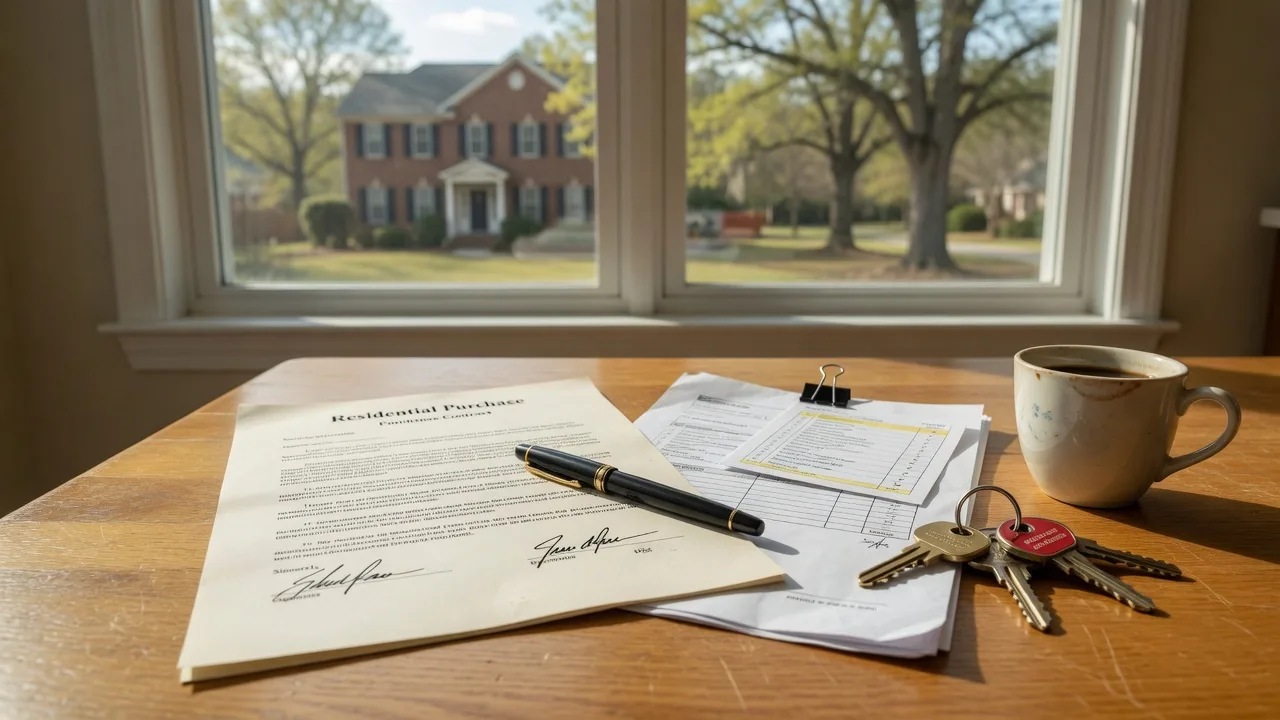
The due diligence fee is the single most surprising part of buying a home in North Carolina, and if you are moving here from almost any other state, you have never seen anything like it. In plain English: it is a negotiable, non-refundable payment you make directly to the seller to take the home off the market while you run your inspections, appraisal, financing, and title work. If you decide to walk away during the due diligence period, the seller keeps that money.
I have spent more than 20 years buying and selling homes in the Triangle, and nearly every out-of-state buyer I have ever represented hits the same wall when they see the contract. They assume the money works like earnest money back home, and it does not. This guide is the honest, plain-English version of how the due diligence fee actually works in 2026, how much it really costs, when it is refundable, and how to protect your money. No hype.
"To give you total clarity, unfiltered local data, and zero risk, backed by a lifetime guarantee that puts your peace of mind first."
What Is the Due Diligence Fee, in Plain English?
The fee is written into the standard North Carolina Offer to Purchase and Purchase Agreement (Form 2-T), the contract the NC Association of Realtors and the NC Bar Association jointly publish and that nearly every Triangle transaction uses. When you go under contract, you agree on two numbers with the seller: the due diligence fee and the length of the due diligence period. The fee is paid directly to the seller when the contract becomes effective, and the period is the window of time you get to investigate the property.
- What it buys. It buys your unconditional right to terminate the contract for any reason, or no reason, during the due diligence period. No inspection contingency, no financing contingency, no appraisal contingency. You have one period, and you can walk for anything.
- What it compensates. It pays the seller for taking the home off the market while you do your homework. That is the whole point: the seller is tying up the property for you, and the fee is the price of that commitment.
- What NC replaces. Other states use a stack of contingencies that each give the buyer an exit. North Carolina compresses that into one due diligence period, which is simpler to understand but much easier to get wrong if nobody explains the risk.
If the sale closes, the due diligence fee is applied to your purchase price, so it is not a fee you lose on a successful transaction. It is only money at risk if you back out. That distinction is the part that confuses everyone, and it is the reason I tell every out-of-state buyer to read the next section before they ever write an offer.
Due Diligence vs. Earnest Money: The Key Difference
This is the most important concept in this entire post, and it is the one that gets out-of-state buyers into trouble. The due diligence fee and earnest money are two separate amounts that behave completely differently.
- Due diligence fee: paid directly to the seller, non-refundable in virtually all cases, and credited back to you at closing if the deal goes through.
- Earnest money: held in escrow, typically by the closing attorney, and refunded to you if you terminate on time during the due diligence period.
Back home, your earnest money deposit is the real money on the line. In North Carolina, it is the opposite: your earnest money is protected, and the due diligence fee is what you can lose. Understanding that one sentence saves buyers thousands of dollars. If you are weighing the full cash needed to get to closing, I break down every line, including this fee, in what closing costs actually run in the Triangle.
How Much Is the Due Diligence Fee in the Triangle?
There is no statutory minimum or maximum. The amount is fully negotiated between you and the seller, and that makes it the single biggest variable in any Triangle offer. Here is the honest range I actually see in 2026:
- Typical Triangle offers: due diligence fees commonly run from roughly $1,000 to $5,000 on many homes, with about $2,000 to $5,000 being normal for houses in the $400,000 to $700,000 range. As a rough guide, that is often around 0.25% to 1% of the purchase price.
- Competitive situations: in hot multiple-offer scenarios, eager buyers sometimes push the fee to $10,000 or more to win the contract and signal serious intent. In luxury segments it can go higher still.
- Slower segments: in areas with more inventory, fees often drop to the low end or even a few hundred dollars. The market condition matters as much as the price of the house.
The important 2026 context: the Triangle is a more balanced, more negotiable market than it was in 2022 or 2023. Inventory is up and homes are sitting longer, which I document in whether the Raleigh market is crashing. That means you rarely need to lead with a huge due diligence fee to win. A reasonable fee plus a pre-approval letter and a short inspection window is usually enough to look serious without gambling on a number that only helps the seller if the deal falls apart.
When Is the Due Diligence Fee Refundable?
Under the standard contract, the fee is non-refundable except in a short list of narrow cases. You get it back if the seller is the one who fails, not if you simply change your mind:
- The seller materially breaches the contract. If the seller defaults, the fee comes back to you.
- The seller cannot deliver marketable title. If a title issue the seller cannot cure blocks the sale, the fee is refunded.
- The property is materially damaged before closing. Under the risk-of-loss provision, you get your money back and the deal ends.
- A written addendum says otherwise. You and the seller can always agree to different terms in the contract itself.
Notice what is not on the list: a bad inspection, a higher-than-expected repair quote, a denied loan, or a low appraisal are all reasons you can walk away, but none of them get the fee back. That is the honest trade-off, and you should size your fee as if you might lose it, because that is exactly the risk you are taking.
How the Due Diligence Period Works
The due diligence period is the window where you do everything you would normally do under contingencies: hire a home inspector, get a repair estimate or quotes from contractors, order the appraisal, finalize your loan, review the HOA documents, and confirm the school assignment and commute. In the Triangle, periods typically run about 14 to 30 days, with a couple of weeks being common in a balanced market. In hot multiple-offer situations the period can compress to a few days; in slower segments it can stretch to 28 or 30 days.
Here is the practical mechanic that matters: you can terminate the contract for any reason by giving written notice before 5:00 p.m. on the last day of the due diligence period. If you do, the seller keeps the due diligence fee, but your earnest money is refunded in full. If you let the period expire and then try to back out, the earnest money becomes at risk too. The fee is the insurance you pay for that window, and the window is what makes it worth negotiating.
How to Protect Your Money
The due diligence fee is not a tax on out-of-state buyers, and it is not a scam. It is the structure of North Carolina home buying, and it works in your favor if you use it the way it is designed. A few honest rules from two decades of Triangle transactions:
- Do the inspections early and aggressively. Schedule the home inspection, pest inspection, and any specialty inspections within the first week of the period, not the last day. The whole point of the fee is the time to find problems while you can still walk.
- Size the fee to the risk, not to the win. In 2026 you rarely need a five-figure fee to be competitive. Bid a number you could stomach losing, and let your pre-approval and speed carry your offer.
- Never skip the title work. Marketable title is one of the few automatic refund triggers, and the title search happens inside the period. Let your attorney run it before you commit further.
- Use an agent who negotiates the fee down, not up. A listing agent wants a high fee because it protects their seller. Your buyer's agent should be showing you comps for the fee itself, because it is as negotiable as the price. I cover exactly who works for whom and what you should expect from your own agent in do you still need a buyer's agent in the Triangle.
The Honest Bottom Line
The due diligence fee is the price of the right to change your mind, and it is how North Carolina sellers get compensated for taking their home off the market while you do your homework. It is non-refundable by design, so the only smart way to approach it is to know exactly which of your dollars are at risk at every step, and to use your due diligence period to verify everything before you are past the point of no return.
If you are moving to the Triangle from out of state, this one concept will save you more confusion than any other part of the contract, and it is one reason I built the whole process into the 2026 out-of-state buyer's guide, from offer to remote closing. If you are coming from the Northeast specifically, the due diligence shock is one of the biggest differences, and I lay out the rest in relocating from the Northeast. And if your question is really about the total cash you need, start with the qualifying math in how much income you need to buy a home in Raleigh.
My lifetime Buyer Home Guarantee
Buy through my team and you are automatically enrolled from day one: if I can't sell your old house, I'll buy it. No ticking clock, no expiration date, and it is all written down, so the guarantee does not expire when the paperwork does.
Get the 42-page relocation guide
Get the 42-page relocation guide as a PDF with real neighborhood breakdowns, school info, and what it costs to live here. Just text RELO to 919-899-2320 and I'll send it your way.
Frequently Asked Questions
What is the due diligence fee in North Carolina?
It is a negotiable, non-refundable payment the buyer makes directly to the seller to take the home off the market while the buyer runs inspections, appraisal, financing, and title work during the due diligence period. It is written into the standard North Carolina Offer to Purchase and Purchase Agreement, Form 2-T.
Is the due diligence fee refundable in North Carolina?
Generally no. If the buyer backs out during the due diligence period, the seller keeps the fee but the earnest money is refunded. The fee is only refunded in narrow cases: the seller materially breaches the contract, cannot deliver marketable title, or the property is materially damaged before closing. If the sale closes, the fee is credited toward the purchase price.
How much is the due diligence fee in the Raleigh Triangle?
There is no set amount, it is fully negotiated. Fees commonly run from roughly $1,000 to $5,000 for many Triangle homes, often about $2,000 to $5,000 for homes in the $400,000 to $700,000 range, and can climb well above that in competitive multiple-offer situations. The fee is credited to you at closing if the deal goes through.
What is the difference between due diligence and earnest money in North Carolina?
The due diligence fee goes directly to the seller and is non-refundable. Earnest money is a separate deposit held in escrow by the closing attorney and is refunded to the buyer if the buyer terminates on time during the due diligence period. The due diligence fee is the real money at risk in North Carolina, not the earnest money.
Relocating to the Triangle?
Let's Walk Through the Due Diligence Math
The due diligence fee does not have to be a mystery. I'll show you what a fair fee looks like in the neighborhoods you are considering, map out exactly which dollars are at risk at every step of the contract, and make sure you never commit more than you are comfortable losing. No hype, just the facts.

Phil Slezak
Real Estate Broker · NC #242173 · 20+ years in the Triangle
I moved to the Triangle from Connecticut more than 20 years ago and have spent my career helping out-of-state buyers navigate North Carolina's unique contract, including the due diligence fee that catches so many of them off guard. If you want to know exactly how much to offer and when your money is safe, that is exactly what a free call is for.
Book a callRelated Articles
Buying
How Much Are Closing Costs When Buying a Home in the Raleigh Triangle in 2026?
Buying
Do You Still Need a Buyer's Agent in the Triangle in 2026? The Honest Answer
Relocation
Relocating from the Northeast? Here's What You Need to Know
Market Trends
Is the Raleigh Housing Market Crashing in 2026? The Honest Answer