The Raleigh-Durham Triangle job market is one of the strongest in the country right now, and it is the single biggest reason people are moving here. The Raleigh-Cary metro unemployment rate was about 3.0 percent in April 2026, well below the national average, and the wider Triangle sits near full employment while adding thousands of positions a year across technology, life sciences, and healthcare. The honest caveats are the ones the job postings do not mention: the work clusters hard around Research Triangle Park, so your suburb and your commute depend on where your employer actually sits, and housing costs have climbed right alongside the job growth.
This is the first question most relocating professionals ask me, before they even get to neighborhoods or schools. I moved to Raleigh from Connecticut more than 20 years ago, have watched this market grow from a regional hub into one of the country's top job destinations, and have helped hundreds of out-of-state buyers match their employer's location to the right town. Here is what the data actually says in 2026.
"To give you total clarity, unfiltered local data, and zero risk, backed by a lifetime guarantee that puts your peace of mind first."
The short answer
The Triangle job market is excellent in 2026, near full employment. The Raleigh-Cary metro unemployment rate sat around 3.0 percent in April 2026, and hiring is strong in technology, life sciences, and healthcare. The honest caveats: the jobs cluster around Research Triangle Park, so your commute and suburb depend on your employer's exact location, and housing costs have risen alongside the job growth. Pick your town around your actual office address and you will spend your days enjoying this area, not sitting in traffic.
The Headline Numbers: A Near-Full-Employment Market
Start with the number that matters most. The Raleigh-Cary metro unemployment rate was about 3.0 percent in April 2026, and the wider Raleigh-Durham-Cary area ran at roughly 3.1 percent, both comfortably below the national average. This is not a fluke month: the metro has hovered around 3 percent since 2025, which is the definition of a tight, near-full-employment labor market.
Growth is the other half of the story. PNC's mid-2026 analysis ranked Raleigh-Cary among the top metros in the country for job growth, around 2.3 percent, and for GDP growth, around 4.1 percent. Southeast Economic Advisors projected roughly 35,000 new Triangle jobs in 2026, with about 15,400 added in the 12 months through April 2026 alone. For a relocating professional, that is a market with real options, not a place where you move first and hope.
The Biggest Employers in Research Triangle Park
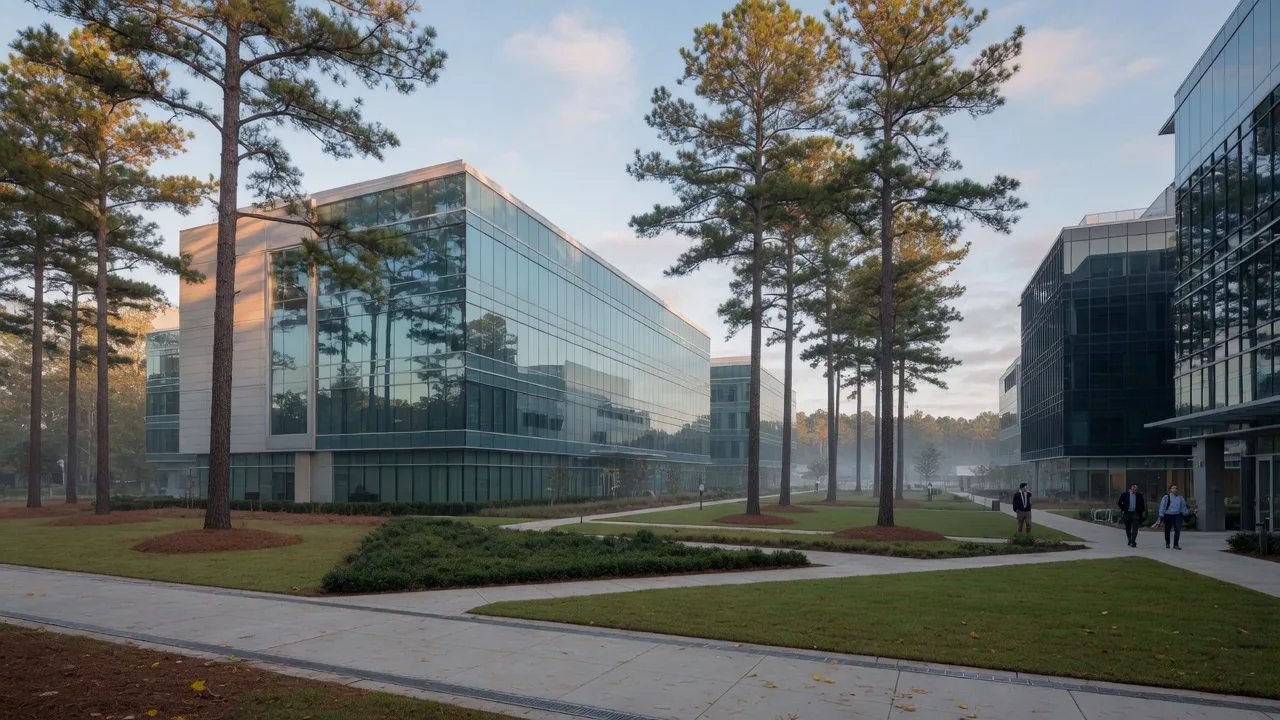
Research Triangle Park is the largest research park in the United States, spanning about 7,000 acres with more than 300 companies and roughly 65,000 workers. It is the employment heart of the region, and knowing who sits there tells you a lot about the local economy. The major employers, per the Research Triangle Regional Partnership, include IBM, Cisco, Fidelity Investments, GlaxoSmithKline, Bayer, BASF, Lenovo, RTI International, Syngenta, and Credit Suisse, with Biogen and Fujifilm among the other large tenants and Apple, Google, and Meta building or expanding campuses.
The practical takeaway for a mover: this is not a one-industry town. Tech, finance, life sciences, and professional services all anchor RTP, which is why the region keeps landing on national lists of the best places to find a job. If you work in any of those fields, you are moving into a deep employer pool, not a single company town.
The Fastest-Growing Industries in 2026
Four sectors are driving the Triangle's growth right now, and they matter for different kinds of workers.
- Technology and professional services. Raleigh consistently ranks among the fastest-growing tech hubs in the country, with tens of thousands of tech jobs added over recent years. Software, cloud, and professional services are the largest and most reliable hiring engine.
- Life sciences and biomanufacturing. This is the region's headline growth story. Biogen completed a roughly $2 billion modernization of its RTP campus, and Novartis announced a $771 million investment expected to create about 700 jobs, part of more than $8 billion in tracked life-sciences investment in the region.
- Healthcare and social assistance. Anchored locally by Duke Health and WakeMed, healthcare is the fastest-growing broad sector nationally and a massive, steady employer here, from clinical roles to administration and research.
- Clean energy. Solar, wind, and renewable-energy jobs are among the fastest-growing industries by percentage nationally, and North Carolina is one of the country's leaders in solar capacity, adding a steady stream of installation and engineering roles.
What the Job Market Means for Where You Live
Here is where the honest data matters most. Because the jobs cluster around Research Triangle Park, your suburb choice should follow your employer's address, not the other way around. I break the full drive times down in my Triangle traffic guide, but the short version is this:
- Working in RTP? Live on the west or northwest side. Morrisville sits right next to the park with the shortest commute, Cary and Apex pair excellent schools with manageable drives, and South Durham is also very close.
- Working downtown Raleigh? The inside-the-Beltline and near-Beltline neighborhoods avoid the worst of the commute and put you close to the action.
- Remote or hybrid? You have the most freedom, which means you can get more house for the money in the faster-growing suburbs and eastern towns. My best suburbs comparison walks through the trade-offs.
The one rule I give every relocating buyer: check the drive during your actual commute window before you commit to a neighborhood. RTP is large and spread out, so your exact office address matters more than the park's general location.
The Honest Caveats
No market is perfect, and the Triangle's job boom comes with real trade-offs. The first is concentration: the strongest hiring is in tech, life sciences, and healthcare, so workers outside those fields will have a more ordinary job search. The second is the commute: because the jobs cluster around RTP, the I-40 corridor between Raleigh and Durham backs up at rush hour, and your suburb choice directly controls how much of that you experience. The third is cost: housing has climbed right alongside the job growth. A median-priced Raleigh home now takes roughly $99K to $101K in household income to buy, and rents have risen too. None of these are dealbreakers, but they are the honest numbers you should plan around.
Frequently Asked Questions About the Raleigh Job Market
Is the Raleigh NC job market good in 2026?
Yes, it is one of the strongest in the country. The Raleigh-Cary metro unemployment rate was about 3.0 percent in April 2026, well below the national average, and the wider Triangle sits near full employment. PNC ranked Raleigh-Cary among the top metros nationally for job growth, and analysts projected roughly 35,000 new Triangle jobs in 2026.
What are the biggest employers in Research Triangle Park?
Research Triangle Park is the largest research park in the United States, spanning about 7,000 acres with more than 300 companies and roughly 65,000 workers. Its major employers include IBM, Cisco, Fidelity Investments, GlaxoSmithKline, Bayer, BASF, Lenovo, RTI International, Syngenta, and Credit Suisse, with Biogen and Fujifilm among the other large tenants and Apple, Google, and Meta building campuses.
What industries are growing fastest in the Triangle?
Technology and professional services lead, with Raleigh ranking among the fastest-growing tech hubs in the country. Life sciences and biomanufacturing are surging, anchored by Biogen's roughly $2 billion RTP modernization and Novartis's $771 million investment expected to create about 700 jobs. Healthcare, anchored by Duke Health and WakeMed, and clean energy round out the fastest-growing sectors.
Is it easy to find a job in Raleigh if I move without one?
It depends on your field. The market is near full employment and hiring is strong in tech, life sciences, and healthcare, so skilled workers in those industries typically have options. The honest caveat is that the jobs cluster heavily around Research Triangle Park, so your suburb and commute depend on where your employer actually sits, and housing costs have climbed right alongside the job growth.
Where should I live in the Triangle if I work at Research Triangle Park?
Morrisville is the closest option, sitting right next to RTP with the shortest commute. Cary and Apex are the top all-around choices with excellent schools and manageable drives, and South Durham is also very close. Downtown Raleigh runs about 25 minutes via I-40, and Holly Springs is the longest of the main options at roughly 30 minutes. Always check the exact drive during your real commute window, because RTP is large and your office address matters.
Moving to the Triangle for a Job?
Match Your Commute to the Right Town
The job market is strong. The hard part is choosing the suburb that fits your employer's location, your budget, and your lifestyle. I have helped hundreds of relocating professionals make that exact call with real drive-time data, not hype. Book a free consultation and we will map your commute, your price range, and the towns that actually work for you.
Sources and Methodology
Unemployment figures are the U.S. Bureau of Labor Statistics and Federal Reserve Economic Data (FRED) for the Raleigh-Cary MSA and the Raleigh-Durham-Cary CSA, April 2026, as compiled by USAFacts. Job growth and GDP growth figures are from PNC's July 2026 regional economic analysis of Raleigh and Southeast Economic Advisors' Raleigh-Durham mid-year economic outlook. Research Triangle Park size, company count, and major employers are from the Research Triangle Regional Partnership. Life-sciences investment figures are from Capital Analytics Associates' regional review of the Raleigh-Durham life-sciences cluster. Figures are estimates and subject to revision; always verify current numbers before making a decision.

Phil Slezak
Real Estate Broker · NC #242173 · 20+ years in the Triangle
I moved to Raleigh from Connecticut, have watched this market grow into one of the country's top job destinations, and have spent two decades helping relocating professionals match their employer's location to the right town. If you want the honest read on a specific commute, employer, or price range, I can walk you through the numbers, no slide show required.
Book a callRelated Articles
Phil Slezak Real Estate brokered by LPT Realty