Recognized globally as the home of Duke University, world-renowned medical innovation, and Research Triangle Park (RTP), Durham, North Carolina -- affectionately known as "Bull City" -- has established itself as one of the most culturally vibrant, economically dynamic cities in the American Southeast.
However, relocating to Durham in 2026 requires understanding hyper-local nuances -- from property tax structures and magnet/charter school systems to distinct neighborhood micro-markets. Whether you are moving for a medical residency at Duke Health, an executive tech role in RTP, or simply seeking top-tier culture and dining, here are 17 essential things you MUST know before moving to Durham, NC.
"To give you total clarity, unfiltered local data, and zero risk—backed by a lifetime guarantee that puts your peace of mind first."
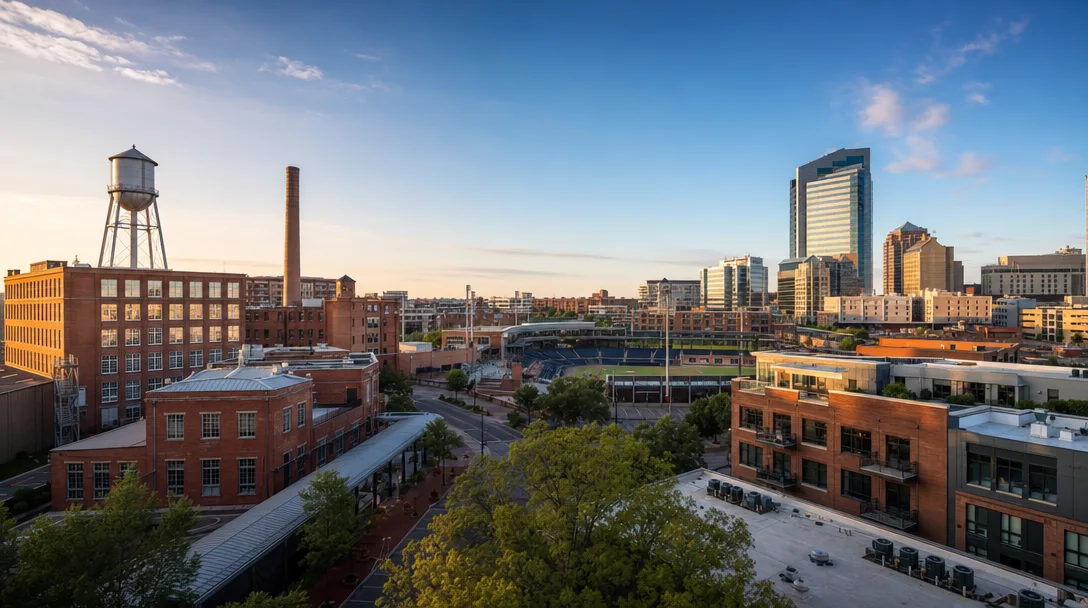
1. Durham vs. Raleigh/Triangle: What Changes?
While Raleigh and Cary offer traditional, master-planned suburban environments, Durham stands out with a distinctly urban, gritty, and soulful identity. Built on a rich industrial heritage -- from historic tobacco warehouses to the legacy of Hayti (Black Wall Street) -- Durham blends historic architecture with modern tech innovation.
Moving to Durham means trading suburban uniformity for independent local businesses, a vibrant arts culture, chef-driven restaurants, and a community that deeply values historic preservation and civic engagement.
2. Cost of Living: Real Estate Breakdown & $460K Single-Family Median
Durham provides incredible relative value compared to national tech hubs and neighboring sub-markets like Chapel Hill or Cary. According to verified Doorify MLS market data analyzed by our team, the median sale price for a single-family detached home in Durham sits right at $460,000, with well-priced homes moving in roughly 19 to 25 days on market.
Entry-level options, townhouses, and condos allow first-time buyers to step into the market at lower price points, while historic estates near Duke University command premium valuations.
| Property Category / Zone | Median / Typical Price Range | Days on Market (DOM) | Primary Buyer Profile |
|---|---|---|---|
| Single-Family Detached (Citywide) | $460,000 | 19-25 Days | Move-up buyers, RTP commuters, healthcare professionals |
| Downtown Urban Core (27701) | $469,900 - $1,000,000+ | 14-21 Days | Walkable lifestyle buyers, young professionals, downsizers |
| South Durham (27713 / Woodcroft) | $385,000 - $550,000 | 18-28 Days | Families needing rapid RTP access & greenway networks |
| North / East Durham (27704) | $375,000 - $420,000 | 25-35 Days | First-time buyers seeking accessible single-family entry points |
Data compiled from Doorify MLS market reports and local property records. Prices vary based on condition and micro-location.
3. Understanding the Combined Property Tax Rate ($0.9913)
When budgeting for a home purchase in Durham, understanding municipal tax boundaries is critical. Properties located inside the corporate limits of the City of Durham pay both Durham County and Durham City property taxes.
The current combined City + County tax rate inside corporate limits is $0.9913 per $100 of assessed value (County rate of $0.5542 + City rate of $0.4371). On a single-family home assessed at $460,000 inside city limits, annual property taxes come out to approximately $4,560. Properties situated outside city limits pay only the county rate ($0.5542), saving several thousand dollars annually while utilizing county services.
4. Most Searched Neighborhoods to Target
Durham's residential landscape is divided into distinct, highly sought-after micro-markets:
- Downtown / Central Core (27701): High-density urban living featuring converted tobacco lofts, modern mid-rise condos, and walkable access to DPAC and dining.
- Hope Valley: A classic, established South Durham country club community featuring historic estates, mature hardwood trees, and custom golf-course homes.
- Woodcroft: A master-planned South Durham community famous for miles of paved hiking/biking trails, natural timber buffers, and mid-range single-family homes.
- Treyburn: A premier North Durham golf community offering quiet acreage, custom luxury builds, and access to the Treyburn Country Club.
- Southpoint (27713): Located adjacent to The Streets at Southpoint mall, offering modern townhouses, new subdivisions, and an 8-minute commute to RTP.
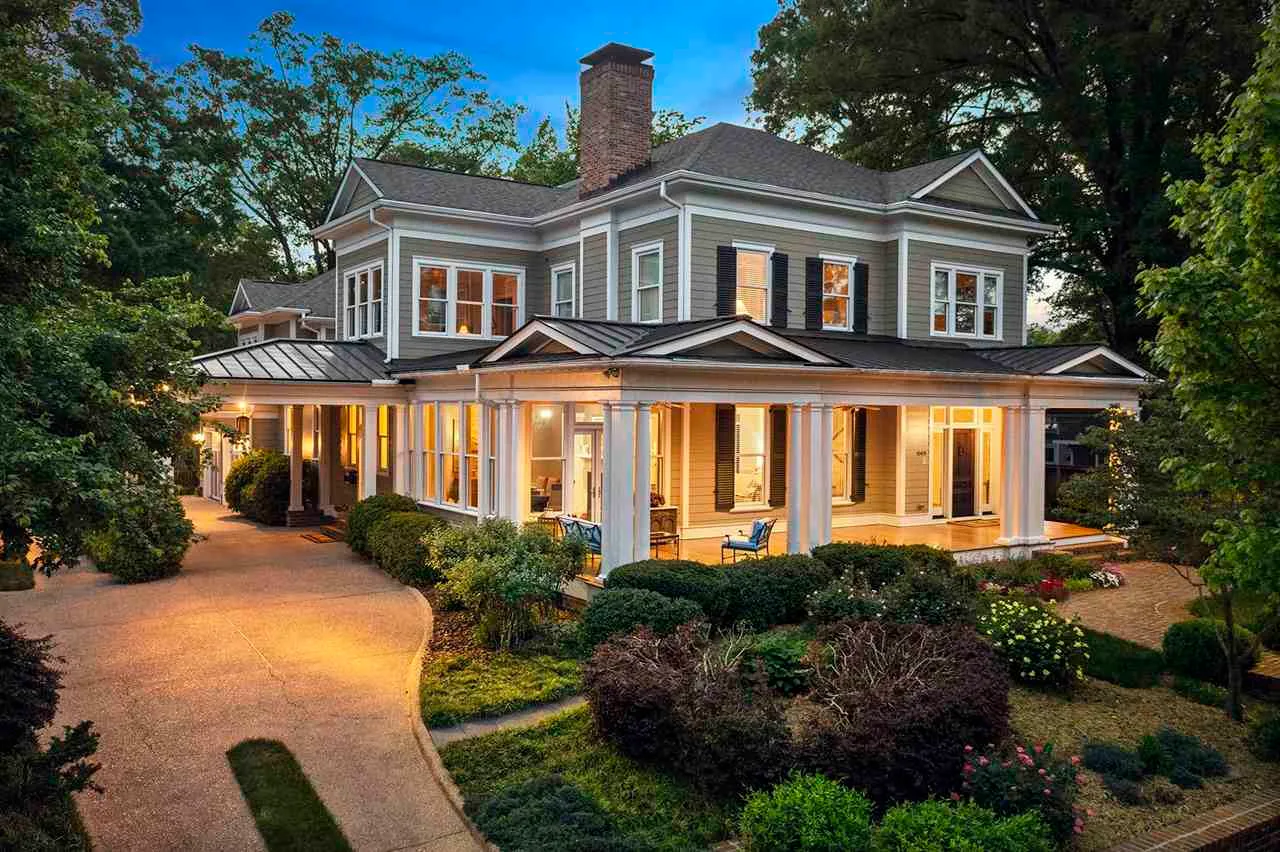
Ready to explore active inventory? Search all available homes across every neighborhood directly on our Durham RealScout Home Search Portal.
5. Commutes: RTP ~10 Min, Downtown Raleigh & Highway Corridors
Geographically positioned on the western edge of Research Triangle Park, Durham offers one of the best regional commute profiles in North Carolina.
Travel times from South and Central Durham to major hubs:
- Research Triangle Park (RTP): 8 to 15 minutes via NC-147 (Durham Freeway) or I-40.
- RDU International Airport: 12 to 18 minutes via I-40 East.
- Downtown Raleigh: 30 to 35 minutes via I-40 East or Highway 70.
- Chapel Hill / UNC: 15 to 20 minutes via 15-501 or NC-54.
6. Schools: DPS, Magnet Lotteries, Charters & Privates
Education in Durham County offers exceptional choices, but it operates differently than standard single-assignment suburban districts. Durham Public Schools (DPS) operates a combination of neighborhood schools and specialized lottery-based magnet programs (focusing on International Baccalaureate, STEM, Montessori, and Arts).
Additionally, Durham features a dense network of top-ranked public charter schools -- such as Voyager Academy, Kestrel Heights, and Research Triangle High School inside RTP -- alongside premier private institutions like Durham Academy and Trinity School.
7. Downtown, American Tobacco Campus, Bulls & World-Class Dining
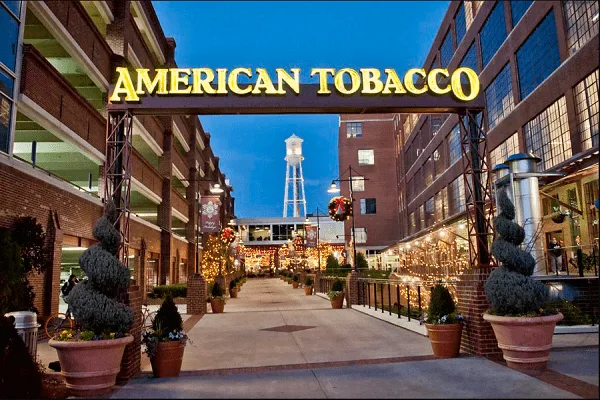
Downtown Durham has undergone one of the most successful urban revitalizations in North Carolina. The historic American Tobacco Campus -- a former Lucky Strike cigarette factory -- now features open-air green space, a man-made river, local tech offices, and restaurants.
Directly next door sits the Durham Bulls Athletic Park (DBAP), home of the iconic Triple-A baseball team made famous by the movie Bull Durham. Combined with national accolades from Bon Appetit and Southern Living naming Durham the "Food Town of the South," downtown delivers world-class culture every day of the week.
8. Duke Economy & How It Drives Real Estate Demand
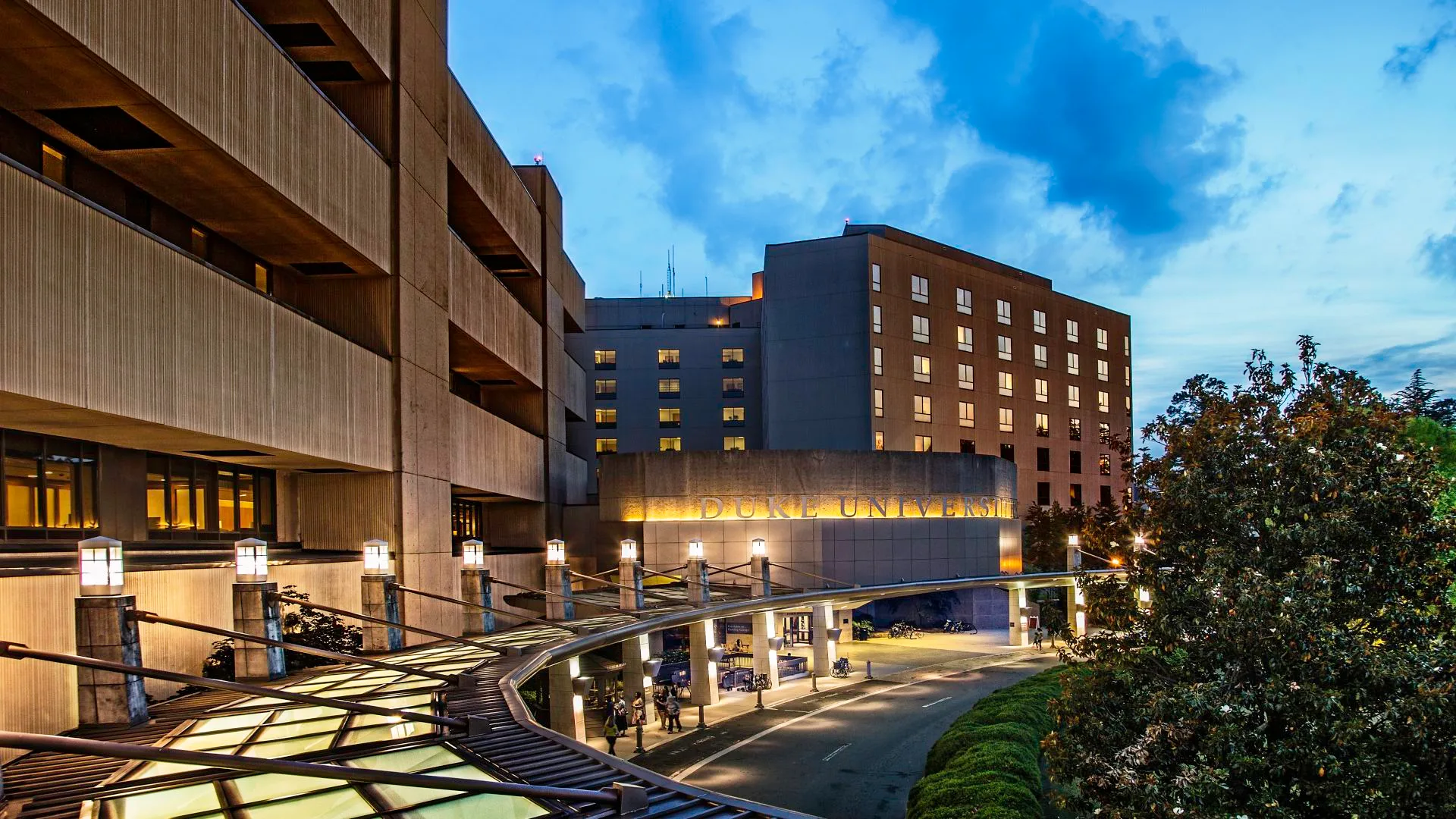
As Durham's largest private employer, Duke University and Duke Health serve as an unstoppable economic engine for the local real estate market.
With over 17,000 students, thousands of faculty members, medical residents, and research scientists moving to Durham annually, housing demand surrounding Duke's East and West Campuses (such as Trinity Park, Watts-Hillandale, and Old West Durham) remains exceptionally high year after year.
9. Job Engines: Healthcare, Tech, Startups & RTP
Durham is a primary technology and life science powerhouse in the American South. Beyond Duke Health System, Durham contains the majority of Research Triangle Park (RTP) -- a 7,000-acre research hub housing 300+ global enterprises like IBM, Cisco, Fidelity, and Biogen.
In downtown Durham, the Durham Innovation District (Durham ID) spans 1.8 million square feet of lab, office, and biotech space, creating thousands of high-wage jobs in software development, clinical research, and venture-backed startups.
10. Walk Score ~34 & Walkable Neighborhood Pockets
While Durham carries an overall citywide Walk Score of ~34 (requiring a car for general suburban errands), it features distinct, highly walkable urban pockets.
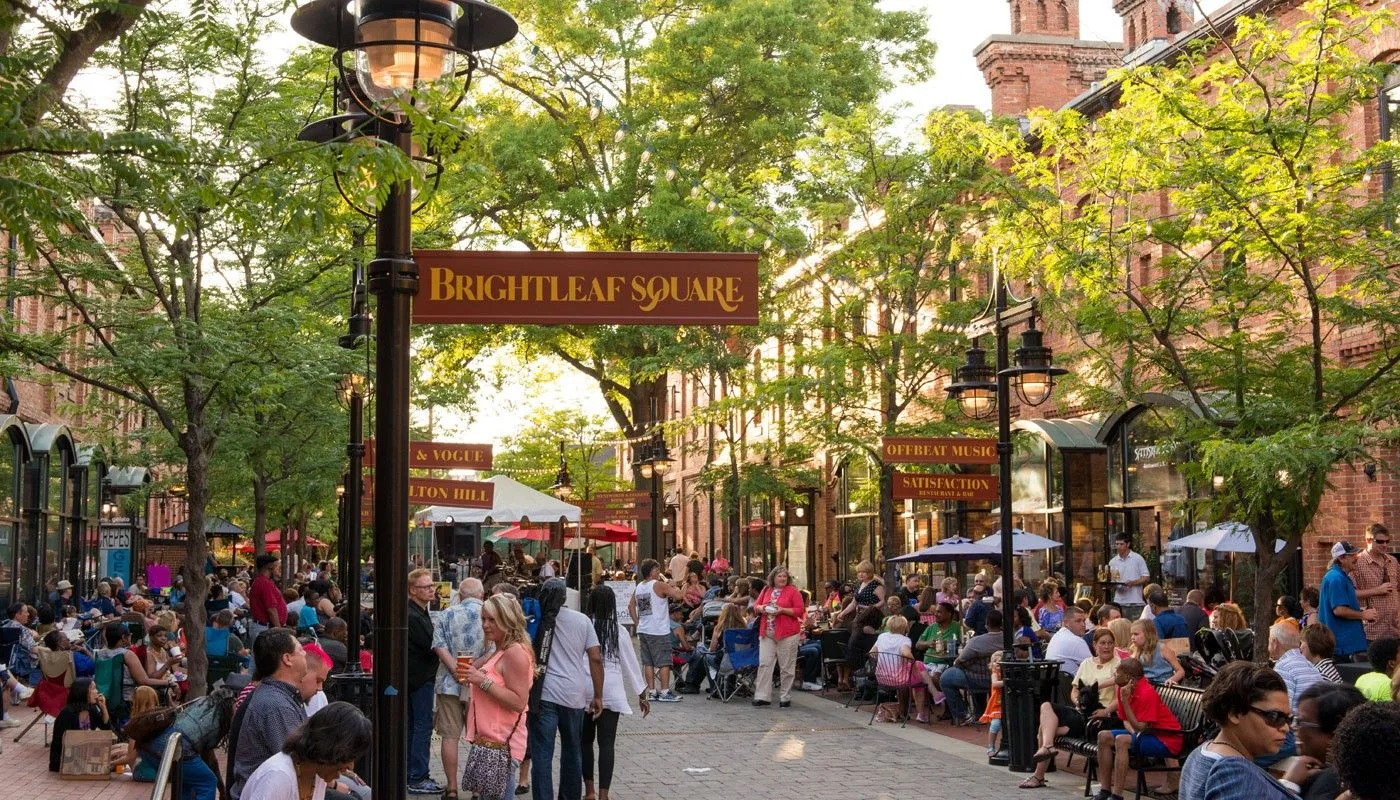
If walking to coffee shops, dinner, and grocery stores is a priority, focus your search on Downtown Durham (27701), Ninth Street / Old West Durham, Trinity Park, or Brightleaf Square, where daily errands can easily be completed on foot or by bike.
11. Bull City History, Heritage & Cultural Identity
Durham's cultural identity is deeply rooted in resilience and innovation. Following the Civil War, Durham became an industrial leader in tobacco production, which fueled the rise of Hayti -- a historic African American community known nationally in the early 20th century as "Black Wall Street" due to institutions like North Carolina Mutual Life Insurance and Mechanics and Farmers Bank.
Today, this rich history is celebrated through local museums, preserved historic districts, and annual cultural events like the American Dance Festival and Full Frame Documentary Film Festival.
12. Outdoors & Recreation: Eno River, Duke Gardens & Tobacco Trail
Nature lovers enjoy immediate access to vast state parks and urban trail networks:
- Eno River State Park: Located in North Durham, offering 4,300+ acres of preserved river canopy, historic mill sites, and 28 miles of hiking trails along rapid waters.
- Sarah P. Duke Gardens: 55 acres of world-renowned landscaped botanical gardens located right on Duke's campus.
- American Tobacco Trail (ATT): A 22-mile paved rails-to-trails greenway running from Downtown Durham south through Wake and Chatham counties.

13. Safety by Neighborhood: An Honest Read (Niche.com Data)
Evaluating safety in an evolving city requires clear data rather than assumptions. Ranked by Niche.com among the Top 50 Best Cities to Live in America, Durham scores high for overall quality of life, with 79%+ of surveyed residents reporting that they feel safe in their neighborhoods.
Like most growing metropolitan areas with an established grid, crime rates vary significantly by street and neighborhood. Established suburban areas in South Durham (Hope Valley, Woodcroft) and historic pockets near campus (Trinity Park, Watts-Hillandale) report exceptionally low incident rates, making local guidance essential when evaluating street-by-street locations.
14. GoDurham Transit & Car-Free Living Potential
While most Durham residents rely on personal vehicles, GoDurham operates comprehensive municipal bus routes linking residential neighborhoods to commercial centers, Duke campuses, and regional transit hubs.
For those seeking a car-free lifestyle, living in the downtown core or along the Ninth Street corridor allows residents to utilize fare-integrated transit, regional GoTriangle express routes to RTP/Raleigh, and bikeways along the American Tobacco Trail.
15. The First-Time Buyer Playbook: Navigating the $375K Entry Point
For first-time home buyers looking to enter the Triangle market, Durham offers some of the best entry points in the region. While single-family medians sit at $460,000, neighborhoods in North and East Durham (such as 27704) and attached townhouse communities across South Durham offer strong inventory starting near $375,000.
Working with a local broker allows first-time buyers to identify up-and-coming corridors, secure down payment assistance programs, and structure competitive offers that build immediate equity.
16. New Construction vs. Established Historic Homes
Durham offers two distinct architectural choices for home buyers:
- Established Historic Homes: 1920s Craftsman bungalows, Colonial Revivals, and converted lofts in urban neighborhoods like Trinity Park, Morehead Hill, and Watts-Hillandale feature unmatched character, mature trees, and walkable locations.
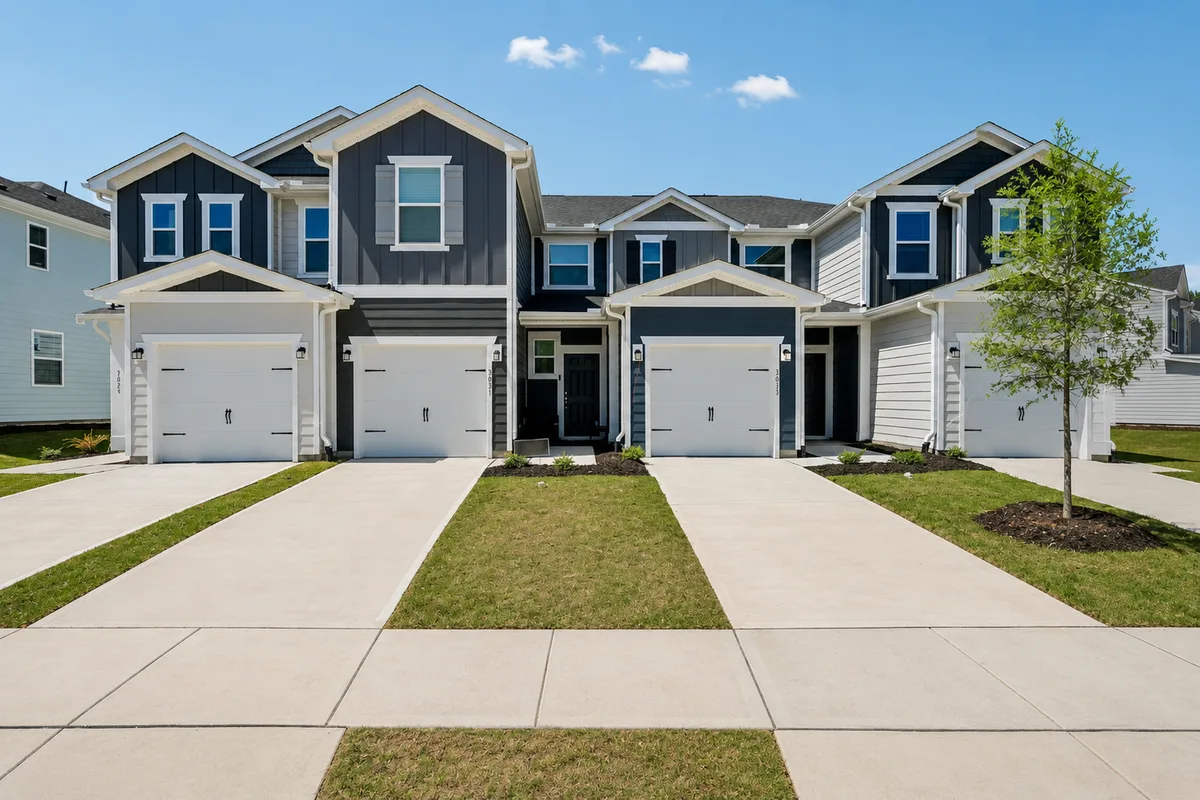
- New Construction Infill & Master-Planned: Modern infill builds downtown and expansive new construction communities in South and East Durham offer energy-efficient floor plans, smart home technology, and minimal maintenance.
17. Local Real Estate Traps to Avoid
When purchasing a home in Durham, avoiding common relocation mistakes can save you thousands of dollars:
- Tax District Overlaps: Assuming a home with a Durham address is outside city limits when it actually sits inside corporate boundaries (incurring the $0.9913 combined tax rate).
- School Zone Assumptions: Assuming a specific home automatically guarantees placement in a specific magnet school without participating in the DPS lottery.
- Commute Blindspots: Underestimating rush-hour traffic along I-40 bottlenecks near the Highway 55 and 147 interchanges.
Phil's Perspective
"Having guided buyers, sellers, and relocating families across the Research Triangle since 2004, I can tell you that Durham offers a distinct, energetic character that you simply will not find anywhere else in North Carolina. Its combination of historic architecture, world-class medical innovation, and vibrant local culture makes it a phenomenal place to invest in your future.
Because Durham's real estate market ranges from $375,000 townhomes to $1M+ historic estates and custom builds, having hyper-local clarity is essential. My team and I are here to give you the exact data and strategy you need to win in this market. Explore our comprehensive regional resources via our dedicated Living in Durham Hub."
-- Phil Slezak, Broker / Owner (NC License #242173)
Frequently Asked Questions About Moving to Durham, NC
Is Durham cheaper to live in than Raleigh or Chapel Hill?
Yes. According to Doorify MLS data, Durham's median single-family home price sits around $460,000, which is significantly more affordable than Chapel Hill (~$825,000) or Cary (~$745,000), and offers more accessible entry points than central Raleigh.
Is Durham NC a safe place to live?
Yes. Durham is ranked by Niche.com among the Top 50 Cities to Live in America, with the vast majority of surveyed residents feeling safe. Like any major city, safety varies by neighborhood, with suburban South Durham and historic core pockets recording low crime rates.
What is the best neighborhood in Durham NC for families?
Top neighborhoods for families include Hope Valley and Woodcroft in South Durham (offering established parks, trail networks, and quick RTP access), Trinity Park (for walkable historic living near Duke), and Treyburn in North Durham for spacious golf-community living.
How far is Durham from Research Triangle Park (RTP)?
Durham contains the majority of Research Triangle Park, keeping commute times exceptionally short -- typically 8 to 15 minutes from South or Central Durham via NC-147 or I-40.
What is the property tax rate in Durham NC?
For properties inside Durham City limits, the combined City + County property tax rate is $0.9913 per $100 of assessed value. Properties outside city limits pay only the Durham County rate of $0.5542 per $100.
What school options exist in Durham County?
Durham Public Schools (DPS) offers neighborhood assignment schools alongside a lottery-based magnet network. Additionally, Durham features numerous top-rated public charter schools (like Voyager Academy and Research Triangle High) and elite private schools like Durham Academy.
How Phil Slezak Real Estate Can Help You
At Phil Slezak Real Estate, brokered by LPT Realty, we bring localized market intelligence, custom buying strategies, and industry-leading guarantees to protect your long-term investment across Durham, Wake, Chatham, and every Triangle county.
- Exclusive Off-Market Listings: Access properties across Durham and South Durham before they hit public MLS feeds.
- Buyer Guide: Step-by-step relocation guide to purchasing homes across Durham, Wake, and Orange Counties.
- Buyer Home Guarantee: If your home is not perfect in year one, we will sell it with zero listing commission.
- Sold Zero Commission: Maximize your home equity with flexible, high-value listing options when selling.
- Cash Offers: Receive up to 4 competitive cash offers on your existing property in minutes.
- 📞Contact Phil Slezak Real Estate: Ask us anything about moving to Durham or the Triangle.
Phil Slezak Real Estate -- brokered by LPT Realty
About the Author
Phil Slezak
Real Estate Broker · NC #242173 · Triangle resident since 2004
I moved to the Triangle from Connecticut in 2004 and have spent two decades learning every corner of this market. I know the pros and cons of living in Durham firsthand, including city vs. county tax nuances, school lottery options, and neighborhood subtleties that never make it into the brochures. If you have questions about relocating to Durham or anywhere in the Triangle, I am happy to help.
Book a call
Phil Slezak
Real Estate Broker · NC #242173 · Triangle resident since 2004
I moved to the Triangle from Connecticut in 2004 and have spent two decades learning every corner of this market. I know the pros and cons of living in Durham firsthand, including city vs. county tax nuances, school lottery options, and neighborhood subtleties that never make it into the brochures. If you have questions about relocating to Durham or anywhere in the Triangle, I am happy to help.
Book a callRelated Articles
Phil Slezak Real Estate brokered by LPT Realty