Downtown Durham NC: At-a-Glance Summary (2026)
A quick factual overview of the Downtown Durham condo and loft market, urban layout, and neighborhood profile.
| Key Data Metric | Downtown Durham Statistic | Comparative Context & Details |
|---|---|---|
| Primary Zip Code | 27701 | Central Durham's walkable core along Main, Parrish, Blackwell, and Foster Streets |
| Housing Stock | Converted warehouses + new mid-rise | Lofts, condos, and townhomes, with a small amount of single-family |
| Typical Condo / Loft Range | $350,000 - $900,000+ | Higher-end penthouses and top-floor units exceed the band |
| Walk Score | 77-82 (Very Walkable) | Versus Durham's citywide average near 30 |
| Commute to Duke | 2 Miles | Duke University and Duke University Hospital area |
| Commute to RTP | 10-15 Minutes | Via the Durham Freeway (NC-147) and I-40 |
| Transit Hub | GoDurham, GoTriangle, Amtrak | Durham Station at the core; downtown passenger rail stop |
| Public Schools (DPS) | Address-specific | Common zone: E.K. Powe Elementary, Brogden Middle, Riverside High. Verify at dpsnc.net |
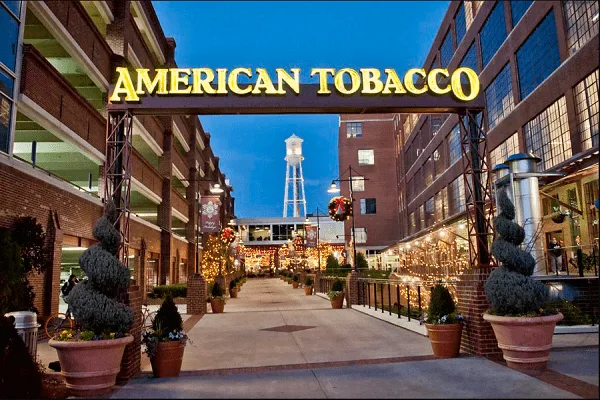
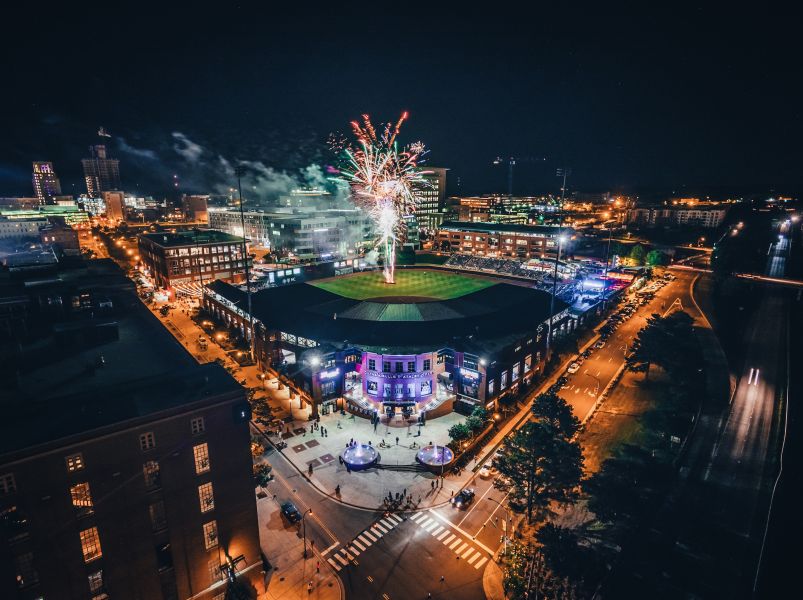
Overview of Downtown Durham
Downtown Durham is the walkable urban core of the Triangle, a dense, mixed-use district built around the American Tobacco Campus, DPAC, Brightleaf Square, the Five Points area, CCB Plaza, and the walkable corridors of Main Street and Parrish Street. Loft and condo living dominates the inventory, anchored by converted early-20th-century tobacco warehouses reborn as offices, restaurants, and residences after the Bull City's manufacturing era ended.
That historic tobacco district is now the city's dining and entertainment engine. Broadway tours and concerts pack the Durham Performing Arts Center, the Durham Bulls play at the Durham Bulls Athletic Park, the downtown Alleys carry murals and installations curated with the Durham Arts Council, and a food scene with an outsized national reputation lines nearly every block.
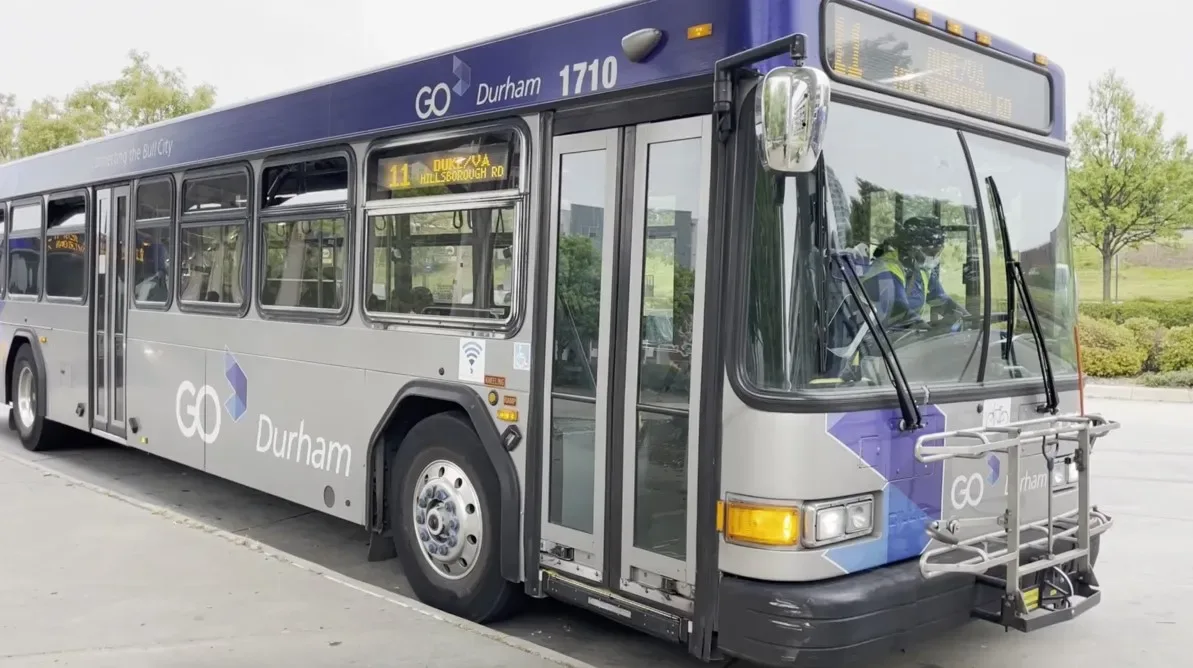
The lifestyle is built on density and convenience. Most daily errands, work, dining, and entertainment sit within a short walk or bike ride, city events fill the streets most weekends, and transit is genuinely useful: GoDurham buses, GoTriangle regional routes, and Amtrak passenger rail all connect through the downtown core, with direct links to Duke, RTP, and Raleigh.
Getting Around Downtown: Transit & Commutes
Downtown Durham is the transit and commuter hub of the east side of the Triangle. Durham Station, the city's main transfer center, routes GoDurham buses through the core, GoTriangle connects downtown to Raleigh and the wider region, and the Durham Amtrak station on West Pettigrew Street puts passenger rail to Raleigh, Cary, Greensboro, Charlotte, and the Northeast within walking distance of hundreds of downtown homes.
Cars remain part of the picture, but the core is compact enough that many trips are shorter on foot or by bike. The American Tobacco Trail links downtown to the south, and the Durham Freeway (NC-147) reaches both Duke and RTP in minutes.
5-10 min
Duke University, about 2 miles west
10-15 min
Research Triangle Park via NC-147 / I-40
15-20 min
Chapel Hill via NC-147 / 15-501
15-20 min
RDU International via I-40
Housing Styles & Typical Price Range
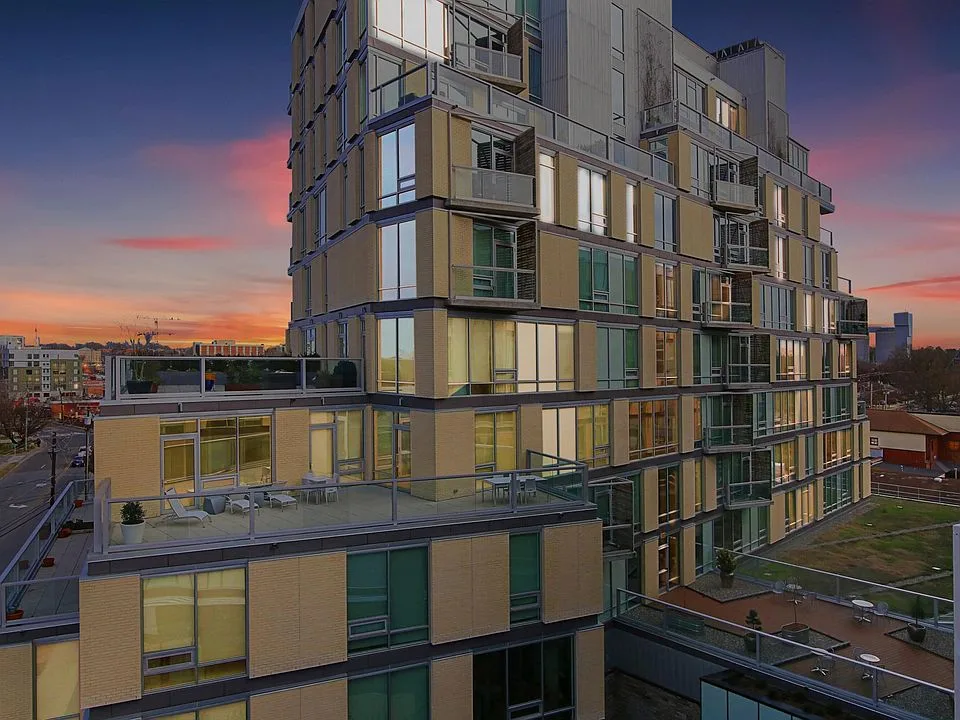
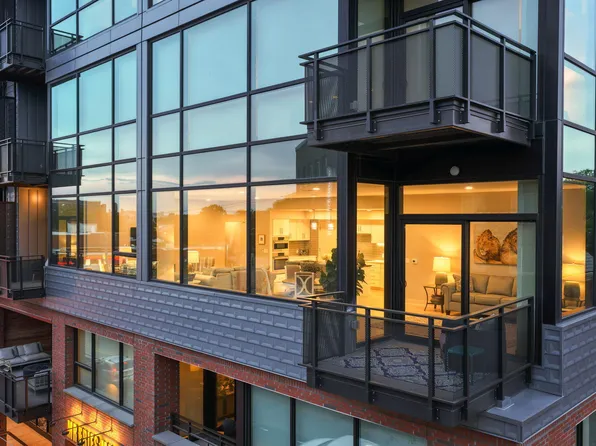
Downtown Durham's housing stock splits sharply between converted historic buildings and new construction. The converted side includes the smoke-stack-era warehouses of the American Tobacco Campus, West Village's former factory lofts, and Liberty Warehouse, all prized for exposed brick, oversized steel-framed windows, concrete floors, and open, high-ceilinged plans. The newer side ranges from mid-rise condos and townhomes along the downtown grid to a modest number of single-family homes on the surrounding blocks.
Realistic pricing for the downtown market runs roughly $350,000 to $900,000+ for condos and lofts, with higher-end penthouses and top-floor units above that band. Two market realities matter for buyers. First, inventory skews heavily toward condos, which carry monthly HOA fees covering shared building maintenance, amenities, and insurance. Second, resale inventory in the core is limited, so competition for well-priced condos is real; move quickly when the right one hits the market.
Condos and lofts typically fall between $350,000 and $900,000+, with pricing tied to building, views, and parking.
Higher-end penthouses and premium top-floor units with skyline views exceed the standard band.
Most resales are condos and lofts with monthly HOA fees; townhomes and single-family are the exception.

Shopping, Dining & Local Services
Downtown Durham wins on walkability: the anchors below are all reachable on foot from the residential core, and everyday services, grocers, and the region's best restaurant density sit within the same walkable footprint.
The redeveloped Lucky Strike complex anchors downtown life: a leafy brick courtyard with a cascading water feature, the illuminated water tower, Fuller steakhouse, Mellow Mushroom, and a deep lineup of restaurants, cafes, offices, and condos. americantobacco.co
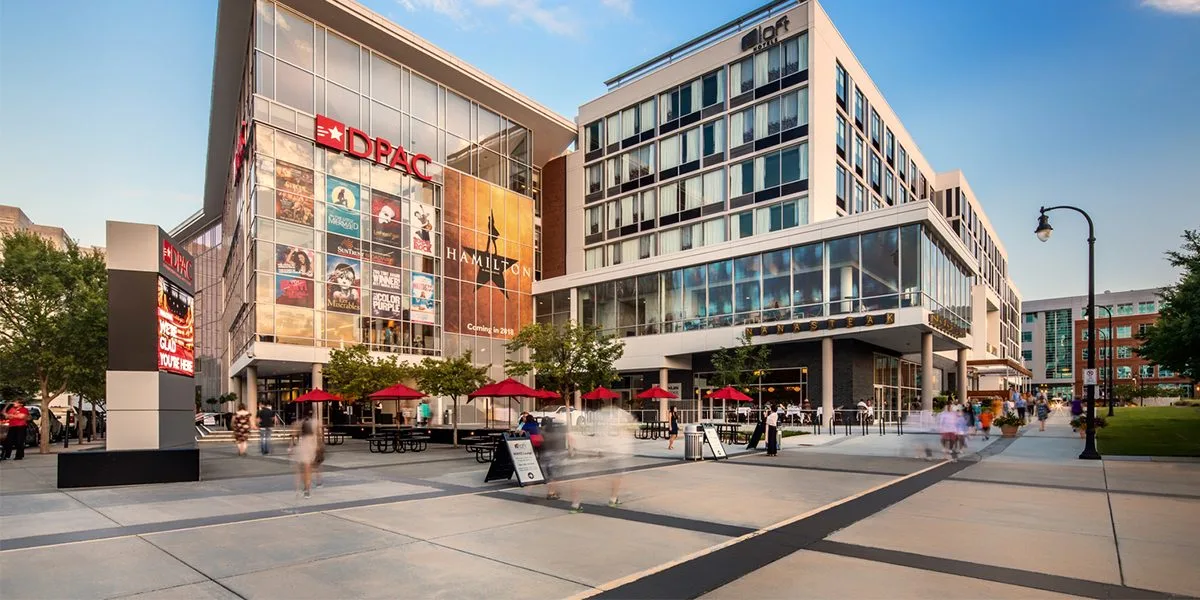
The Durham Performing Arts Center at 123 Vivian Street books Broadway tours, concerts, and comedy year-round, and the surrounding block adds music venues, galleries, and the mural-lined downtown Alleys. dpacnc.com
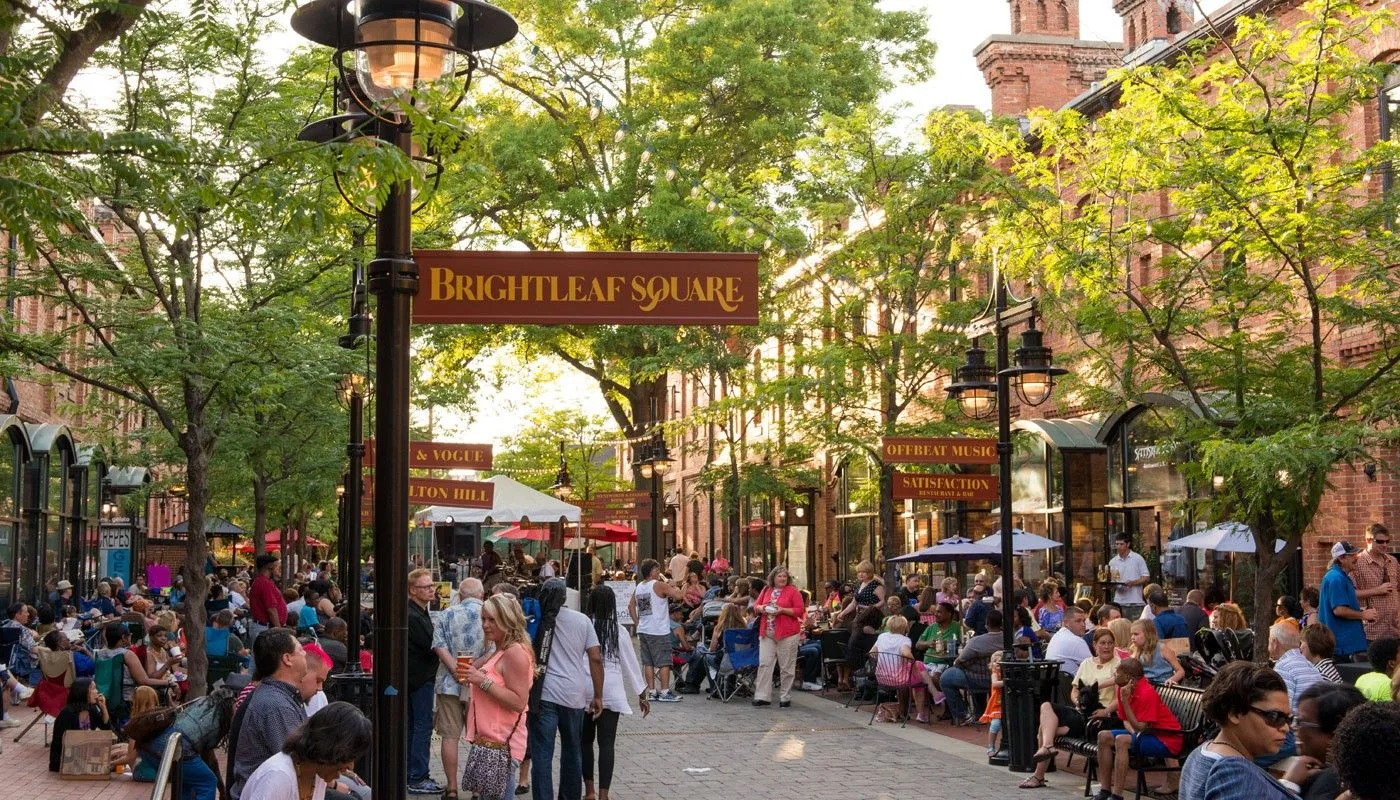
The 1904 tobacco warehouses at 905 West Main Street hold longtime favorites like Nikos alongside shops and cafes, while West Main and City Hall Plaza add spots such as Luna Rotisserie, koki, and Pie Pushers. brightleafdurham.com
Durham Co+op Market and Bulldega Urban Market cover everyday groceries downtown, and the Durham Farmers' Market sets up Saturday mornings in the Pavilion at Durham Central Park. durhamfarmersmarket.com
Hospitals & Healthcare Proximity
Downtown Durham sits close to the core of the Triangle's healthcare network, with Duke Health's flagship hospitals minutes away. Distances below are approximate.
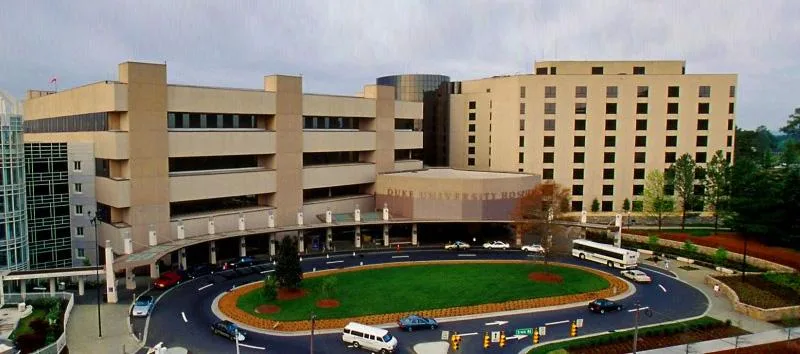
Duke Health's flagship academic medical center on Erwin Road is roughly 2 miles from the downtown core, about a 5-8 minute drive or a short bus or bike ride.
Duke's community hospital on North Roxboro Street toward North Durham sits roughly 3 miles from downtown, about an 8-12 minute drive.
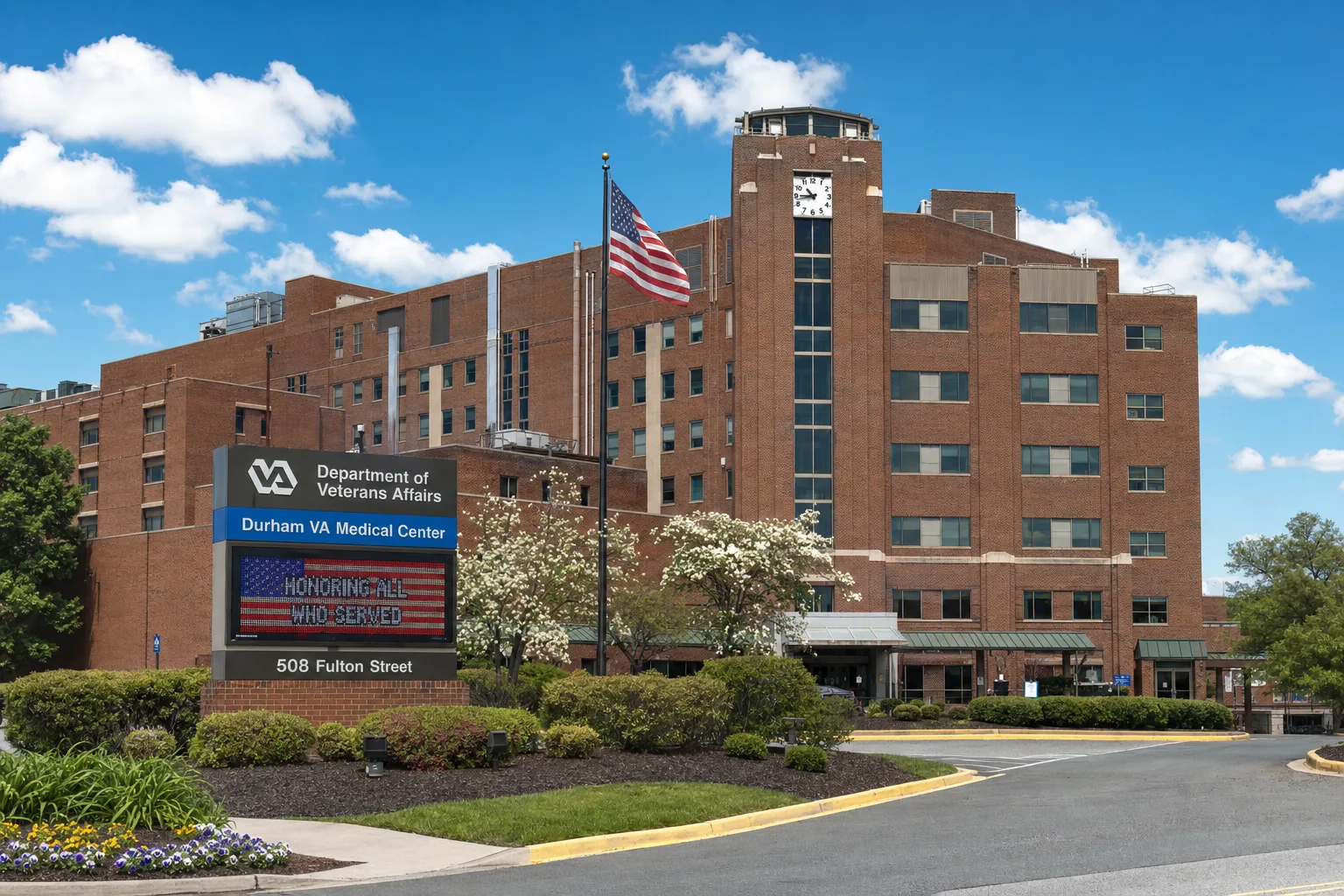
The VA's regional medical center for veterans, on Fulton Street near Duke, sits about 4 miles from downtown, a roughly 10-15 minute drive.
Schools Serving Downtown Durham
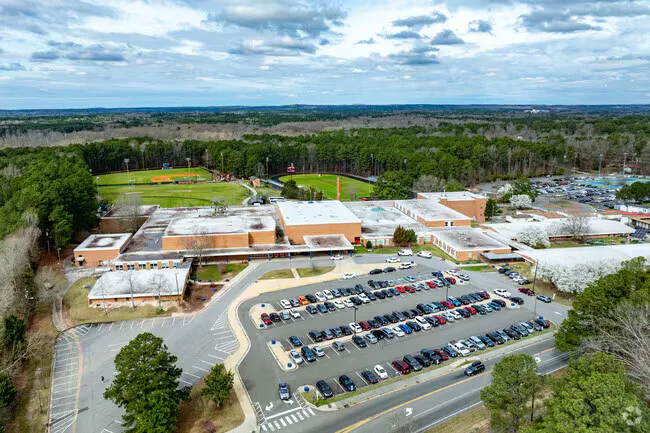
Downtown Durham is served by Durham Public Schools (DPS):
- E.K. Powe Elementary School (the base/zoned elementary for much of the downtown core; an International Baccalaureate magnet school whose attendance zone includes downtown)
- Morehead Montessori School (a downtown-adjacent public Montessori magnet that enrolls district-wide through the magnet lottery)
- Brogden Middle School (typical base middle school for the downtown zone)
- Riverside High School (typical base high school for the downtown zone)
Because DPS assignments are strictly address-specific and DPS adopted new secondary attendance boundaries effective the 2025-26 school year, always verify the exact elementary, middle, and high school zoned to a specific address at dpsnc.net before writing an offer.
Nearby private school options include Durham Academy (PreK through 12), Duke School (PreK through 8), and Trinity School of Durham and Chapel Hill.
Honest Pros & Cons of Living in Downtown Durham
✓ THE PROS
- Walkable: One of the most walkable ZIP codes in the state. Errands, dining, work, and entertainment are within a short stroll of most front doors, with walk scores in the high 70s and low 80s.
- Dense Urban Core: Genuine density with the Triangle's most complete high-rise footprint outside downtown Raleigh. Foot traffic, skyline views, and city energy year-round.
- Live Music: A deep live music scene from the big rooms at DPAC to neighborhood clubs and outdoor stages around the district.
- Arts and Events (DPAC, Bulls): Broadway tours, concerts, comedy, and Durham Bulls baseball at the Durham Bulls Athletic Park put marquee entertainment a short walk from home.
- Best Dining Scene in the Triangle: James Beard-recognized chefs, the Alleys' dining corridor, and dozens of restaurants between Main Street, Brightleaf Square, and the American Tobacco Campus.
- Historic Character: Converted tobacco warehouses, century-old brick commercial blocks, and the industrial bones of the Lucky Strike era give downtown a sense of place no suburb can replicate.
- Easy Access to Duke and RTP: Duke's campus and medical center sit about 2 miles west, and the Durham Freeway puts Research Triangle Park 10-15 minutes away.
- Transit and Bike Access: GoDurham and GoTriangle routes, the Amtrak station, and the American Tobacco Trail connect downtown to the rest of the region without a car.
⚠ THE CONS
- Parking Is Tight and Pricier: Most buildings offer assigned spaces, but visitor and second-car parking is limited, and street or deck parking costs more than the suburbs.
- Condo HOA Fees: The condo-heavy inventory carries monthly HOA or maintenance fees that add a real line item on top of the mortgage.
- Street Noise and City Light: Traffic, sirens, stadium nights, and bright street lighting are part of the bargain; downtown is not a quiet cul-de-sac.
- Limited Yard Space: Lofts and condos trade yards for balconies and rooftop decks; outdoor space is shared or compact.
- Grocery Options Are Closer Than Food Options: The restaurant scene outruns the grocery scene; everyday food shopping is doable but not as convenient as the deep inventory in the suburbs.
- Construction Activity: Downtown is mid-transformation. Cranes, road work, and new towers mean ongoing noise, sidewalk detours, and dust.
Planning a Move to or From Downtown Durham?
Buy with complete confidence. If you're ever unhappy with your home purchase, we'll list it for $0 listing commission when you buy your next home with us, backed permanently in writing.

Homes for Sale in Downtown Durham
Browse active listings updated directly from the MLS.
Tips from Phil
- Condos sell on building, not just location: two similar floor plans can price very differently depending on a building's amenities and HOA financials. Pull the HOA docs before you fall in love with the view.
- Parking is a feature: units with deeded parking sell faster and for more. Confirm exactly what space, if any, conveys before you compare listings on price alone.
- School assignment varies block to block: downtown elementary zones and the new secondary boundaries shift, so verify the exact assignment at dpsnc.net for a specific address before you write an offer.
Frequently Asked Questions
Is Downtown Durham a good place to live in North Carolina?
Yes. Downtown Durham is the most walkable residential core in the Triangle, prized for loft and condo living in converted tobacco warehouses, a nationally recognized dining and arts scene, and direct access to DPAC, the Durham Bulls Athletic Park, and the American Tobacco Campus. It is an urban lifestyle choice: dense, event-filled, and walkable.
What is the price range for condos and lofts in Downtown Durham?
Realistic pricing for the downtown market runs roughly $350,000 to $900,000+ for condos and lofts, with higher-end penthouses and top-floor units above that band. Inventory skews to condos with monthly HOA fees, so factor those fees into your budget.
How walkable is Downtown Durham?
Very walkable. Downtown Durham routinely posts walk scores in the high 70s and low 80s, far above Durham's citywide average near 30. Most daily errands, dining, entertainment, and work sit within a short walk or bike ride of the core around Main Street, Parrish Street, and Blackwell Street.
What schools serve Downtown Durham?
Downtown Durham is served by Durham Public Schools (DPS), and assignments are strictly address-specific. Many downtown addresses are zoned to E.K. Powe Elementary, with Brogden Middle School and Riverside High School the typical base middle and high school path for the downtown zone. Morehead Montessori is a downtown-adjacent magnet that enrolls district-wide. Verify the exact assignment for a specific address at dpsnc.net before writing an offer.
How far is Downtown Durham from Duke and RTP?
Duke University and Duke University Hospital are about 2 miles from downtown, roughly a 5 to 10 minute drive. Research Triangle Park is about 10 to 15 minutes away via the Durham Freeway (NC-147) and I-40. The Durham Amtrak station and GoDurham and GoTriangle routes put regional rail and bus connections at the doorstep.
What is the transit situation like in Downtown Durham?
Strong by Triangle standards. Durham Station at the core is the main GoDurham bus transfer hub, GoTriangle links downtown to Raleigh and the region, and the Durham Amtrak station on West Pettigrew Street provides passenger rail connections. Combined with the walkable core and the American Tobacco Trail, a car is genuinely optional for many daily trips.
Planning a Move to Downtown Durham?
Phil Slezak is a licensed Real Estate Broker in North Carolina (License #242173) with Phil Slezak Real Estate, brokered by LPT Realty, helping buyers find the right fit across the Triangle with honest, no-hype guidance.
Have quick questions about a Downtown Durham property?
Call or Text (919) 899-2320Schedule a 15-minute relocation and home strategy Zoom call with Phil.
Book Strategy CallSave up to $15,000 in equity when buying and selling with Phil's team.
Phil Slezak is a licensed Broker in North Carolina. Phil Slezak Real Estate is brokered by LPT Realty. Equal Housing Opportunity.
Phil's Perspective

“Downtown Durham buyers are choosing the opposite of the standard Triangle suburb: they want to park once, walk to dinner, and live inside the city's energy. The trade-off is a condo-first market with HOA fees, tight parking, and constant construction, so my job is making sure a building's financial health and parking situation are as fully vetted as the floor plan.”
Phil Slezak, Real Estate Broker