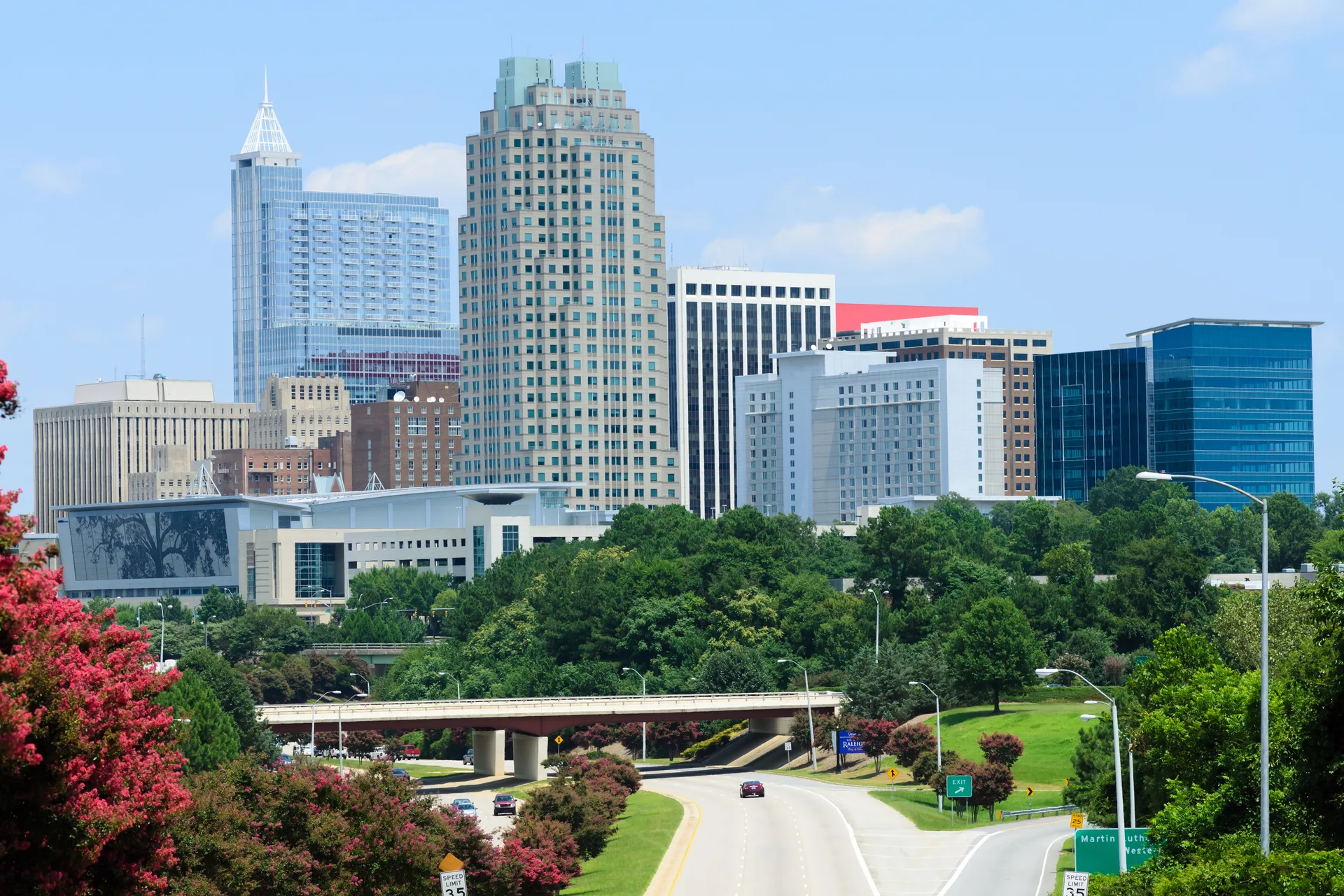
"Is it a good time to buy a house in Raleigh?" gets a different answer every couple of years, and heading into November 2026 the honest answer is yes for a lot of buyers: not because money is cheap, but because leverage has moved toward buyers. November 2026 is one of the better negotiating windows Raleigh has offered in years. Home prices have leveled off, sellers are conceding, and this winter's buyers have room that spring buyers simply will not have.
The catch is financing. The 30-year fixed rate is sitting in the low 7s, around 7.32% per Freddie Mac's October 22 reading, versus about 6.3% a year ago, and the Fed just raised its benchmark again in September. Here is the thesis with the numbers attached: if you plan to stay at least five years and the payment works at today's rate, waiting for lower rates may cost you more negotiating power than it saves in interest. The full breakdown is below, from a real estate agent for Raleigh NC and the Triangle who tracks this market week to week.
"To give you total clarity, unfiltered local data, and zero risk, backed by a lifetime guarantee that puts your peace of mind first."
1. The Short Answer: Leverage Has Moved Toward Buyers
The short answer for most buyers this fall is: November 2026 is one of the better negotiating windows Raleigh has offered in years. Prices stopped climbing, homes are increasingly closing under list price, and sellers are making terms concessions that were unheard of in 2021 and 2022. None of that is an accident: higher rates took buyers out of the market, and fewer buyers means more room at the table for the ones who show up.
The catch is that money is not cheap. A 30-year fixed rate in the low 7s adds hundreds of dollars a month versus a year ago, and the Fed's September hike means nobody should plan around rates dropping fast. So the real question is not "is it a good time" but "is it a good time for you." If you will stay five or more years and the payment works at today's rate, this window is worth moving on. Waiting for lower rates can cost you more negotiating power than it saves in interest, because when rates fall, competition returns with them.
2. Raleigh's Market by the Numbers Heading Into November 2026
Here is what the City of Raleigh's third quarter actually looks like, straight from Doorify MLS closed-sale data for July 1 through September 30, 2026:
| Metric | Q3 2026, City of Raleigh |
|---|---|
| Closed sales (Jul 1 - Sep 30) | 1,456 homes |
| Median sold price | $452,725 |
| Median list price | $459,250 |
| Sold price vs. list price | About 98.6% |
| Days on market | 33 average / 15 median |
| Average sold price | $628,365 |
The eye-popping average of $628,365 is pulled up by luxury sales in Raleigh, which ran as high as $5.9 million in the quarter. The median is the number to anchor on.
Read those numbers together and two things stand out. First, a 15-day median means well-priced homes still sell quickly, so this is not a market where anything and everything sits. Second, the 33-day average shows a good share of listings sitting much longer, which is exactly where negotiation room comes from: the homes that missed their price are the ones with a motivated seller on the other side. Underneath it all, Raleigh-Cary jobs are up 2.2% year over year, so the market is cooling from a position of strength, not cracking.
3. What's Working in Your Favor Right Now
If you are shopping in Raleigh this November, here is what a buyer sees that you would not have seen two years ago:
- Prices have leveled off. The median sold price of $452,725 is essentially flat against list, and the days of every home setting a new record are over. You are no longer playing catch-up with a rising number.
- Homes are more often closing under list. At about 98.6% of asking price on average, below-ask closings are common enough that starting below list is a legitimate strategy, not a fantasy.
- Sellers are conceding on terms. Closing cost help, rate buydowns, repair credits, and flexible closing dates are all back on the table. In North Carolina, buyer closing costs typically run 1% to 5% of the price, so a seller concession can move your cash-to-close dramatically.
- Less frenzy, more time for due diligence. With a 33-day average days on market, you have time for a real inspection, a title review, and the full North Carolina due diligence process. That protects you more than any discount does.
The framing that matters: buying in a soft patch of a growing market is a different bet than buying into a market in decline. Raleigh's jobs, population, and long-term price history are still pointing up. Buying when the crowd is quiet is how you get the growth without paying the crowd's price.
4. The Catch: Mortgage Rates Are Higher Than Last Fall
Here is the number that keeps buyers on the fence: the 30-year fixed rate was about 7.32% as of Freddie Mac's October 22 reading, versus about 6.3% a year ago. On a median-priced Raleigh home, that difference is real money:
- Purchase price: $452,725 with 10% down, or a loan of about $407,452.
- Principal and interest at 7.32%: approximately $2,799 per month.
- Property tax: about $343 per month, using Raleigh's FY2026-27 combined rate of $0.9091 per $100 of assessed value.
- The rate difference itself: about $266 more per month than the same home cost a year ago at roughly 6.3%.
The macro picture explains why a quick drop is not the plan: the Fed raised its benchmark to 3.75% to 4.00% in September 2026 with inflation still near 3.7%, and forecasters expect rates to hold around 7% for the rest of 2026. The honest advice is do not count on a quick drop. Plan the payment at today's rate, and treat any future decline as a refinance opportunity rather than a reason to wait.
5. How a 2-1 Buydown Takes the Sting Out of 7%
The most common bridge in this market is a 2-1 buydown, where the rate is reduced for the first two years of the loan. On that same $452,725 home with 10% down, here is the real payment schedule:
| Period | Rate | P&I payment | Monthly savings |
|---|---|---|---|
| Year 1 | 5.32% | $2,268 | $531 / month |
| Year 2 | 6.32% | $2,527 | $272 / month |
| Years 3-30 | 7.32% | $2,799 | $0 |
The seller typically pays the upfront cost, roughly $9,600, as a closing concession, which is exactly the kind of term concession a November seller is willing to make. Two details worth knowing: lenders still qualify you at the full 7.32% note rate, so the qualification math is the honest math, and you need to plan for the payment step-up in year three. Used well, a 2-1 buydown is a two-year bridge to a refinance, not a permanent discount.
6. Moving to Raleigh From Out of State? Start Here
If you are relocating to Raleigh and the Triangle from another state, the negotiating window is only half the picture. You are also learning a different market: North Carolina's due diligence process, Wake County school assignment, your commute corridor, and which suburb fits your budget.
Relocation Guide
Text RELO to 919-899-2320 for 42 page Detailed RELO guide!
The guide walks through moving costs, NC due diligence, school options, property taxes, and the honest suburb-by-suburb numbers, assembled from 20+ years of helping out-of-state buyers land in the Triangle.
7. Buy Now or Wait? How to Decide for Your Situation
Forget the headlines and run your own situation through this comparison. Here is who this window favors and who it does not:
Consider buying this winter
- You plan to stay at least five years, long enough to ride out any near-term price softness and refinance if rates fall.
- The payment fits your budget at today's rate, with room for taxes and insurance.
- You are relocating for a job or already have a start date, so timing is fixed.
- You will still have savings left after closing, not just a down payment and nothing else.
- You want negotiating room and time for due diligence, which is exactly what this market offers.
Consider waiting
- You may move again within two or three years, too soon to recover closing costs and price swings.
- Your numbers only work if rates drop first, and you cannot afford today's payment.
- Your income or job situation is in flux, so a big fixed commitment is a risk you do not need.
- Your down payment would drain your emergency fund, leaving nothing for repair or job-loss buffers.
- You would rather pay more in a busier spring market than compromise on the exact home or neighborhood now.
If rates do fall meaningfully in 2027, the buyers sitting on the sidelines come back at the same time, inventory gets competed for again, and the negotiating room closes. You can't go back and renegotiate the price you paid in a bidding war.
8. Worried Your Next Move Will Cost You? Our Buyer Home Guarantee Has You Covered
One of the biggest reasons buyers hesitate is fear of being trapped: buy now, and what happens when you need to move up, move down, or relocate across the Triangle in a few years? That fear is exactly why the Buyer Home Guarantee exists. Buy your home with the team, and when you are ready to move up, down, or elsewhere in the Triangle, they will sell that home for zero listing commission, as long as you buy your next home with them.
It removes the "what if I have to sell" side of the buy-now equation, which makes the five-year timeline easier to commit to. Details live on the Buyer Home Guarantee page, and it is one of the first things I walk out-of-state buyers through on a call.
9. Frequently Asked Questions
Is November 2026 a good time to buy a house in Raleigh?
For a lot of buyers, yes. November 2026 is one of the better negotiating windows Raleigh has offered in years: prices have leveled off, homes are more often closing under list price, and sellers are conceding on terms. The catch is 30-year mortgage rates in the low 7s, which makes the right answer depend on how long you plan to stay and whether the payment works at today's rate.
What income do I need to buy a house in Raleigh in November 2026?
On the median-priced Raleigh home of $452,725 with 10% down at a 7.32% rate, principal and interest run about $2,799 a month and property tax about $343, or roughly $3,140 before insurance and HOA dues. That points to a household income in the neighborhood of $135,000 to $150,000 depending on your other debts, down payment, and lenders' qualifying rules.
Is the market turning into a buyer's market in Raleigh?
Not a full buyer's market, but clearly rebalanced. Raleigh homes closed at about 98.6% of list in Q3 2026 with a 15-day median days on market, so well-priced homes still move quickly. The 33-day average tells the real story: a good share of listings sit much longer, and those are the ones where buyers get price and term concessions. This is leverage shifting toward buyers, not a free-for-all.
Will mortgage rates drop soon in 2026?
Do not count on a quick drop. The Fed raised its benchmark in September 2026 to 3.75% to 4.00% with inflation near 3.7%, and forecasters expect 30-year rates to hover around 7% for the rest of the year. The practical lever for lowering a payment in this market is a seller-paid 2-1 buydown or a builder rate buydown, not waiting for the market to move.
Is buying this winter better than waiting for spring 2027?
For most buyers, yes. A seller's market returns in spring: more buyers show up, well-priced homes compete again, and sellers lose the urgency they have in November and December. If rates do fall meaningfully in 2027, the buyers sitting on the sidelines come back at the same time, and you cannot go back and renegotiate the price you paid in a bidding war.
10. The Bottom Line
November 2026 is one of the better negotiating windows Raleigh has offered in years, and it is open right now. Prices have leveled off, sellers are conceding, and the combination of a 15-day median and a 33-day average means the good homes still move while the overpriced ones build you leverage. The financing is the trade-off: at rates in the low 7s, the payment is higher than last year, and sellers' 2-1 buydowns are how you bridge it.
So the honest recommendation: if you will stay five or more years and the payment works at today's rate, this is your window, and waiting may cost you more than it saves. When rates fall, buyer competition returns at the same moment, and the negotiating power you have today disappears. If you are weighing it, run your real numbers with someone who knows this market, because the answer is in your timeline and your payment, not in the headlines.
Your Next Step
Ready to Run the Numbers for the Raleigh Market?
I work with Triangle buyers every week on the buy-now-versus-wait decision: the real payment math at today's rates, seller concessions and buydowns, and the neighborhoods where your budget goes furthest. Bring your timeline and your price range.
Disclaimer
Market statistics, prices, and mortgage figures are drawn from the sources below as of late October 2026, are subject to change, and are provided for general information only. Nothing here is financial, tax, or lending advice. Speak with a licensed mortgage professional about your specific qualifying math, rates, and buydown programs.
Sources
- Doorify MLS, City of Raleigh closed sales, July 1 - September 30, 2026
- Redfin data via Cruz Realty Solutions, Raleigh Market Snapshot, October 18, 2026
- October 2026 Research Triangle Housing Report
- Raleigh NC Housing Market Update, October 2026
- The Mortgage Reports, October 23, 2026 (Freddie Mac PMMS)
- Trading Economics, US 30-year mortgage rate
- Norada Real Estate, Fed outlook
- Resideline ZIP code snapshots, 27604 and 27613
Written October 28, 2026, by Phil Slezak, Real Estate Broker, Phil Slezak Real Estate, brokered by LPT Realty.

Phil Slezak
Real Estate Broker · NC #242173 · 20+ years in the Triangle
I moved to the Triangle from Connecticut more than 20 years ago and have spent my career helping relocating buyers time their move, negotiate their strongest deal, and find the right community for their budget. If you are weighing whether this is your window, let's look at the real numbers for your price range and timeline.
Book a callRelated Articles
Market Trends
Best Time to Buy a House in Raleigh NC in 2026: What the Fall Data Says
Market Trends
Is the Raleigh Housing Market Crashing in 2026? The Honest Answer
New Construction
3.85% Builder Buydowns: What Triangle Buyers Need to Know
Buying
How Much Income Do You Need to Buy a Home in Raleigh in 2026?
Phil Slezak Real Estate brokered by LPT Realty