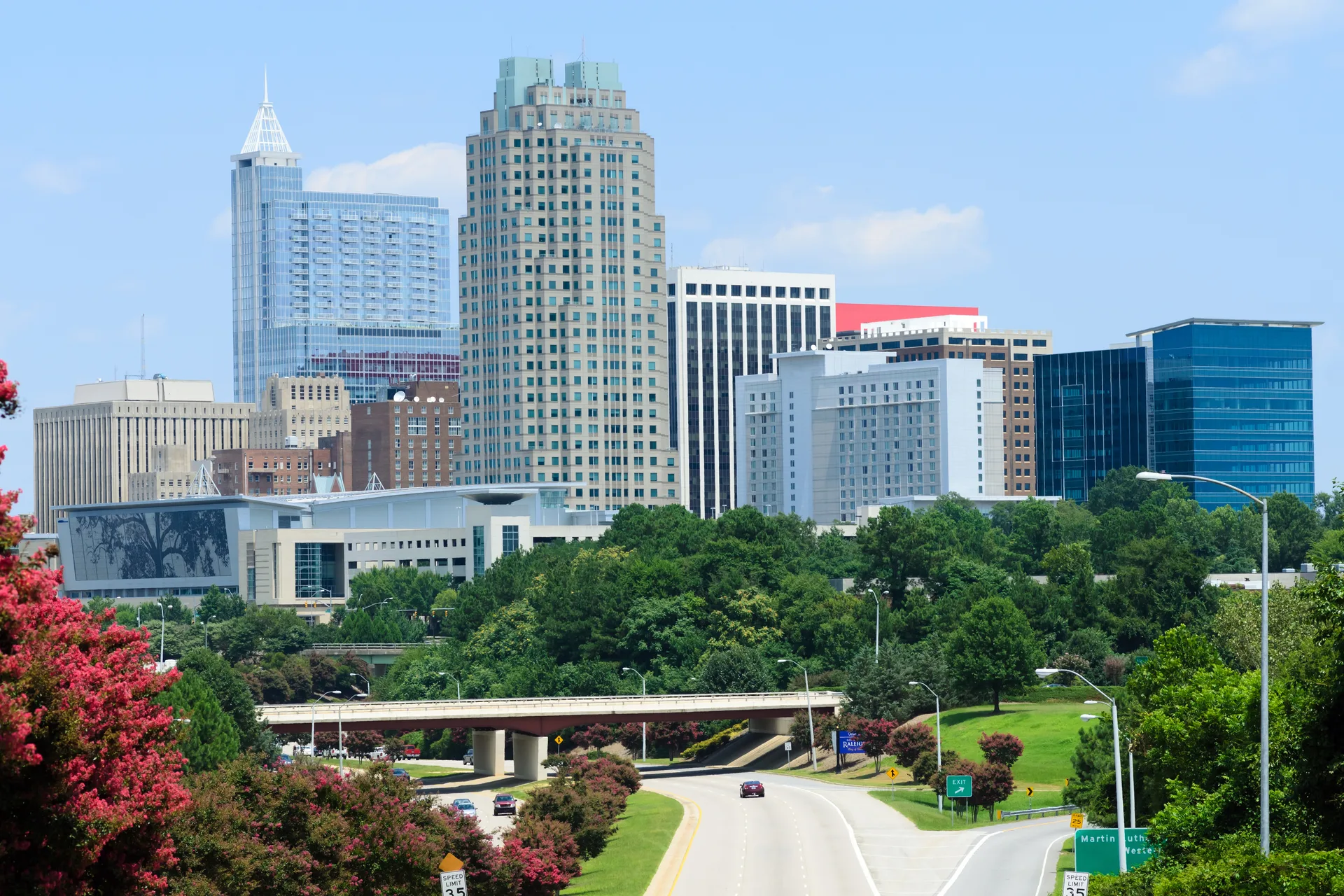
Yes, a $100,000 household income can still buy a solid home in the Raleigh Triangle in 2026. The honest caveat is that it doesn't buy the median-priced home in Raleigh. That budget points you toward townhomes,and condos near North Hills, first-step single-family homes in emerging neighborhoods, newer construction with more space farther out in Johnston County,and similar entry points in Durham. Here is the real math, working backwards from what lenders actually qualify, so you know exactly where a $100K salary lands this year. No hype, just the numbers.
"To give you total clarity, unfiltered local data, and zero risk—backed by a lifetime guarantee that puts your peace of mind first."
This is the same framework I publish in the salary section of my Living in Raleigh guide. A median-priced Raleigh home of $445,000 assumes a household income of roughly $115,000-$125,000 with a 20% down payment, or $125,000-$140,000 with a 10% down payment, at mortgage rates around 6.8% on a 30-year fixed loan. If that income bar feels high, that is because the median is higher than what a $100,000 salary supports. The median isn't the only way in, though, and this post walks through exactly where the cheaper options are.
The short answer
On a $100,000 household income,at the 28% front-end debt-to-income guideline,the maximum total monthly housing payment lands at about $2,333. In this market,with a 20% down payment and a 30-year fixed loan near 6.8%,that $2,333 supports a home in roughly the $325,000-$360,000 range, all-in (principal, interest, taxes,and insurance(. No HOA dues in that number yet, so account for them separately.
The 2026 Numbers to Anchor To
Start with published figures rather than national averages:the salary breakdown on the Living in Raleigh page uses a Raleigh median home price of $445,000, recommended household incomes of $115,000-$125,000 with a 20% down payment,and $125,000-$140,000 with a 10% down payment, an interest rate assumption of 6.8% on a 30-year fixed, the standard 28% front-end / 36% back-end debt-to-income guideline,and a combined Wake County + City of Raleigh property tax rate of $0.9500 per $100 of assessed value for FY2026. Those are the numbers lenders,and appraisers in this county actually work with.
The same table shows how far that stretches locally. Durham's median home price sits at $460,000 with a similar income recommendation, while Cary's median of $697,500 takes about $165,000-$180,000 of income,and Chapel Hill's median of $825,000 takes about $195,000-$215,000. In other words,the affordability story in 2026 differs a lot by which way you point the compass.
Working Backwards From a $100,000 Income
Let's reverse-engineer it. To be clear upfront:this is a planning estimate, not a lender's quote. A $100,000 annual household income works out to about $8,333 a month gross. Lenders using the standard 28% front-end debt-to-income guideline cap your total monthly housing payment at about $2,333, before other monthly debts tighten the 36% back-end constraint.
With a 20% down payment on a $340,000 home, which sits near the middle of the range, you would finance about $272,000. At 6.8% over 30 years,that's roughly $1,775 in principal,and interest. Property taxes at the combined Wake County + City of Raleigh rate add about $269 a month,and homeowners insurance runs another $100-$150 depending on the home,and the coverage. That lands around $2,150-$2,200 all-in before HOA fees,and sits comfortably inside the $2,333 cap.
Push that logic in both directions,and the realistic band is about $325,000-$360,000, the kind of home a $100,000 income supports with a 20% down payment at today's rates. Rates move, insurance quotes vary,and an HOA at the top of the band can push the payment over the line,so treat this as a planning range, not a promise. If rates drift lower,the band widens,and if they creep higher,it narrows.
What a $100,000 Income Affords in Raleigh
In Raleigh,that budget realistically reaches three buckets.
- Townhomes,and condos near North Hills / Midtown: many list in the high-$200s to mid-$300s,with walkable access to shops,and dining streets,and quick I-440 access toward downtown.
- First-step single-family homes in emerging neighborhoods: Raleigh's eastern,and southeastern edges consistently price below the citywide median,and the 27610 corridor sits well below the $445,000 figure.
- Established smaller homes across east Raleigh: more square footage per dollar,often on better lots than the townhome alternative,with the same combined city + county tax rate applying.
The Same Budget in Durham
Durham's median home price is $460,000,per the same comparison table,and that same planning exercise puts a $100,000 income in roughly the same territory as Raleigh:townhomes, established single-family homes in neighborhoods south of downtown,and more square footage per dollar than West Raleigh or Cary. My Living in Durham guide breaks down the neighborhoods where that budget does real work,and where it doesn't.
Farther Out: Clayton,and Johnston County
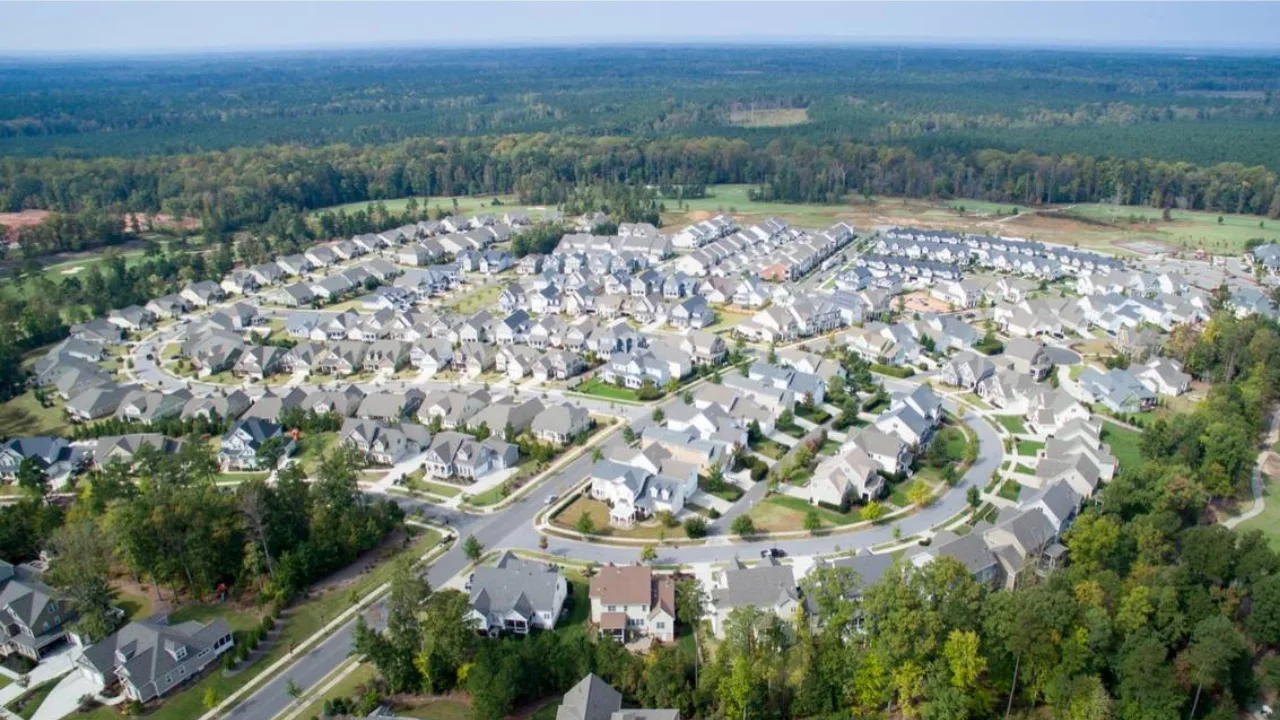
If you want newer construction with more space, point that budget southeast. In Clayton and the surrounding Johnston County communities, builders are putting up brand-new single-family homes in the mid-$300s to low-$400s,and a $100,000 income at the 20% down payment scenario fits comfortably,typically with more room than in Raleigh proper. You trade a longer commute into the city for newer finishes,bigger lots,and brand-new neighborhoods that didn't exist a decade ago.
Tax math matters here,too:outside City of Raleigh limits,the combined $0.9500 City + County rate from the salary guide doesn't apply,and county-level rates vary by community. Check current rates with a local agent,or lender,when you run the real numbers.
What $100K Affords in 2026 vs. What the Median-Priced Home Needs
The honest version of the list:
With a $100,000 income in 2026,you can realistically target:
- A purchase price of roughly $325,000-$360,000 with a 20% down payment at today's rates.
- Townhomes,and condos near North Hills / Midtown,and in several inner-beltline areas of Raleigh.
- First-step single-family homes in the eastern,and southeastern parts of Raleigh.
- New construction in Clayton,and Johnston County with more square footage per dollar.
- Similar entry points in Durham:townhomes,and established homes south of downtown.
For the median-priced homes,the income bar sits higher:
- Raleigh median home price $445,000: about $115,000-$125,000 of income at 20% down,or $125,000-$140,000 at 10% down.
- Durham median home price $460,000: a similar $115,000-$125,000 income bar at 20% down.
- Cary median home price $697,500: about $165,000-$180,000 of income.
- Chapel Hill median home price $825,000: about $195,000-$215,000 of income.
Where the Estimate Gets Tested
A few honest caveats,the math above makes five assumptions:
- Interest rates. 6.8% is the working assumption for 2026. A half-point move shifts the affordable price band by thousands of dollars,so re-run the math when you actually rate-lock.
- A 20% down payment. With 10% down,mortgage insurance joins the monthly payment,and the affordable price band moves down,not up.
- The back-end ratio. Lenders also cap total debt at 36% of income. A car note, student loan,or other monthly debt directly reduces what remains for a mortgage.
- Taxes,and insurance. The $0.9500 per $100 combined Wake County + City of Raleigh rate is FY2026's number. Homes outside city limits pay county-level rates instead,and insurance quotes vary by home,and by carrier.
- HOA dues. Many townhome communities carry dues that run $100-$250 a month,which count toward the same 28% housing bucket.
How to Find Out What You Can Actually Afford
The fastest way to turn this estimate into a number you can shop with is to put your real income,down payment, and monthly debts in front of a lender,and then match the result to neighborhoods. That's exactly what a relocation consultation with me,and my team is for:we run your scenario against current rates,and local price data,and point you at the areas where your budget does real work. No hype,just the real numbers.
And when you do find the right place,the Lifetime Buyer Home Guarantee removes most of the risk of getting it wrong:if the home ever isn't the right fit,we list, and sell it with zero listing commission,and in specific scenarios we can buy it back,backed completely in writing. That kind of protection matters more when a $100,000 income means the down payment you saved took real discipline to build.
Frequently Asked Questions About Affordability in the Raleigh Triangle
Can a $100,000 salary really buy a home in the Raleigh Triangle in 2026?
Yes,with the right price point. At the 28% front-end debt-to-income guideline,a $100,000 income supports about $2,333 a month in total housing cost,which with a 20% down payment,and rates near 6.8% buys roughly a $325,000-$360,000 home,all-in. In Raleigh,in Durham,and in the faster-moving new-construction communities farther out,that means townhomes,condos near North Hills,first-step single-family homes in emerging neighborhoods,and similar entry points. It does not buy the median-priced Raleigh home,which assumes a higher income.
What if I don't have a 20% down payment?
A smaller down payment adds mortgage insurance to the monthly payment,which pulls the affordable price band down. For the median-priced Raleigh home,the salary guide puts the 10% down income requirement at about $125,000-$140,000,versus $115,000-$125,000 at 20% down. On a fixed $100,000 income,the efficient play is to pair a smaller down payment with a lower price point,or save a little longer. A lender can run your exact scenario in about ten minutes.
Is $100,000 enough for the median-priced home in Cary or Chapel Hill?
Not this year. The comparison table in the Living in Raleigh salary guide shows Cary's median at $697,500 needing about $165,000-$180,000 in income,and Chapel Hill at $825,000 needing about $195,000-$215,000. At $100,000,your strongest options are in Raleigh's entry corridors, parts of Durham,and the new-construction communities in Clayton,and Johnston County.
Lifetime Buyer Home Guarantee
Buy on a $100K Budget, Without the Big What-If
If you don't love your new home at any point,we'll sell it for free,or in many cases,buy it back ourselves, backed completely in writing. That kind of protection matters more when you have worked hard to save the down payment. Full details are on the Lifetime Buyer Home Guarantee page.

Phil Slezak
Real Estate Broker · NC #242173 · 20+ years in the Triangle
I moved to Raleigh from Connecticut,and have spent two decades learning this market inside out. If you want a straight answer on what your income can actually buy here,I'm happy to help.
Book a callRelated Articles
Phil Slezak Real Estate brokered by LPT Realty