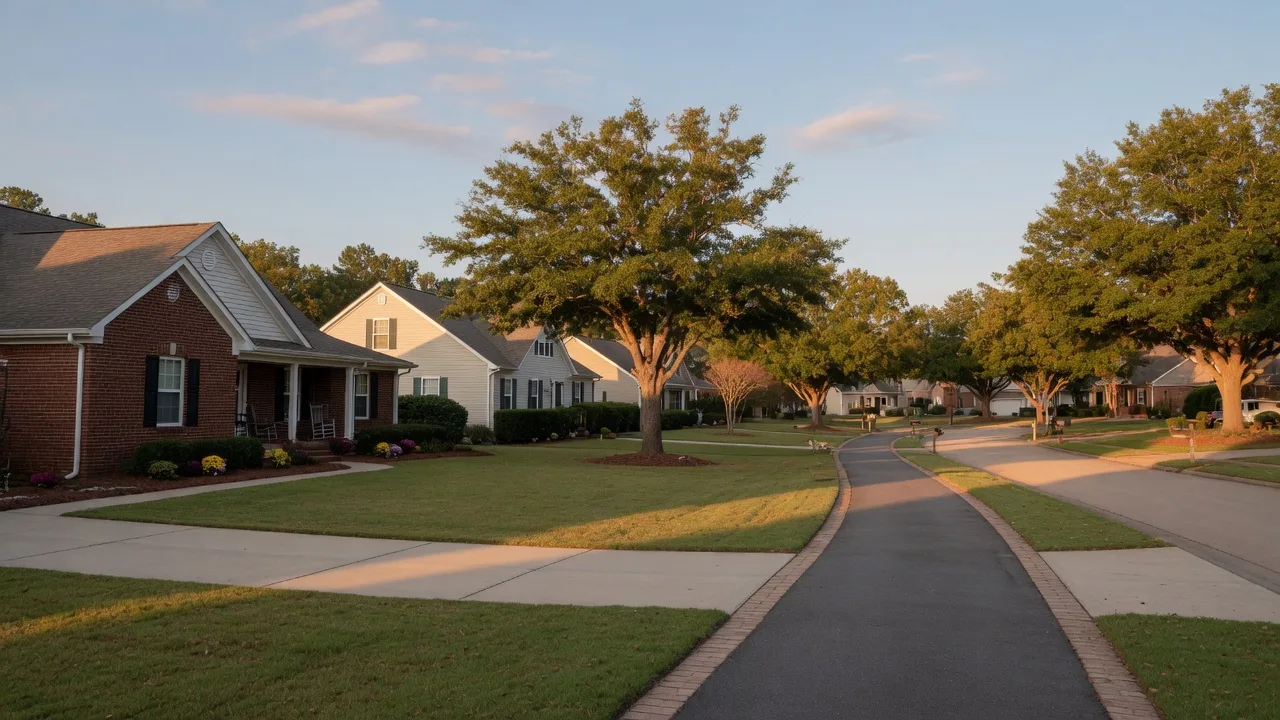
"Is Raleigh a good place to retire?" is one of the questions I hear most from out-of-state buyers in their 50s and 60s, and the honest answer is yes, with real caveats. Forbes named Raleigh among its top 25 U.S. places to retire in 2025, citing the strong economy, healthcare, and a bike-friendly, walkable layout. The 2026 tax picture is genuinely favorable for retirees, and the Triangle's medical options are as good as you will find anywhere in the Southeast.
But "good for retirement" is not the same as "cheap." Raleigh's median home price sits around $425,000, assisted living runs above the national average, and there are 2026 healthcare network wrinkles you need to check before you pick a Medicare plan. Here is the honest, current breakdown, with the numbers and the sources, so you can decide for yourself.
"To give you total clarity, unfiltered local data, and zero risk, backed by a lifetime guarantee that puts your peace of mind first."
The Short Answer: Yes, With Real Caveats
Raleigh checks most of the boxes retirees actually care about. The economy is one of the strongest in the country, which matters for anyone who wants part-time work or rental income. The healthcare system is anchored by WakeMed, UNC REX, and Duke Raleigh Hospital, with Duke University Hospital and UNC Medical Center a short drive away in Durham and Chapel Hill. The airport is excellent, the weather is four real seasons without brutal winters, and the cost of living runs below the national average.
The caveats are honest ones. Housing is not the bargain it was a decade ago: the median sale price in Raleigh is around $450,000 in 2026, and the suburbs people retire to, like Cary and Wake Forest, run higher. Assisted living in Raleigh averages about $5,388 a month, roughly 16% above the national average. And a couple of 2026 healthcare network changes mean you cannot assume your current Medicare Advantage plan will cover your preferred Triangle hospital. None of that makes Raleigh a bad retirement choice. It just means the decision deserves real numbers, which is the whole point of this site.
What North Carolina Taxes Retirees in 2026
This is where North Carolina shines, and it is usually the first thing a retiree from a high-tax state asks about. Here is the current picture, straight from the NC Department of Revenue:
- Social Security is fully exempt. North Carolina does not tax Social Security benefits at all, and you can deduct any Social Security or Railroad Retirement income that was taxed federally.
- The income tax rate is dropping. NC uses a flat individual income tax: 4.25% for 2025, falling to 3.99% for tax years after 2025, which is 2026 and beyond.
- No inheritance or estate tax. North Carolina has neither, which simplifies planning for the next generation.
- A senior homestead break on property taxes. Homeowners 65 and older with income under roughly $37,900 may qualify for the homestead exclusion, which exempts $25,000 or 50% of the taxable home value from property taxes.
The honest catch: there is no general retirement income exclusion in North Carolina. Private pensions, 401(k) and 403(b) withdrawals, and traditional IRA distributions are taxed as ordinary income at that flat rate. The two big exceptions are military pensions, which are fully exempt, and certain federal, state, and local government retirement benefits from plans you contributed to before August 12, 1989, which are excluded under the Bailey decision. If most of your retirement income is Social Security plus a private 401(k), your NC tax bill will be modest but not zero.
The standard deduction is $12,750 for single filers and $25,500 for married filing jointly, and North Carolina gives no extra deduction for being 65 or older. For the full property tax picture, including the real combined rates across Wake County towns, see my 2026 property tax breakdown.
Healthcare in the Triangle: The Real Picture
The Triangle's medical infrastructure is a genuine retirement asset. WakeMed Health & Hospitals is a 919-bed, three-hospital system based in Raleigh. UNC REX operates multiple Wake County locations, and Duke Raleigh Hospital covers the east side of the city. For the highest-acuity care, Duke University Hospital in Durham and UNC Medical Center in Chapel Hill are both within about a 30-minute drive of most of Raleigh.
The 2026 caveat is real and worth flagging before you move: WakeMed is currently out-of-network for UnitedHealthcare Medicare Advantage plans, and retirees on the NC State Health Plan face extra charges for WakeMed care starting in July 2026. If you are on Medicare Advantage, check your plan's network against the specific hospitals you expect to use before you commit to a neighborhood. This is exactly the kind of detail the brochures leave out, and it can matter more than the price per square foot.
What It Actually Costs to Retire Here
Cost-of-living estimates for Raleigh vary by source, and the honest range is roughly 3% to 14% below the U.S. average. Apartments.com puts Raleigh about 3% lower, PayScale about 6% lower, and Forbes Advisor about 13.6% lower. The spread exists because the calculators weight housing, groceries, and healthcare differently, so treat any single number as a ballpark.
- Housing: Raleigh's median sale price is around $425,000 in 2026 (Redfin and Zillow both report figures in the low-to-mid $420Ks). A paid-off home or a downsized purchase changes the math dramatically.
- Care costs: assisted living in Raleigh averages about $5,388 a month, roughly 16% above the national average. Budget for this even if you do not plan to need it soon.
- Insurance: homeowners insurance in the Triangle runs roughly $2,400 to $2,900 a year in 2026 after the state's rate increases. See my insurance breakdown for the details.
- Everyday costs: groceries, utilities, and services generally run below the national average, which is why the overall indices come in under 100. My full cost of living guide has the line-item numbers.
55+ Communities in the Triangle: Where to Look
If you want the active-adult lifestyle, the Triangle has real options at genuinely different price points. The two big active-selling new-construction communities in Wake County in 2026 are Regency at Olde Towne in Raleigh and Carolina Gardens by Del Webb in Fuquay-Varina. The older Del Webb communities are now resale-only, which changes the buying math.
- Regency at Olde Towne (Raleigh): Toll Brothers' newest large 55+ community, roughly 592 homes, with new homes starting around $389K and ranging into the low $600Ks.
- Carolina Gardens by Del Webb (Fuquay-Varina): actively selling new construction in southwest Wake, with homes starting around $369K to $390K and plans up to roughly $775K.
- Auburn Village (Raleigh/Garner border): a Lennar community of about 400 homes built since 2018, with a median price in the low $400Ks.
- Carolina Preserve by Del Webb (Cary): the Triangle's largest 55+ community at roughly 1,360 homes, now resale-only, with prices in the upper $400Ks to $700Ks.
- Del Webb at Traditions (Wake Forest): essentially sold out and resale-only, with current listings roughly $550K to $685K.
- Heritage Pines (Cary) and Falls Village (Raleigh): smaller resale communities, roughly $500Ks to $800Ks and $400Ks to $600Ks respectively.
The pattern is worth noting: new 55+ construction in Wake County generally starts in the mid-$300Ks to mid-$400Ks, while the established Del Webb communities command a premium for location and maturity. If your budget is under $400K, Fuquay-Varina and the eastern side of Raleigh are where the entry points actually are.
Where Retirees Actually Buy in the Triangle
The right town depends on what you are optimizing for, and the honest answer is that the Triangle's towns are genuinely different:
- Raleigh itself offers the most variety, from walkable historic districts inside the Beltline to golf-course and 55+ communities in North Raleigh. See the full Raleigh guide.
- Cary is the most mature and most convenient, with top-tier medical access and the largest 55+ community in the region. It is also the most expensive. See the Cary guide.
- Wake Forest pairs a historic downtown with Falls Lake recreation and the resale-only Del Webb community. See the Wake Forest guide.
- Fuquay-Varina is where the new 55+ construction value is in 2026, with Carolina Gardens starting below $400K. See the Fuquay-Varina guide.
- Durham costs less and sits closest to Duke's medical system, at the tradeoff of a busier, more urban feel. See the Durham guide.
The Bottom Line
Is Raleigh NC a good place to retire in 2026? Yes, genuinely, for most retirees: Social Security is untaxed, the income tax rate is falling to 3.99%, there is no inheritance or estate tax, healthcare is world-class, and the cost of living runs below the national average. Forbes' top-25 retirement ranking is earned, not marketing.
The honest caveats: a median home price around $425,000 is not the bargain Raleigh used to be, assisted living runs above the national average, and 2026 Medicare Advantage network changes mean you must verify hospital coverage before you commit. Plan for those three things and Raleigh remains one of the strongest retirement moves in the Southeast. And if you are coming from a high-tax state, the annual savings on state income tax alone often pays for the move.
Frequently Asked Questions
Does North Carolina tax Social Security in 2026?
No. Social Security benefits are fully exempt from North Carolina income tax, and you can deduct any Social Security or Railroad Retirement income that was taxed federally.
What is the NC income tax rate for retirees in 2026?
North Carolina uses a flat individual income tax of 3.99% for tax years after 2025, down from 4.25% in 2025. There is no general retirement income exclusion, so pensions and IRA withdrawals are taxed at that flat rate.
Are pensions and 401(k) withdrawals taxed in North Carolina?
Yes, at the flat income tax rate, with two notable exceptions: military pensions are fully exempt, and certain federal, state, and local government retirement benefits from plans you contributed to before August 12, 1989 are excluded under the Bailey decision.
What does it cost to retire in Raleigh in 2026?
Raleigh's cost of living runs roughly 3% to 14% below the U.S. average depending on the source. The median home price is around $425,000, and assisted living averages about $5,388 a month, roughly 16% above the national average.
Are there 55+ communities in the Raleigh Triangle?
Yes. Active-selling new construction includes Regency at Olde Towne in Raleigh and Carolina Gardens by Del Webb in Fuquay-Varina. Resale-only communities include Carolina Preserve in Cary, Del Webb at Traditions in Wake Forest, Heritage Pines in Cary, and Falls Village in Raleigh. Entry prices in Wake County 55+ communities typically start in the mid-$300Ks to mid-$400Ks.
Your Next Step
Planning a Retirement Move to the Triangle?
I help relocating retirees every week match the right 55+ community, the right town, and the right budget, using current pricing and two decades of Triangle market knowledge. Tell me your target price and your must-haves, and I will show you what is actually available.

Phil Slezak
Real Estate Broker · NC #242173 · 20+ years in the Triangle
I moved to the Triangle from Connecticut more than 20 years ago and have spent my career helping relocating buyers, including many retirees, find the right community for their next chapter. Let's map out your move with real data.
Book a callRelated Articles
Phil Slezak Real Estate brokered by LPT Realty