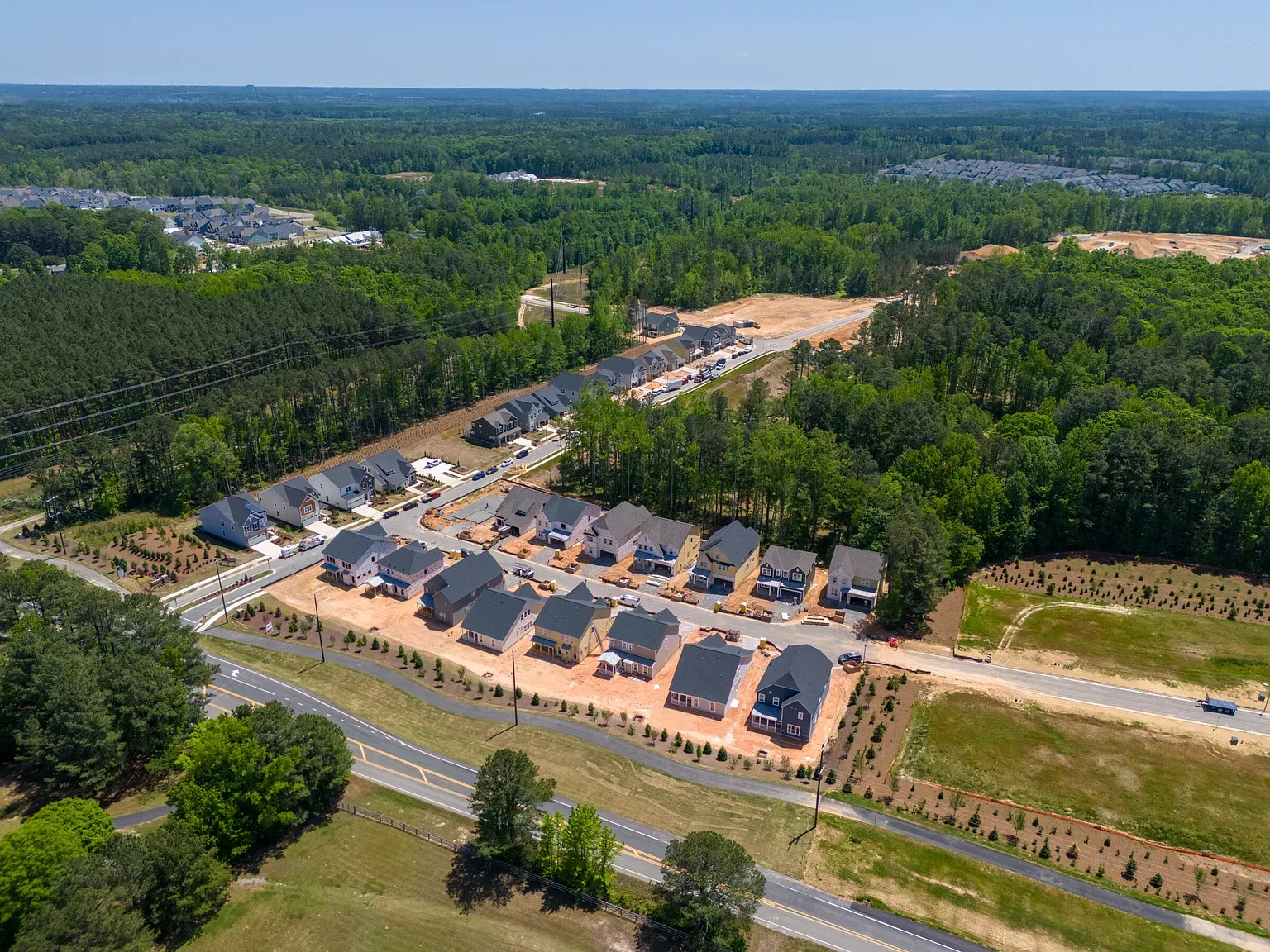
Straight talk: Raleigh is not a hidden gem anymore. It is a strong, growing city that has priced itself into a two-tier market. This is the version I give clients, not the brochure version, written for both buyers and renters weighing the Triangle in 2026.
Here is the biggest thing to understand about 2026. The Triangle now runs as two separate markets. In premium pockets like Cary, North Hills, and Apex, a $700,000-plus home stays insulated and competitive, because buyers at that tier often move on corporate relocation, heavy equity, or cash. At the same time, entry-level inventory has genuinely expanded across eastern Wake, Johnston County, and southern Wake, so first-time buyers have real choices again. Both tiers are real, and which one you live in depends on budget and commute. Let's start with the honest pros.
The Pros
These are the reasons people keep moving here, in the order I hear them from clients.
- The job market is the real engine. Research Triangle Park keeps landing major tech, pharma, and healthcare employers, and the latest data shows the Raleigh-Durham area at a 3.0% unemployment rate. When companies keep hiring, homes keep turning over.
- The tax picture is favorable, with one honest asterisk. North Carolina's flat income tax drops to 3.99% for 2026 and Social Security income is not taxed. It is not a no-income-tax state, so do not buy that myth, but it is a low, simple number for most households.
- The outdoor life is not marketing fluff. Four real seasons, an extensive network of greenways, lakes like Falls Lake and Jordan Lake within a short drive, and open space that stays close to the city. Newcomers from bigger metros are routinely surprised at how easy it is to get outside.
- RDU is a real airport, and the geography around it is a bonus. RDU connects nonstop to most major US hubs, is about two hours to the Atlantic coast near Wrightsville Beach, and three to three and a half hours to the Blue Ridge Mountains and Asheville. Weekend trips in both directions genuinely work.
- Highly-rated schools, stated fairly. Wake County's public schools are consistently highly-rated, and the magnet and choice system means you research assignments rather than assume them from a street address. If schools anchor your move, Wake's reputation is earned, but verify at the address level before you commit.
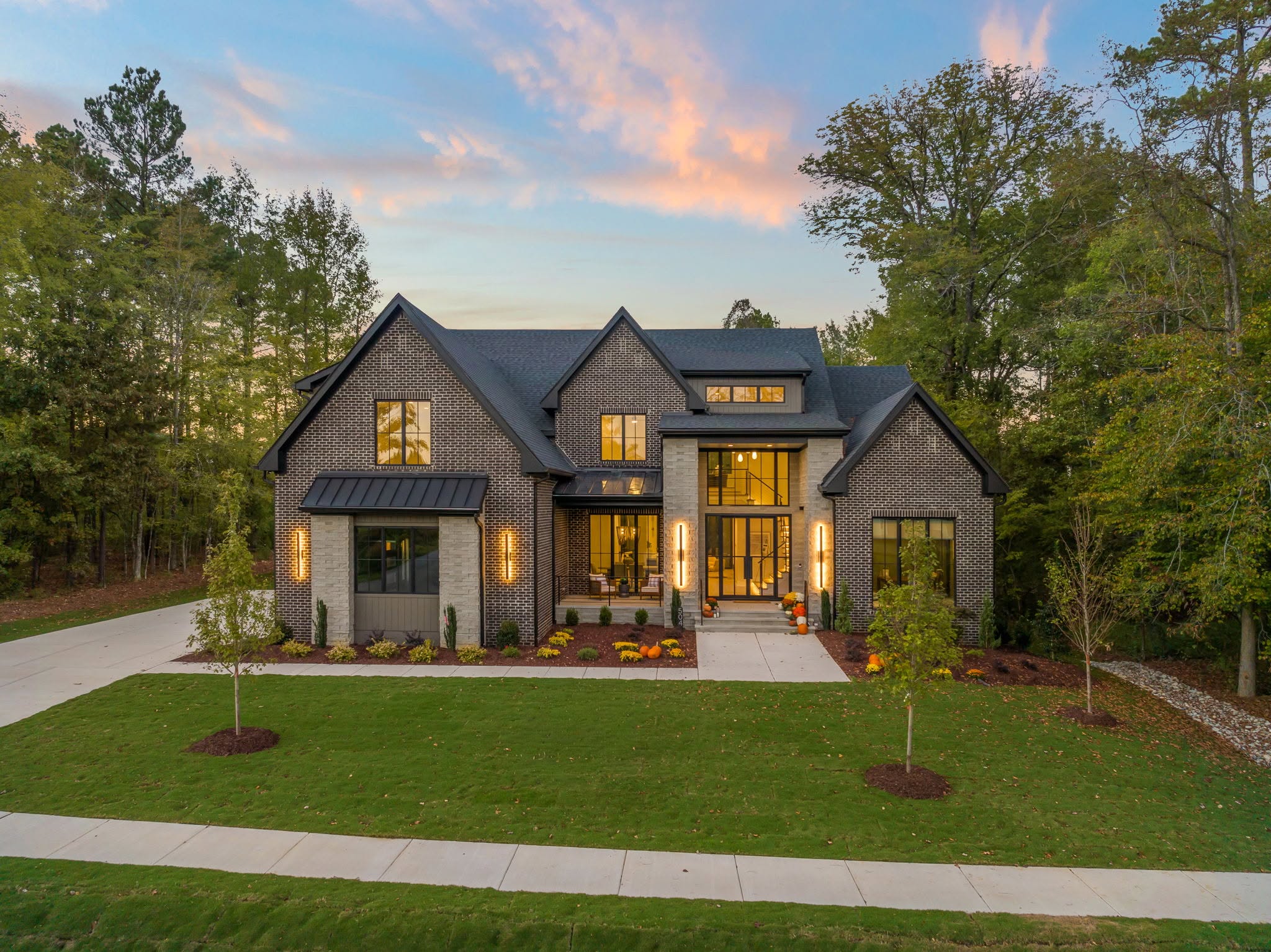
- New construction is everywhere, and the math has flipped. This region builds, from townhomes in the high $200Ks and $300Ks to custom homes over $1M. In 2026 builders are offering rate buydowns and closing cost help, which can make new construction cheaper per month than resale.
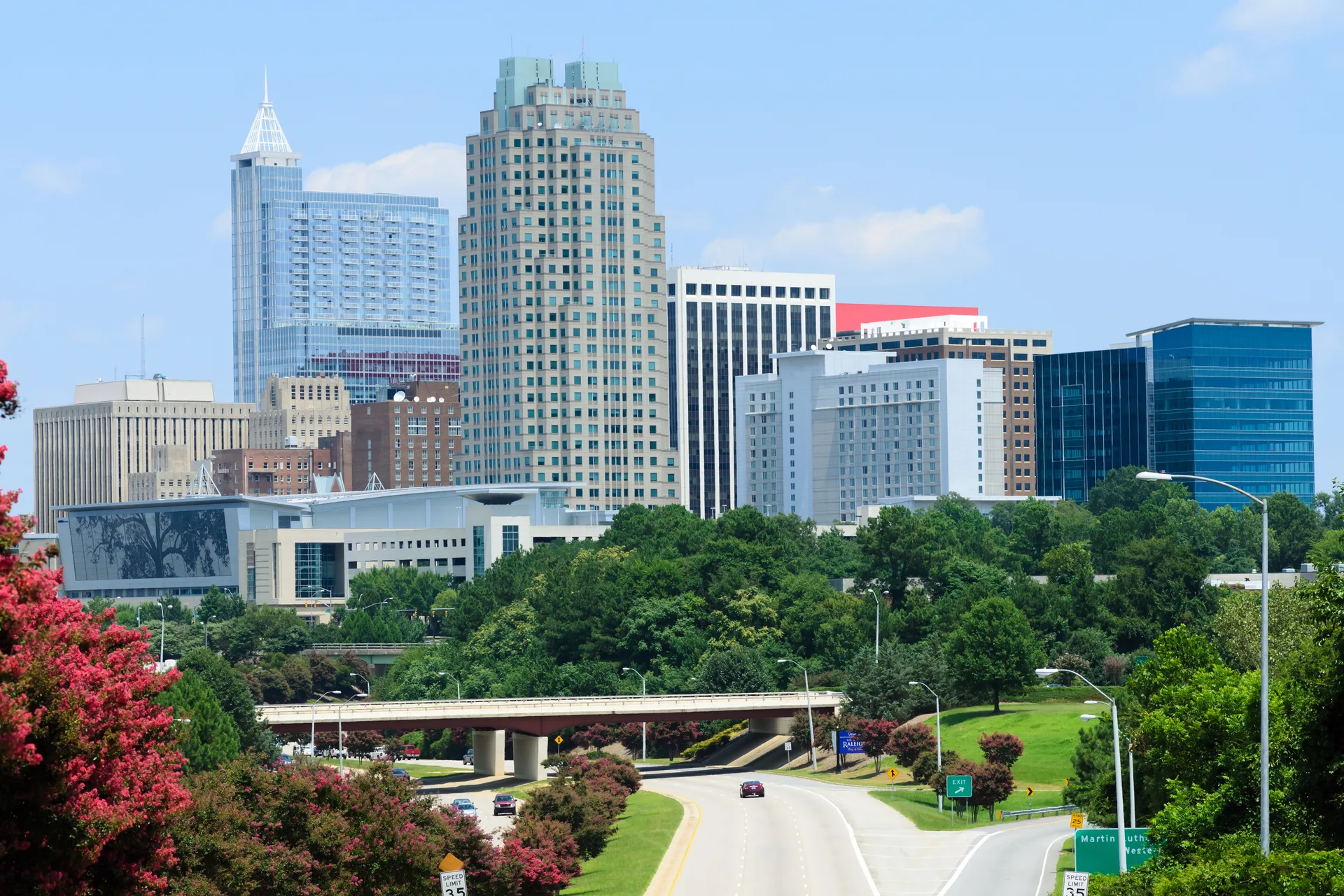
- The food scene quietly became excellent. Barbecue is the headline, but the real story is the variety: farm-to-table, Indian, Vietnamese, breweries, food halls, and a downtown that keeps adding serious restaurants. And it all sits inside a real capital city, with museums, pro sports, and three major universities nearby, which gives you city energy without city chaos.
The Cons
Now the part the boosters skip. I tell every client these before they fall in love with a listing.
- Growth pain is real traffic. The region is growing faster than the roads, and I-40 through the RTP corridor, I-440, US-1, and I-540 jam at peak, predictably. Average one-way commutes still run about 23 to 25 minutes, below the national average, but the trend line is not your friend.
- Property taxes are creeping up. They are not California, but they are not the bargain they used to be. Wake County's 2026 rate is 53.71 cents per $100 of assessed value, and with Raleigh's city rate added you hit 90.91 cents. On a $500,000 home that is roughly $4,545 a year.
- Homeowners insurance costs more than newcomers expect. After North Carolina's two-step 15% base rate increase, a typical Raleigh home runs roughly $2,400 to $2,900 a year. The Triangle is not coastal, so exposure is lower than the beach counties, but the policy is still a real line item.
- Summer heat and humidity are not negotiable. July highs sit near 89 degrees and the humidity does the talking. Coming from the Northeast, your first full summer is a shock. Air conditioning is a necessity in every home you look at.
- Competition is concentrated at certain price points. In 2026 the pressure is not everywhere, it is targeted. Homes under $400,000 in the towns that still have inventory attract multiple offers fast, while sloppy pricing at the top of the market sits. Entry-level buyers still need to be decisive and pre-approved.
- The value towns come with long commutes. Clayton, Garner, Wendell, Zebulon, and Fuquay-Varina deliver the best prices per square foot, and they also deliver 30, 40, even 50 minutes of peak-hour driving to RTP or downtown. Test the drive at your actual hours before you commit, not on a Sunday.
The Real Costs in 2026
Every number below comes from this site's own 2026 pages, so nothing here contradicts the market reports.
The anchor number: the Wake County median sales price is $480,000 through January to September 2026, down 2.0% from $490,000 over the same window in 2025, on 12,002 closed sales, up 1.2% year over year, per the Doorify MLS Market Review (Domus Analytics) I publish on the Wake County market report page. That median is the middle of the market, not the entry point. Median days on market run about 25, sellers are collecting 98.7% of list price, and the median sold price per square foot is $221.
On top of the purchase price, budget for the taxes and insurance I mentioned above: $2,400 to $2,900 a year for homeowners insurance on a typical Raleigh home, and combined property tax rates from 88.06 cents per $100 in Holly Springs to 95.71 cents in Wake Forest. The deep dive on what you will actually pay by town is in the property taxes post, and the policy math is in the homeowners insurance post.
Plan for buyer closing costs of roughly 1% to 5% of the purchase price, with most buyers landing in the 2% to 4% range once prepaids are included and typical non-prepaid costs around $3,400. The full who-pays-what breakdown is in the closing costs post. If the down payment is the obstacle, North Carolina has help: up to 3% of the loan through NC Home Advantage, a flat $15,000 through NC 1st Home Advantage, and up to $45,000 from the City of Raleigh for qualified first-time buyers.
Put it all together and the realistic all-in monthly housing cost on a median-priced home lands in the $2,700 to $3,000 range before utilities. That is the number to test against your budget, not the sticker price.
Run Your Numbers
Already Own in the Triangle? See What Your Home Is Worth Today
If you already live here, a hyper-local equity analysis shows what your current property is worth in this two-tier market, and what your next move would cost. No national averages, just your neighborhood's real numbers.
Who Raleigh Is (And Isn't) For
Raleigh and the Triangle fit professionals and families relocating for RTP jobs, buyers carrying equity from a previous market, people who want highly-rated schools without coastal prices, and anyone who values outdoor space plus real city amenities. If a two-car suburban lifestyle with a weekend lake trip sounds right, this region is a very strong fit.
Raleigh is not for people who need dense urban walkability, renters expecting big-city transit, or buyers who refuse to own a car, and the heat and humidity are a dealbreaker for some. Want the lowest price and the shortest commute at the same time? Here you give up one or the other.
If you are relocating this year and want the town-by-town version of this argument, start with the Triangle relocation guide, which walks through schools, commutes, and price ranges for the communities people actually move to.
The Honest Takeaway
Raleigh in 2026 is a strong, growing, two-tier market. The $480,000 county median, the ~$2,700 to $3,000 all-in monthly cost, and the highly-rated schools are all real, and so are the taxes, insurance, humidity, and peak-hour traffic. It is not cheap and it is not perfect, but it is a good, honest place to build the next ten years if the numbers work for you. My job is to make sure they do before you sign anything.
Ready When You Are
Let's Talk About Your 2026 Move
Whether you are six months out or already here, a 20-minute call covers your budget, your target towns, and what the real numbers say. You get total clarity and zero pressure, backed by a lifetime guarantee.

Phil Slezak
Real Estate Broker · NC #242173 · 20+ years in the Triangle
I moved here from Connecticut and have spent 20+ years watching this market, and 2026 is the most balanced two-tier Triangle I have seen in years. If you are weighing a move, let's put your real numbers on the table before you fall in love with anything.
Book a callRelated Articles
Phil Slezak Real Estate brokered by LPT Realty