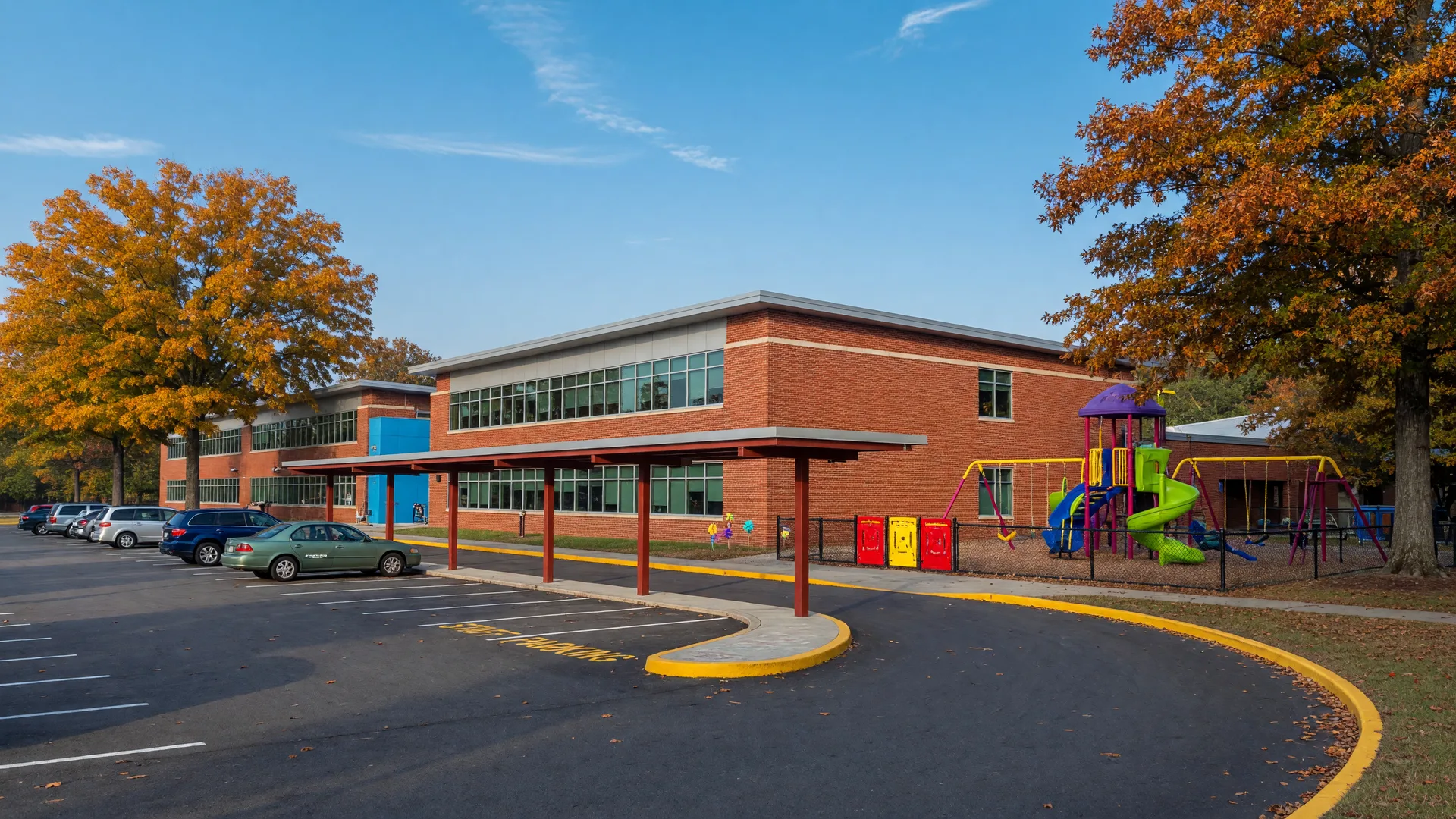
Wake County Public Schools works on a two-part model: every address in the county is assigned a base elementary, middle, and high school, and on top of that you can apply to magnet and year-round schools through a single choice application. The base schools are guaranteed by where you live, while the choice schools run on priorities and a lottery, not on address. That mix is the single biggest surprise for families moving here from districts where one zoned school is simply your school.
I have walked more relocating families through this system than almost any other topic in my 20 years in the Triangle. Parents from Connecticut, New York, and everywhere else assume the house they buy picks the school. In Wake County, the house picks the base schools and the application picks everything else. And right now the timing matters: the choice window for the 2027-28 school year opened October 15, 2026 and closes January 21, 2027. If you are moving with school-age kids, that deadline is closer than you think.
"To give you total clarity, unfiltered local data, and zero risk, backed by a lifetime guarantee that puts your peace of mind first."
What Is a "Base School" in Wake County, and How Is It Assigned?
The base school is the default, guaranteed school for your neighborhood. The district assigns one elementary, one middle, and one high school to every residential address based on your home's location, a rule the district calls the student's domicile. You do not apply for base schools and you cannot be waitlisted for them. If you rent or buy at an address, those three schools are your child's seats, full stop. About 203 schools serve the district's roughly 160,000 students, making Wake County the largest school district in North Carolina and one of the largest in the country.
The catch new residents miss: base school is about the exact street, not the zip code or the city. Two homes a mile apart, or even on the same street, can feed different schools. That is why the address lookup the district publishes, and a current local agent who knows the boundaries, matter far more than a real estate site's "school ratings" tab. Before you fall in love with a house for its school, verify the assignment against the district's own tool for the specific address.
How Does the Wake County School Choice Application Work?
The choice application is the one portal families use to apply to both magnet and year-round schools. For the 2027-28 school year it is open October 15, 2026 through January 21, 2027, with results released February 19, 2027. You rank up to five schools in order of preference, and the system works on published priority tiers with a lottery for ties. It is explicitly not first-come, first-served, and it is not based on test scores. Applying on day one gets you the same odds as applying on the final day.
Two practical hurdles catch newcomers. First, families new to the district must enroll at their base school and get the student enrolled (a student ID typically takes a day or two) before they can submit a choice application. Second, the early college and Crossroads FLEX programs run a separate, earlier window, so if those interest your family, do not wait for the main cycle. And if your family misses the results you hoped for, a second-round magnet window opens in March for whatever seats remain.
What Is the Difference Between Traditional and Year-Round Calendars?
This is the question that confuses more out-of-state families than any other, because "year-round" sounds like more school. It is not. Both calendars deliver about the same number of instructional days. The difference is the spread of breaks, and for many families the real decision is which rhythm fits your life.
| What Changes | Traditional Calendar | Year-Round Calendar |
|---|---|---|
| School year | Late August to June | Roughly July through June |
| Summer break | One long summer break | Shorter, more frequent breaks all year |
| Track system | Everyone on the same schedule | Most run multi-track; part of the school is on break while other tracks attend |
| Instructional days | Same state requirement | Same state requirement |
The multi-track setup is how one building serves roughly 25% more students: with four tracks rotating, a quarter of the school is on break at any given time while the building stays in use. You rank track preferences during the choice application, and the school weighs them with sibling placement and class size. But the track is not guaranteed and can change from year to year, so avoid booking a family vacation around a track before the assignment is official.
How Do Magnet Schools and the Lottery Work?
Magnet schools are themed public schools, often grouped into "magnet pathways" that carry a theme from elementary through high school, and this is North Carolina's answer to tailored education inside the public system. The district's own directory is the authoritative list, and community directories count roughly 60 magnet programs across the county. Popular themes include year-round magnets, the International Baccalaureate program, and arts and science academies, depending on the school.
Seats are allocated by priority tiers rather than a flat lottery. The top priority goes to rising kindergarteners, sixth graders, and ninth graders who already have an older sibling assigned as a magnet student at the same school, and students already in a magnet program get first claim on the pathway school at the next level. If your child is not selected, they go on a waiting list for their first-choice school only. For families moving in specifically for a magnet path, understand that admission is a priority system, not a guarantee, and the base school is always the fallback.
What About School Capacity Caps and Rezoning?
The honest caveat to the "address equals school" rule is capacity. The district can cap enrollment at schools that are near or over capacity, and when a cap is in place, new residents who move into the neighborhood after the cap is set may not get a seat at that base school. Overcrowding is most visible in the fast-growing parts of the county, and for the 2026-27 school year the district proposed caps or related changes at roughly 18 schools in places like Cary, Apex, and Holly Springs.
Reassignment is the other word that spooks parents, and the honest history helps: rezoning was a real, recurring fact of life during the 2000s growth years, and it has slowed considerably. But it is not gone, and a school committee can redraw boundaries. The pragmatic play is to buy inside a walkable base zone for the schools you want, ask your agent for the assignment history of the specific street, verify the current assignment, and then accept that Wake County offers a very strong public education system rather than a permanent, written-in-stone promise about one building.
How Should Families Moving to the Triangle Approach School Selection?
Start with the district comparison, then narrow to the suburb. My honest district-by-district comparison explains how Wake compares with Chapel Hill-Carrboro, Durham, and Johnston County, because the choice does not have to end at Wake. If you want Wake specifically, the assignment reality is different in Cary, Apex, Holly Springs, Wake Forest, and Raleigh proper, both in base schools and in how likely a year-round or magnet seat is to be offered.
My practical advice, based on hundreds of family moves: write down your two or three non-negotiables first, a specific base school, a magnet pathway, or the year-round calendar, and let the house search follow the school decision, not the reverse. The families who suffer here are the ones who buy the perfect house and then discover the choice window closed two weeks earlier. For the 2027-28 cycle, that window closes January 21, 2027, results land February 19, 2027, and the school year after that starts on the calendar the school assigns.
The Bottom Line
Wake County schools run on a base school guarantee plus a choice application, and understanding that two-part system is the difference between a smooth move and a scramble. Your address sets the base elementary, middle, and high school; the application, open now until January 21, 2027 for the 2027-28 year, sets everything else, through ranked preferences, priority tiers, and a lottery. Traditional and year-round calendars carry the same instructional days but very different family rhythms, and capacity caps mean no school assignment is a permanent promise.
The system is genuinely good, it is the biggest district in North Carolina for a reason, and with a little planning it works well for relocating families. If you want to know how the assignment reality in a specific suburb fits your house hunt, that is exactly the kind of straight, data-first conversation I have every week, and I keep the current choice calendar on my desk. I would be glad to have that conversation with you.
Frequently Asked Questions
How do I find out what school my address is zoned to in Wake County?
Every Wake County address has an assigned base elementary, middle, and high school, determined by your home address, not by choice. Look up your base schools on the WCPSS assignment lookup, then enroll directly at your base school. It is not a zip-code match: two houses on the same street can feed different schools.
Does applying early to a Wake County magnet or year-round school improve my chances?
No. The choice application is not first-come, first-served and does not use test scores. You rank one to five schools, and seats go by published priority tiers with a lottery for ties. For the 2027-28 school year the window runs October 15, 2026 to January 21, 2027, with results on February 19, 2027.
Do year-round Wake County schools have more school days than traditional schools?
No. Both calendars cover about the same number of instructional days. Year-round schools spread those days across the whole year with shorter, more frequent breaks, and most run a multi-track system, so part of the school can be on break while the building serves the other tracks.
Are track assignments at year-round schools guaranteed?
No. You rank track preferences when you apply, and the school weighs them with sibling placement and class size, but the school makes the final call. Tracks can change from year to year, so plan family travel around the specific track after it is assigned.
Can I buy a home and be guaranteed its base school in Wake County?
Usually, at the moment you buy. But the district can cap enrollment at schools near capacity: new residents who move in after a cap is set may not get a seat at that capped base school, and rezoning can later change assignments. Buying in a walkable base zone lowers the reassignment risk, but nothing in Wake County is a permanent guarantee.
Your Next Step
Match the School Reality to Your House Hunt
Schools decide where most relocating families land in the Triangle. Tell me your non-negotiables, base school, magnet pathway, year-round calendar, or commute, and I will show you the current assignment reality in the suburbs that fit, with no spin.

Phil Slezak
Real Estate Broker · NC #242173 · 20+ years in the Triangle
I have helped hundreds of relocating families make the school decision before the house decision, and watched Wake County's assignment system evolve for two decades. Bring me your priorities and I will show you the neighborhoods that actually deliver them.
Book a callRelated Articles
Phil Slezak Real Estate brokered by LPT Realty